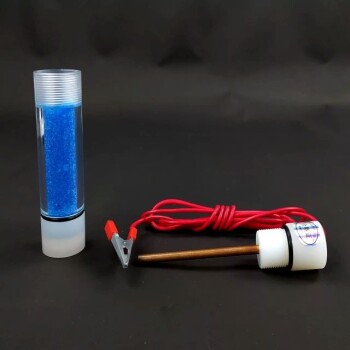
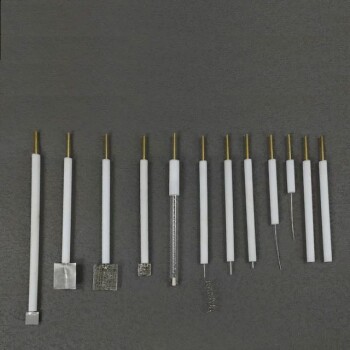
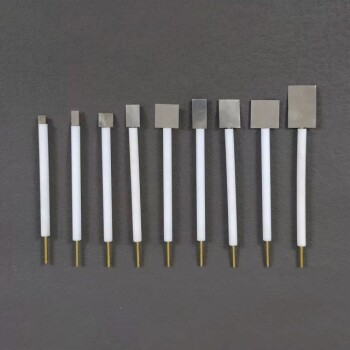
Stainless steel blocking electrodes serve a precise function in Electrochemical Impedance Spectroscopy (EIS): they isolate the electrical properties of the electrolyte by conducting electrons while stopping ions. By preventing electrochemical reactions at the interface, these electrodes allow researchers to measure the material's intrinsic resistance without interference from chemical charge transfer.
By acting as a physical barrier to ion transfer, stainless steel electrodes eliminate surface reactions from the measurement. This allows the EIS system to specifically target the bulk resistance, which is the fundamental data point required to calculate the ionic conductivity of a solid polymer electrolyte.
The Mechanism of Ion Blocking
Conducts Electrons, Blocks Ions
The defining characteristic of these electrodes is their ability to act as a selective filter. They provide a pathway for electron flow through the external circuit, which is necessary to run the EIS instrument.
Preventing Surface Reactions
Simultaneously, the stainless steel interface acts as a "wall" for ions moving through the electrolyte. Because ions cannot physically cross into the steel, electrochemical reactions (Faradaic processes) are effectively prevented at the electrode surface.
Creating a Capacitive Interface
Since ions accumulate at the blocking electrode without transferring charge, the interface behaves like a capacitor. In the resulting impedance spectra, this appears as a distinct characteristic in the low-frequency region, helping researchers distinguish between different physical processes.
Why This Isolation Matters
Targeting Bulk Resistance
The primary goal of using blocking electrodes is to measure the bulk resistance of the solid polymer electrolyte. If the electrodes allowed reactions to occur, the resistance of those reactions would mix with the resistance of the material, corrupting the data.
Simplifying Equivalent Circuit Fitting
Because the "blocking" behavior creates a predictable response, researchers can use standard equivalent circuit models to analyze the data. This makes it significantly easier to mathematically isolate the electrolyte's resistance from the electrode interface effects.
Calculating Ionic Conductivity
Once the bulk resistance is isolated, it serves as the key input for calculating ionic conductivity. Without the use of blocking electrodes to remove reaction variables, determining the accurate conductivity of the polymer would be nearly impossible.
Understanding the Trade-offs
The Necessity of Good Contact
While stainless steel is effective, the electrodes must be highly polished and uniform. Poor surface contact between the steel and the solid polymer can introduce contact resistance, which creates artifacts in the high-frequency region of the data.
Limited to Material Characterization
It is important to remember that these are test-only configurations. Because they block ions, these symmetric cells cannot support actual battery cycling or energy storage; they are strictly tools for measuring transport properties.
Making the Right Choice for Your Goal
To ensure you are gathering the correct data for your specific research needs, apply the following guidelines:
- If your primary focus is measuring Ionic Conductivity: Use stainless steel blocking electrodes to eliminate reaction noise and isolate the bulk resistance of the polymer.
- If your primary focus is analyzing Electrode Kinetics: Do not use blocking electrodes; instead, use reversible (non-blocking) electrodes that allow charge transfer to occur.
By using blocking electrodes, you effectively silence the chemical noise to listen strictly to the movement of ions within the material.
Summary Table:
| Feature | Blocking Electrode (Stainless Steel) | Non-Blocking Electrode (Reversible) |
|---|---|---|
| Primary Function | Blocks ion transfer; conducts electrons | Allows both ion and electron transfer |
| Interface Behavior | Capacitive (no Faradaic reaction) | Kinetic (charge transfer reactions) |
| EIS Focus Area | Bulk resistance of electrolyte | Interface kinetics and battery cycling |
| Frequency Response | Distinct low-frequency capacitive tail | Low-frequency semi-circles (reactions) |
| Common Use Case | Measuring ionic conductivity | Battery performance and cycle life testing |
Elevate Your Battery Research with KINTEK Precision
Unlock accurate data for your next breakthrough with KINTEK’s premium laboratory solutions. Whether you are characterizing transport properties with stainless steel blocking electrodes or testing full-cell performance, our comprehensive range of electrolytic cells, electrodes, and high-performance battery research tools provides the reliability you need.
From high-temperature furnaces and pressure reactors to specialized consumables like PTFE products and ceramics, KINTEK supports your entire workflow. Don't let measurement noise compromise your results.
Contact KINTEK experts today to discover how our specialized equipment can enhance your lab's efficiency and data accuracy.
Related Products
- Glassy Carbon Sheet RVC for Electrochemical Experiments
- Glassy Carbon Electrochemical Electrode
- Electrode Fixture for Electrochemical Experiments
- Graphite Disc Rod and Sheet Electrode Electrochemical Graphite Electrode
- Metal Disc Electrode Electrochemical Electrode
People Also Ask
- What is an RVC glassy carbon sheet? A High-Performance Material for Demanding Applications
- What is the applicable potential range for an RVC glassy carbon sheet? Master Your Electrochemical Analysis
- What is the porosity of an RVC glassy carbon sheet? Understanding the Critical Difference Between PPI and Porosity
- What are the key characteristics of RVC glassy carbon sheets? Unlock Superior Electrochemical Performance
- What consideration should be given to ancillary equipment used with RVC glassy carbon sheets? Ensure Reliable Performance and Protect Your Investment