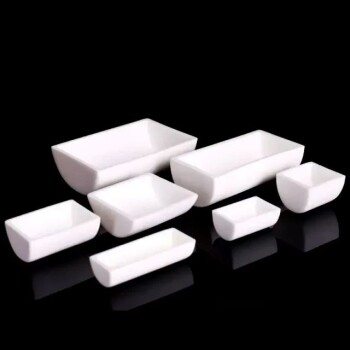
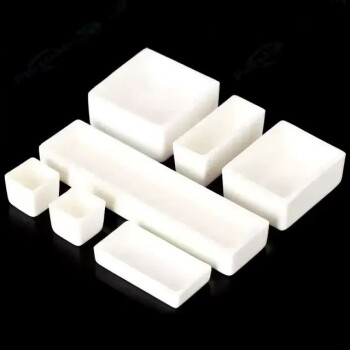
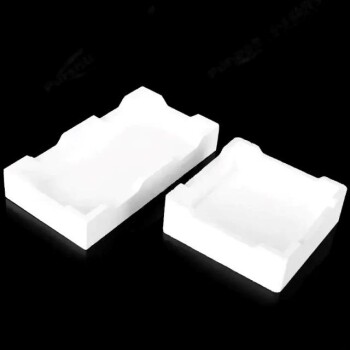
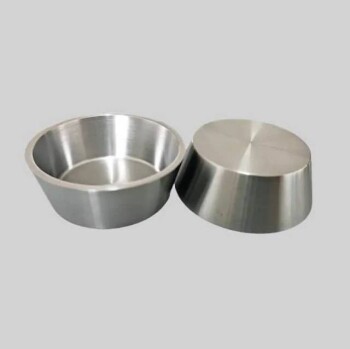
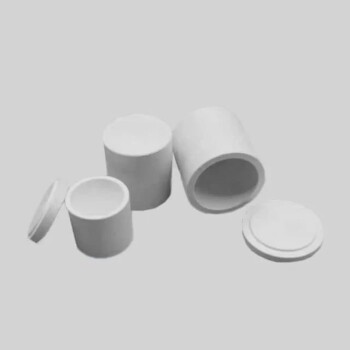
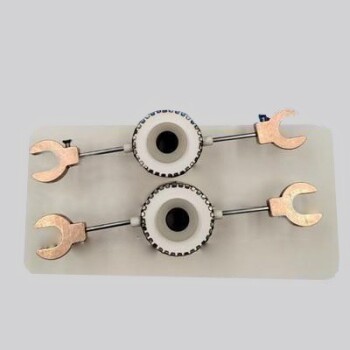
Crucial for tube furnace processing, a boat-shaped alumina crucible acts as a chemically inert vessel designed to contain LATP powders during multi-stage heat treatments. It isolates the reactive electrolyte precursors from the furnace environment while enduring temperatures up to 850°C. This specific geometry maximizes surface area exposure within the cylindrical heating zone, ensuring uniform thermal processing without contaminating the material.
The primary role of the alumina boat is to guarantee the chemical purity of LATP material by acting as a barrier against reactions with the furnace lining. Its elongated shape and thermal stability make it the standard solution for containing powders during both pre-calcination and high-temperature calcination steps.
Chemical Purity and Containment
Preventing Chemical Contamination
The most critical function of the alumina crucible is maintaining the stoichiometric integrity of the LATP powder. Alumina offers excellent chemical corrosion resistance, ensuring that the container itself does not react with the mixed powders. This prevents foreign elements from leaching into the electrolyte, which would degrade its final ionic conductivity.
Physical Isolation
During heating, the crucible acts as a physical barrier between the sample and the furnace. It holds the precursor powders securely, preventing them from contacting the furnace tube or heating elements. This isolation is vital to prevent damage to the equipment and to avoid cross-contamination from previous experimental runs.
Thermal Stability Requirements
Enduring Multi-Stage Heating
LATP synthesis involves distinct thermal processing steps. The crucible must remain stable during pre-calcination at 450°C and the subsequent calcination at 850°C. High-quality alumina maintains its structural integrity across this range, ensuring it does not warp or degrade during the ramp-up to peak temperatures.
Resisting Thermal Shock
Heat treatment processes often involve significant temperature fluctuations. Alumina crucibles possess high thermal shock resistance, allowing them to withstand the stress of heating and cooling cycles without cracking. This reliability is essential to prevent sample loss midway through a synthesis protocol.
Geometric Advantages for Processing
Optimized for Tube Furnaces
The "boat" shape is specifically engineered for the cylindrical constraints of a tube furnace. Its elongated, low-profile design allows it to slide easily into the center of the heating zone. This geometry ensures the powder is spread in a thin layer, facilitating uniform heat distribution and efficient gas exchange if a specific atmosphere is required.
Understanding the Trade-offs
Material Compatibility
While alumina is highly resistant, it is not universally inert to all materials at extreme temperatures. You must verify that your specific LATP precursor mix is compatible with aluminum oxide at 850°C. While generally safe for LATP, certain lithium-heavy compounds can react with alumina under aggressive conditions, potentially leading to slight contamination or crucible degradation over repeated uses.
Mechanical Fragility
Despite its thermal robustness, alumina is a brittle ceramic. It requires careful handling during loading and unloading. Unlike metal containers, it cannot withstand mechanical impacts or drops, meaning operator care is as critical as the material's thermal properties.
Making the Right Choice for Your Goal
To ensure the success of your LATP synthesis, apply the crucible based on your specific priorities:
- If your primary focus is high ionic conductivity: Prioritize high-purity alumina boats to strictly minimize any potential diffusion of aluminum impurities into the LATP lattice.
- If your primary focus is equipment longevity: Ensure the boat volume is sufficiently large to contain the powder without spillage, protecting your furnace tube from direct contact with lithium precursors.
The boat-shaped alumina crucible remains the definitive tool for LATP calcination because it effectively balances high-temperature resilience with the practical geometry required for tube furnace operations.
Summary Table:
| Feature | Role in LATP Heat Treatment | Key Benefit |
|---|---|---|
| Chemical Inertness | Prevents reaction between powder and vessel | Maintains stoichiometric purity & ionic conductivity |
| Boat Geometry | Optimized for cylindrical tube furnace zones | Ensures uniform heat distribution & easy loading |
| Thermal Stability | Endures 450°C pre-calcination & 850°C calcination | Resists warping and structural degradation |
| Thermal Shock Resistance | Withstands rapid temperature fluctuations | Prevents crucible cracking and sample loss |
| Physical Isolation | Barrier between sample and furnace lining | Protects furnace tubes from corrosive lithium precursors |
Elevate Your Materials Research with KINTEK Precision
Achieving high ionic conductivity in LATP solid-state electrolytes requires more than just high temperatures—it requires the right environment. KINTEK specializes in providing high-performance laboratory solutions, from advanced high-temperature tube furnaces and vacuum systems to precision-engineered alumina crucibles, ceramic boats, and PTFE consumables.
Whether you are scaling up battery research or perfecting a calcination protocol, our comprehensive portfolio of crushing and milling systems, hydraulic presses, and cooling solutions ensures your workflow remains contamination-free and efficient.
Ready to optimize your synthesis process? Contact our technical experts today to find the perfect equipment and consumables tailored to your laboratory's needs!
Related Products
- Arc-Shaped Alumina Ceramic Crucible High Temperature Resistant for Engineering Advanced Fine Ceramics
- Alumina Al2O3 Ceramic Crucible Semicircle Boat with Lid for Engineering Advanced Fine Ceramics
- Engineering Advanced Fine Ceramics Alumina Al2O3 Crucible With Lid Cylindrical Laboratory Crucible
- Engineering Advanced Fine Ceramics Alumina Crucibles (Al2O3) for Thermal Analysis TGA DTA
- Engineering Advanced Fine Alumina Al2O3 Ceramic Crucible for Laboratory Muffle Furnace
People Also Ask
- Why Use Alumina Crucibles & Powder Burial for NaSICON? Ensure Phase Purity and Prevent Elemental Volatilization
- What is the primary purpose of using alumina crucibles for LLTO ceramics? Optimize Your High-Temperature Sintering
- Why are alumina crucibles and mother powder essential for LATP sintering? Optimize Your Solid Electrolyte Performance
- Why are high-purity alumina crucibles used for liquid lead corrosion experiments? Ensure Data Accuracy at 550°C
- Primary considerations for choosing alumina crucibles and quartz tubes in indium intercalation: Ensure Material Purity