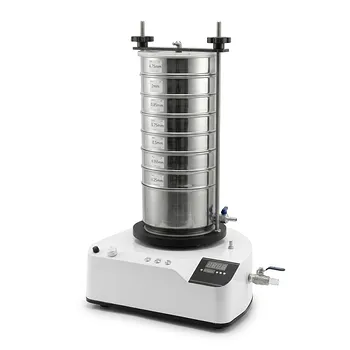
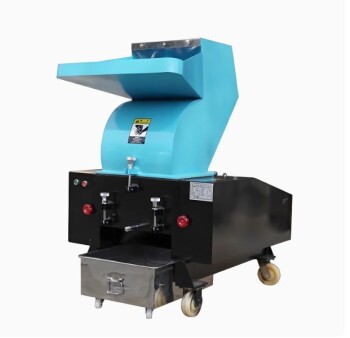
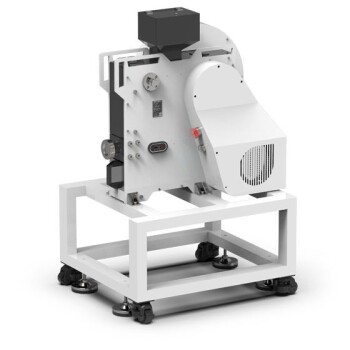
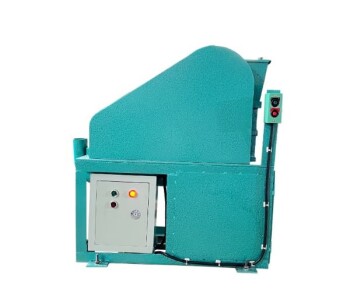
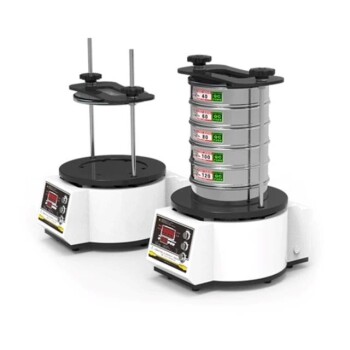
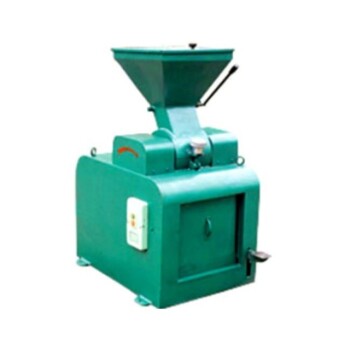
Crushing and sieving systems are the critical physical enablers in the conversion of peanut shells into levulinic acid. These systems mechanically reduce raw peanut shells into fine, uniform particles to maximize the surface area available for subsequent chemical reactions.
By forcing material through specific mesh screens, these systems drastically increase the biomass surface area. This physical transformation is the prerequisite for chemical efficiency, allowing acid and alkali reagents to penetrate the structure deeply and effectively remove hemicellulose and lignin.
The Mechanics of Physical Pretreatment
Achieving Uniform Particle Size
The primary function of crushing and sieving is to convert irregular peanut shells into a homogenous feedstock. By processing the shells through defined mesh screens, the system ensures that every particle falls within a specific, small size range.
This uniformity eliminates variations in the raw material. It ensures that the entire batch of biomass reacts consistently during processing, preventing the issue of having some particles over-reacted while others remain under-processed.
Maximizing Reactive Surface Area
Reducing the particle size has a direct, exponential impact on the specific surface area of the biomass. Crushing exposes the internal structures of the peanut shell that were previously inaccessible.
This increase in surface area creates more contact points for chemical interactions. It is the physical foundation that dictates the speed and completeness of the chemical processes that follow.
Enhancing Chemical Efficiency
Improving Reagent Penetration
For levulinic acid production, chemical reagents (acids and alkalis) must penetrate the dense lignocellulosic structure of the shell. A crushing system ensures this penetration is rapid and uniform.
Without this size reduction, reagents would only interact with the outer shell, leaving the core unreacted. Fine particles allow the chemicals to soak through the biomass thoroughly, reducing the time required for treatment.
Facilitating Component Removal
The ultimate goal of this pretreatment phase is to prepare the cellulose for conversion by stripping away unwanted components. High surface area allows for the effective removal of hemicellulose and lignin.
By exposing the lignocellulosic matrix, the system ensures that acid and alkali treatments can efficiently solubilize these barriers. This purification is essential to access the cellulose, which is the precursor for levulinic acid.
Understanding the Trade-offs
The Balance of Particle Size
While smaller particles generally react faster, there is a limit to how fine the material should be ground. Extremely fine powders can lead to clumping or filtration issues downstream, while particles that are too coarse will result in incomplete chemical reactions (unreacted cores).
Energy Consumption vs. Yield
Achieving very fine particle sizes requires significantly higher mechanical energy input during the crushing stage. Operators must balance the cost of this mechanical energy against the benefit of increased chemical yield. The goal is to find the optimal mesh size that maximizes yield without unnecessary energy expenditure.
Making the Right Choice for Your Goal
To optimize your peanut shell pretreatment process, consider your specific production constraints:
- If your primary focus is Reaction Speed: Prioritize a finer mesh size during sieving to maximize surface area and accelerate reagent penetration.
- If your primary focus is Process Consistency: Focus on the precision of the sieving system to ensure a narrow particle size distribution, which guarantees uniform product quality.
The efficiency of your chemical conversion is defined by the precision of your physical preparation.
Summary Table:
| Process Step | Primary Function | Impact on Production |
|---|---|---|
| Crushing | Mechanical size reduction | Increases specific surface area for reagent contact |
| Sieving | Particle size classification | Ensures feedstock uniformity and prevents unreacted cores |
| Acid/Alkali Soak | Chemical penetration | Removes hemicellulose and lignin barriers efficiently |
| Optimization | Balance of mesh size | Maximizes chemical yield vs. mechanical energy input |
Maximize Your Biomass Conversion Efficiency with KINTEK
Precision in physical pretreatment is the cornerstone of successful chemical synthesis. KINTEK specializes in advanced crushing and milling systems and high-precision sieving equipment designed to provide the exact particle uniformity required for levulinic acid production and other biomass research.
Our laboratory-grade solutions empower researchers and industrial producers to:
- Achieve optimal surface area for deep reagent penetration.
- Ensure consistent results with uniform feedstock distribution.
- Enhance downstream yields using our comprehensive range of pellet presses, high-temperature reactors, and centrifugal shakers.
Ready to scale your research or optimize your pretreatment workflow? Contact our technical experts today to find the perfect equipment for your laboratory needs.
References
- A. Halliru, A. S. Muhammad. Optimization of Levulinic acid production from groundnut shell using Taguchi orthogonal array design. DOI: 10.4314/bajopas.v12i1.51s
This article is also based on technical information from Kintek Solution Knowledge Base .
Related Products
- Laboratory Test Sieves and Sieving Machines
- Three-dimensional electromagnetic sieving instrument
- Laboratory Vibratory Sieve Shaker Machine for Dry and Wet Three-Dimensional Sieving
- Powerful Plastic Crusher Machine
- Laboratory Jaw Crusher
People Also Ask
- What are laboratory test sieves used for? A Guide to Particle Size Analysis
- How do you calculate the sieve test? Master Particle Size Distribution for Quality Control
- How does a lab test sieve contribute to biomass charcoal powder preparation? Achieve Uniform Particle Size
- What are the specifications for test sieves? A Guide to ASTM & ISO Standards for Accurate Particle Analysis
- What materials are required for sieving? Achieve Accurate Particle Size Analysis