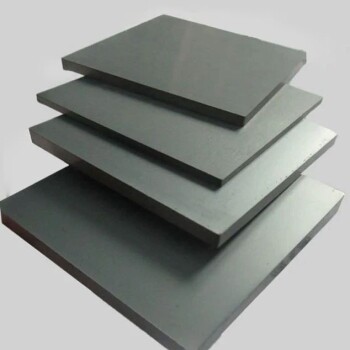
Graphite paper serves as a multifunctional interface material essential for successful hot-press sintering. Its primary roles include acting as a pressure transmission medium, a thermal conductor, and a protective barrier between the Silicon Carbide (SiC) powder and the mold. By providing a flexible buffer, it ensures that mechanical and thermal energies are applied uniformly, resulting in a high-density ceramic body with minimal structural defects.
The core function of graphite paper is to translate irregular mechanical force and heat into a uniform field while acting as a sacrificial lubricant. This ensures the integrity of the sintered SiC part and prevents the permanent bonding of the sample to the expensive graphite mold.
Optimizing Pressure and Density Distribution
Uniform Pressure Transmission
Graphite paper acts as a pressure transmission medium and a mechanical buffer between the rigid mold punches and the SiC powder. It compensates for minor misalignments or surface irregularities in the mold, ensuring that the axial pressure from the hydraulic system is distributed evenly.
Reducing Density Gradients
By ensuring a uniform application of force, graphite paper minimizes pressure gradients within the powder bed. This leads to a more consistent green density throughout the sample, which is critical for preventing warping or uneven shrinkage during the final stages of sintering.
Structural Integrity Under High Load
In processes requiring pressures up to 40-50 MPa, the paper helps the mold assembly withstand mechanical stress. It prevents localized stress concentrations that could lead to micro-cracking in the brittle SiC ceramic as it densifies.
Thermal Field Stabilization
Enhancing Heat Transfer
Due to its high thermal conductivity, graphite paper facilitates the efficient transfer of thermal energy from the heating elements or mold walls to the sample. This is particularly important in vacuum hot-pressing where radiant heat must be converted into conductive heat.
Maintaining Temperature Uniformity
The paper helps maintain a consistent temperature field throughout the SiC powder, even in large-scale samples. Uniform heating prevents the formation of thermal stress cracks and ensures that the phase transformation and grain growth occur at the same rate across the entire specimen.
Thermal Buffering
As a buffer, the graphite paper mitigates sudden temperature fluctuations that could occur at the contact interface. This stability is vital when sintering at extreme temperatures, such as the 1850°C to 2000°C required for high-performance SiC ceramics.
Surface Protection and Isolation
Preventing Chemical Adhesion
At extreme sintering temperatures, SiC powder can become highly reactive or bond physically to the rigid inner walls of the graphite mold. Graphite paper acts as a diffusion barrier, preventing chemical reactions and ensuring the ceramic does not fuse to the mold components.
Facilitating Smooth Demolding
The material provides essential lubrication between the sintered body and the mold cavity. This allows the finished SiC part to be ejected easily after the cooling cycle, protecting the sample from edge chipping and the mold from surface scoring.
Extending Mold Service Life
By preventing direct contact and adhesion, the paper significantly reduces the wear and tear on high-strength graphite molds. This sacrificial layer absorbs the friction and chemical interaction that would otherwise degrade the expensive, precision-machined mold surfaces.
Understanding the Trade-offs
Potential for Carbon Contamination
Because graphite paper is composed of carbon, there is a risk of surface carbon enrichment in the SiC ceramic. While SiC is inherently carbon-based, excessive carbon diffusion at the interface may alter the stoichiometry or electrical properties of the outer layer of the sample.
Impact on Dimensional Tolerances
The thickness of the graphite paper must be accounted for during the mold design and loading phase. Variations in paper compression or thickness can lead to minor dimensional inaccuracies in the final sintered block if not strictly controlled.
Making the Right Choice for Your Goal
How to Apply This to Your Project
To achieve the best results when using graphite paper in SiC sintering, align your selection with your specific production priorities:
- If your primary focus is high geometric precision: Use high-density, thin graphite paper to minimize the impact of paper compression on the final dimensions of the ceramic.
- If your primary focus is preventing mold damage: Opt for a slightly thicker, more flexible grade of graphite paper to provide a superior buffer against mechanical stress and chemical bonding.
- If your primary focus is maximizing density: Ensure the paper is perfectly centered and free of wrinkles to prevent pressure "shadows" that could cause localized low-density regions.
By carefully managing the interface between the mold and the powder, you ensure that the extreme conditions of hot-pressing result in a flawless, high-performance ceramic component.
Summary Table:
| Function | Key Benefit | Impact on SiC Quality |
|---|---|---|
| Pressure Transmission | Evenly distributes axial force | Prevents warping and density gradients |
| Thermal Conductivity | Maintains stable temperature field | Ensures uniform grain growth and phase transformation |
| Surface Protection | Prevents chemical/physical bonding | Facilitates smooth demolding and extends mold life |
| Mechanical Buffering | Compensates for mold irregularities | Minimizes micro-cracking and structural defects |
Elevate Your Ceramic Sintering Precision with KINTEK
Achieving high-density Silicon Carbide ceramics requires more than just heat; it demands precision interface management and robust hardware. At KINTEK, we provide the advanced tools necessary for superior material science results. From high-performance hydraulic presses (hot, isostatic, and pellet) designed for uniform pressure application to high-temperature vacuum and atmosphere furnaces that ensure perfect thermal stability, we empower your lab to achieve excellence.
Our extensive portfolio also features essential consumables like ceramics, crucibles, and high-purity graphite interfaces, alongside specialized equipment such as CVD/PECVD systems and crushing and milling tools. Whether you are a researcher or an industrial manufacturer, KINTEK delivers the reliability and technical support you need to optimize your production and maximize profit margins.
Ready to upgrade your sintering process? Contact KINTEK today to find the perfect solution for your lab!
References
- Lan Zhang, Xingyou Tian. Effect of Bi-B-Si-Zn-Al glass additive on the properties of low-temperature sintered silicon carbide ceramics. DOI: 10.3389/fphy.2022.1090437
This article is also based on technical information from Kintek Solution Knowledge Base .
Related Products
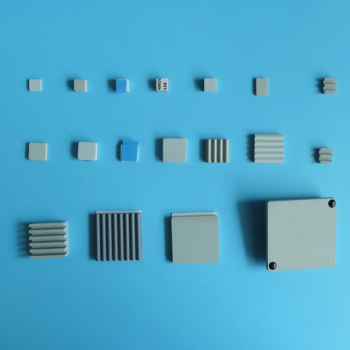
- Silicon Carbide (SIC) Ceramic Sheet Flat Corrugated Heat Sink for Engineering Advanced Fine Ceramics
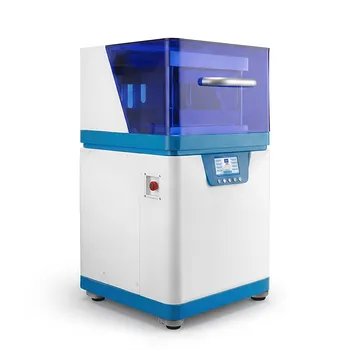
- 600T Vacuum Induction Hot Press Furnace for Heat Treat and Sintering
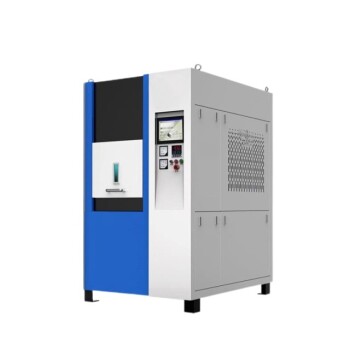
- Vacuum Heat Treat and Sintering Furnace with 9MPa Air Pressure
- Automatic Hydraulic Hot Press with 500x500mm Heating Plates and Multi Stage PLC Control for Material Sintering
- Vacuum Heat Treat and Pressure Sintering Furnace for High Temperature Applications
People Also Ask
- What are the properties and applications of silicon carbide ceramics? Solve Extreme Engineering Challenges
- What is the strongest ceramics? Silicon Carbide Leads in Hardness & Thermal Strength
- What are the uses of silicon carbide ceramics in different industries? Master Extreme Performance in Aerospace, Semiconductors & More
- What are the properties of SiC? Unlock High-Temperature, High-Frequency Performance
- Why is silicon carbide more efficient? Unlock Higher Power Density with SiC's Superior Material Properties