Maintaining a vacuum environment is indispensable during the hot pressing sintering of Ni-Mn-Sn-In alloys to prevent the degradation of reactive elements. Specifically, it protects manganese (Mn) and tin (Sn) from high-temperature oxidation while simultaneously removing trapped gases to ensure a dense, chemically accurate final material.
Core Takeaway The vacuum environment serves a dual purpose: it acts as a chemical shield to preserve the stoichiometry of oxidation-prone elements (Mn, Sn) and as a physical facilitator to evacuate trapped gases. This "clean" environment allows mechanical pressure to effectively close pores, resulting in an alloy with superior density and structural integrity.
Preserving Chemical Integrity
The primary function of the vacuum in this process is to strictly control the chemical environment during the high-temperature phase.
Preventing Elemental Oxidation
Ni-Mn-Sn-In alloys contain elements that are highly reactive at sintering temperatures. Manganese and tin are particularly prone to oxidation when exposed to trace amounts of oxygen.
Without a vacuum, these elements would form unwanted oxides on the surface of the powder particles. This oxidation would alter the precise chemical composition of the alloy, potentially degrading its functional properties.
Ensuring Compositional Accuracy
By isolating the material from oxygen, the vacuum ensures that the final alloy matches the intended chemical formula.
This purity is essential because the performance of Ni-Mn-Sn-In alloys often depends on precise atomic ratios. A vacuum environment guarantees that the reactive elements remain part of the metallic matrix rather than becoming oxide impurities.
Enhancing Physical Density and Structure
Beyond chemical protection, the vacuum plays a critical role in the physical consolidation of the powder into a solid body.
Eliminating Trapped Gases
Powder metallurgy naturally involves gaps between particles where air and other gases can be trapped.
The vacuum actively promotes the degassing of these adsorbed gases. If these gases were not removed prior to pore closure, they would remain inside the material, creating internal defects that weaken the alloy.
Synergistic Densification
The vacuum works in tandem with the mechanical pressure applied during hot pressing.
By removing the gas resistance within the pores, the applied uniaxial pressure can more effectively compress the particles. This synergy promotes atomic diffusion and bonding, leading to a high-density microstructure with minimized porosity and improved mechanical properties.
Understanding the Operational Trade-offs
While vacuum hot pressing is superior for these alloys, it introduces specific processing constraints that must be managed.
The Necessity of "Synergy"
A vacuum alone is insufficient to achieve full density; it must be coupled with high mechanical pressure and thermal energy.
The process relies on the synergistic effect of these three factors (vacuum, temperature, pressure) to promote plastic deformation and diffusion. If pressure is inadequate, even a perfect vacuum will not eliminate all internal pores or achieve the desired grain structure.
Sensitivity to Vacuum Levels
The effectiveness of the process is highly dependent on the quality of the vacuum.
As seen in similar reactive alloy systems, the vacuum level must be sufficient to outpace the oxidation rate of the specific elements involved. A compromised vacuum can lead to surface contamination that prevents proper metallic bonding, rendering the mechanical pressure ineffective.
Making the Right Choice for Your Goal
The vacuum environment is not just a precaution; it is a manufacturing parameter that dictates the quality of the final component.
- If your primary focus is compositional precision: Prioritize vacuum stability to strictly prevent the loss of manganese and tin to oxidation, which ensures the alloy retains its targeted chemical properties.
- If your primary focus is mechanical strength: Focus on the degassing phase of the vacuum cycle to ensure all interstitial gases are evacuated before maximum pressure is applied, maximizing final density.
By maintaining a rigorous vacuum, you transform a collection of reactive powders into a cohesive, high-performance alloy capable of meeting demanding specifications.
Summary Table:
| Feature | Role in Ni-Mn-Sn-In Sintering | Impact on Final Alloy |
|---|---|---|
| Oxidation Prevention | Protects reactive Mn and Sn from oxygen | Maintains precise stoichiometry and chemical purity |
| Degassing | Removes trapped air and adsorbed gases | Eliminates internal defects and prevents porosity |
| Pressure Synergy | Removes gas resistance within pores | Facilitates atomic diffusion for maximum density |
| Microstructure Control | Ensures clean particle surfaces | Promotes superior metallic bonding and structural integrity |
Elevate Your Material Research with KINTEK Precision
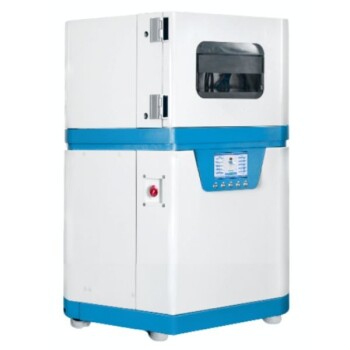
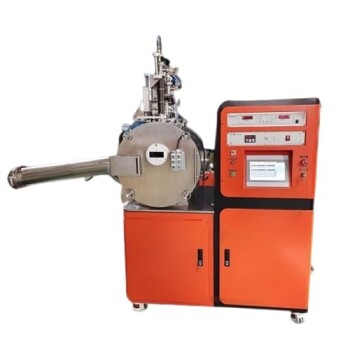
Precision in Ni-Mn-Sn-In alloy fabrication starts with the right environment. KINTEK specializes in advanced laboratory equipment designed to meet the rigorous demands of material science. Our comprehensive range of vacuum hot presses and high-temperature furnaces provides the stable, high-vacuum conditions and precise pressure control necessary to prevent oxidation and achieve theoretical density in reactive alloys.
Whether you are developing next-generation magnetic shape memory alloys or conducting fundamental battery research, our portfolio—including crushing systems, hydraulic presses, and high-temperature reactors—is engineered to deliver repeatable, high-quality results for lab and pilot-scale production.
Ready to optimize your sintering process? Contact KINTEK today to discover how our high-performance solutions can enhance your lab's efficiency and material integrity.
Related Products
- Vacuum Heat Treat and Sintering Furnace with 9MPa Air Pressure
- Vacuum Heat Treat and Pressure Sintering Furnace for High Temperature Applications
- 600T Vacuum Induction Hot Press Furnace for Heat Treat and Sintering
- Vacuum Heat Treat and Molybdenum Wire Sintering Furnace for Vacuum Sintering
- Vacuum Heat Treat Sintering Brazing Furnace
People Also Ask
- What is the process of pressure sintering? Achieve Superior Density and Strength for High-Performance Parts
- What is the effect of pressure during sintering? Achieve Higher Density and Finer Microstructures Faster
- Why must green bodies produced via binder jetting undergo treatment in a vacuum sintering furnace?
- What is a vacuum sintering furnace? Unlock Purity and Performance in Advanced Materials
- How does the vacuum environment impact sintering of diamond-copper composites? Protect Against Thermal Damage