A boiling water bath serves a precise thermal function. Its specific purpose is to raise the temperature of submerged samples to exactly 100°C. By utilizing the boiling point of water, this device creates a consistent high-temperature environment necessary for specific laboratory protocols and chemical reactions.
The core function of a boiling water bath is to heat samples to a fixed limit of 100°C, utilizing the physical properties of boiling water to ensure temperature stability and reproducibility.
The Mechanics of the Function
Reaching the Thermal Ceiling
The defining characteristic of this device is its ability to reach and maintain the boiling point of water.
The bath heats the water medium until it transitions from liquid to gas.
Because liquid water cannot exceed 100°C (at standard atmospheric pressure), the bath provides a natural, physical temperature cap for your samples.
Uniform Heat Transfer
The function extends beyond just reaching a number; it ensures the heat is applied evenly.
Water surrounds the sample vessel, providing contact on all sides.
This eliminates "hot spots" that often occur with direct heating methods, ensuring the entire sample reaches the target 100°C simultaneously.
Understanding the Trade-offs
Evaporation Management
Because the specific function involves boiling, rapid evaporation is an unavoidable side effect.
You must frequently monitor water levels to ensure the bath does not boil dry, which could damage the heating element or the samples.
Temperature Limitations
The reliance on water as a medium restricts the upper temperature limit strictly to 100°C.
If your protocol requires temperatures exceeding this threshold, a boiling water bath is physically incapable of performing the function.
You would require an alternative medium, such as oil or sand, to achieve higher temperatures.
Making the Right Choice for Your Goal
To determine if this specific tool fits your workflow, consider your temperature requirements:
- If your primary focus is reproducibility at high heat: Use a boiling water bath to guarantee samples reach exactly 100°C without the need for complex calibration.
- If your primary focus is temperatures exceeding 100°C: Do not use this device; the physical limit of the water medium makes it unsuitable for your needs.
A boiling water bath provides a reliable, fixed-temperature solution for processes requiring the specific thermal conditions of 100°C.
Summary Table:
| Feature | Specific Function / Detail |
|---|---|
| Target Temperature | Constant 100°C (at standard pressure) |
| Heating Mechanism | Water-to-sample thermal conduction |
| Key Benefit | Eliminates hot spots through uniform immersion |
| Primary Limit | Physical cap at boiling point; requires water level monitoring |
| Best Used For | Protocols requiring a physical temperature ceiling for reproducibility |
Optimize Your Lab Thermal Processes with KINTEK
Precision and reliability are at the core of every successful experiment. At KINTEK, we specialize in high-performance laboratory equipment designed to meet the most rigorous scientific standards. Whether you need precise temperature control with our water baths or require specialized high-temperature solutions like vacuum and muffle furnaces, crushing systems, or isostatic hydraulic presses, we have the expertise to support your goals.
From high-temperature high-pressure reactors for chemical synthesis to PTFE consumables and ceramics for sample purity, KINTEK provides a comprehensive portfolio for researchers and industrial professionals.
Ready to upgrade your laboratory efficiency? Contact our experts today to find the perfect equipment tailored to your specific application!
Related Products
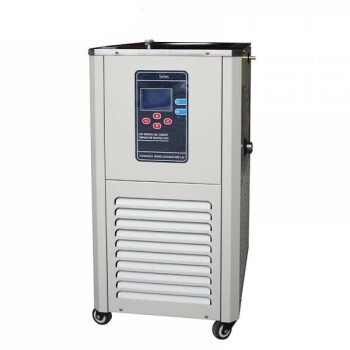
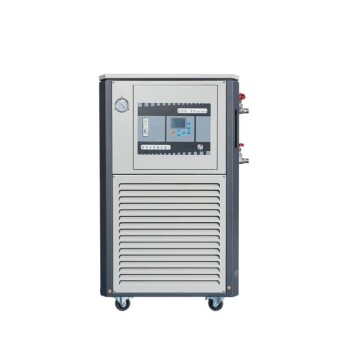
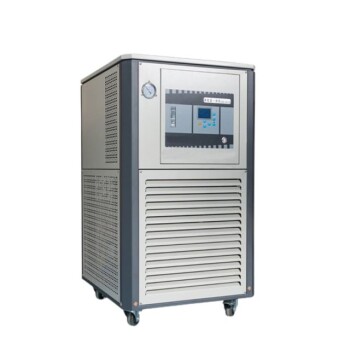
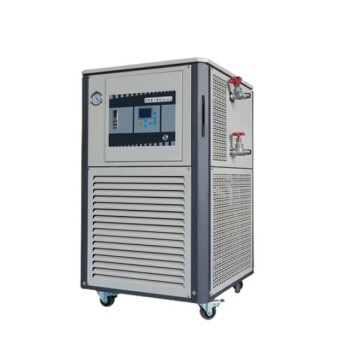
- High Temperature Constant Temperature Heating Circulator Water Bath Chiller Circulator for Reaction Bath
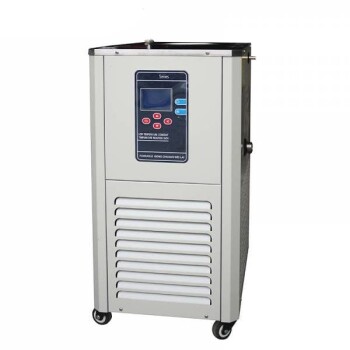
- 10L Chilling Circulator Cooling Water Bath Low Temperature Constant Temperature Reaction Bath
- 30L Chiller Water Bath Cooling Circulator Low Temperature Constant Temperature Reaction Bath
- 50L Chiller Water Bath Cooling Circulator Low Temperature Constant Temperature Reaction Bath
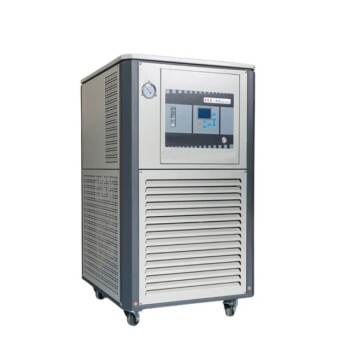
- 20L Heating Chilling Circulator Cooling Water Bath Circulator for High and Low Temperature Constant Temperature Reaction
People Also Ask
- What is the necessity of a circulating water bath in chlorate production? Optimize Yield & Purity with Precision
- How do constant temperature circulators impact weight-loss immersion tests? Ensure Precision in Corrosion Analysis
- How does a constant temperature circulator support the leaching reaction of gold scrap? Optimize Gold Recovery Results
- Why is a constant temperature water bath used for precursor storage in CVD? Achieve Stable Nanocrystalline SiC Deposition
- Why is a high-precision constant temperature water bath necessary for anaerobic digestion? Ensure Success at 37±0.02°C