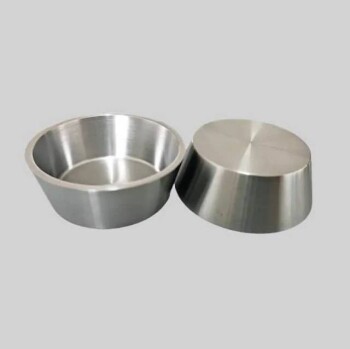
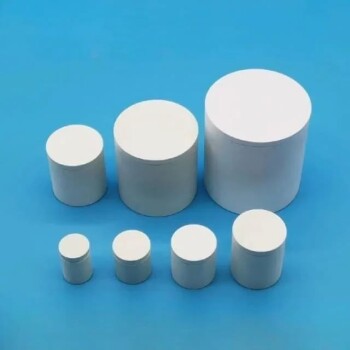
The primary function of the heat-resistant crucible is to serve as a chemically inert containment vessel for waste magnesium alloy within the vacuum furnace's heating zone. It provides the physical boundary necessary to separate pure magnesium vapor from non-volatile impurities, ensuring contaminants like aluminum and iron remain trapped as residue while the magnesium vaporizes.
By maintaining structural and chemical stability under high vacuum and temperatures, the crucible enables the selective sublimation of magnesium while physically trapping high-boiling-point impurities to prevent product contamination.
The Mechanics of Purification
Critical Containment
The crucible is positioned at the bottom of the heating zone inside the vacuum furnace.
Its most basic role is to securely hold the waste magnesium alloy raw materials. This ensures the raw material stays localized in the area where temperature control is most precise.
Ensuring Chemical Stability
The crucible must function in a harsh environment, typically subject to temperatures between 650°C and 750°C under vacuum.
It is vital that the crucible maintains chemical stability. It must not react with the magnesium melt or the waste material, as any reaction would introduce new impurities or degrade the crucible structure.
Selective Separation of Impurities
The crucible acts as a filter during the phase change process.
As heat is applied, magnesium transitions from a solid or liquid state into a gas (sublimation/vaporization). The crucible retains non-volatile impurities, such as aluminum and iron, which have higher boiling points and do not vaporize at these temperatures.
The Role of the Thermal Environment
Facilitating Phase Change
The resistance heating furnace surrounding the crucible creates a stable high-temperature environment.
This heat drives the sublimation process, converting raw magnesium directly into vapor. The crucible endures this heat transfer to ensure the raw material reaches the necessary temperature for vapor generation.
Vapor Generation Control
Precise temperature control ensures a consistent rate of magnesium vapor generation.
This vapor is then driven out of the crucible toward the condensation zone, leaving the high-boiling-point impurities behind in the crucible bottom.
Understanding the Constraints
Material Integrity Risks
The effectiveness of the entire apparatus relies on the crucible's ability to resist degradation.
If the crucible material is not perfectly matched to the thermal and chemical requirements, it may degrade over time. A failing crucible risks releasing trapped impurities (like iron or aluminum) back into the vapor stream, compromising the purity of the final magnesium product.
Making the Right Choice for Your Goal
To ensure successful purification, consider how the crucible interacts with your specific processing parameters:
- If your primary focus is Purity: Prioritize a crucible material with verified chemical inertness against magnesium to prevent cross-contamination with the melt.
- If your primary focus is Process Efficiency: Ensure the crucible has high thermal shock resistance to withstand the 650°C–750°C operational range without structural failure.
The crucible is not just a container; it is the fundamental separation barrier that makes high-purity magnesium production possible.
Summary Table:
| Feature | Description |
|---|---|
| Primary Function | Chemically inert containment for magnesium alloy during heating |
| Operating Temp | 650°C – 750°C under vacuum conditions |
| Key Impurities Removed | High-boiling-point elements (e.g., Aluminum, Iron) |
| Material Requirement | Chemical stability & high thermal shock resistance |
| Separation Goal | Facilitate selective sublimation while trapping non-volatile residue |
Elevate Your Materials Research with KINTEK Precision
Achieving ultra-high purity in magnesium sublimation requires more than just high temperatures; it demands the right equipment and consumables. KINTEK specializes in advanced laboratory solutions, providing the high-temperature resistance furnaces and chemical-grade crucibles essential for sensitive purification processes.
From our robust muffle and vacuum furnaces to high-purity ceramics and crucibles, our portfolio is designed to meet the rigorous standards of modern metallurgy and material science. Whether you are scaling up battery research or optimizing crushing and milling systems, KINTEK offers the technical expertise to enhance your lab’s efficiency.
Ready to optimize your purification results? Contact KINTEK today to find the perfect furnace and crucible combination for your application.
Related Products
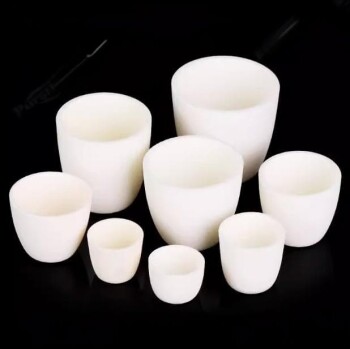
- Arc-Shaped Alumina Ceramic Crucible High Temperature Resistant for Engineering Advanced Fine Ceramics
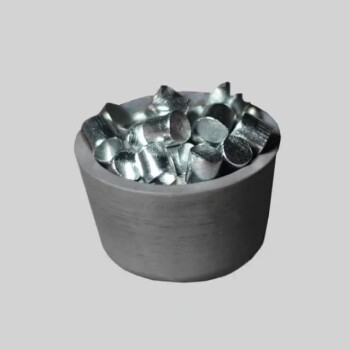
- High Purity Pure Graphite Crucible for Evaporation
- Engineering Advanced Fine Ceramics Alumina Crucibles (Al2O3) for Thermal Analysis TGA DTA
- High Purity Pure Graphite Crucible for Electron Beam Evaporation
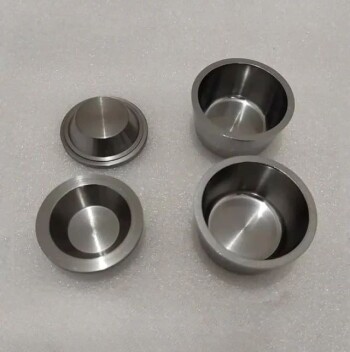
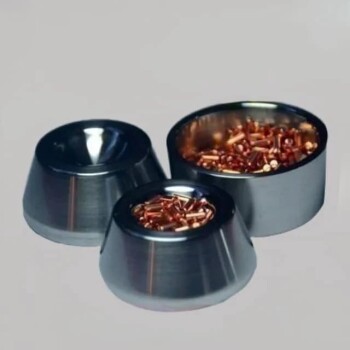
- Electron Beam Evaporation Coating Tungsten Crucible and Molybdenum Crucible for High Temperature Applications
People Also Ask
- Why Use Alumina Crucibles & Powder Burial for NaSICON? Ensure Phase Purity and Prevent Elemental Volatilization
- What is the primary purpose of using alumina crucibles for LLTO ceramics? Optimize Your High-Temperature Sintering
- Why are alumina crucibles and mother powder essential for LATP sintering? Optimize Your Solid Electrolyte Performance
- Why are high-purity alumina crucibles used for liquid lead corrosion experiments? Ensure Data Accuracy at 550°C
- Primary considerations for choosing alumina crucibles and quartz tubes in indium intercalation: Ensure Material Purity