Knowledge What is the temperature of thermal evaporation? It Depends on Your Material and Goals
Author avatar

Tech Team · Kintek Solution

Updated 1 week ago

What is the temperature of thermal evaporation? It Depends on Your Material and Goals


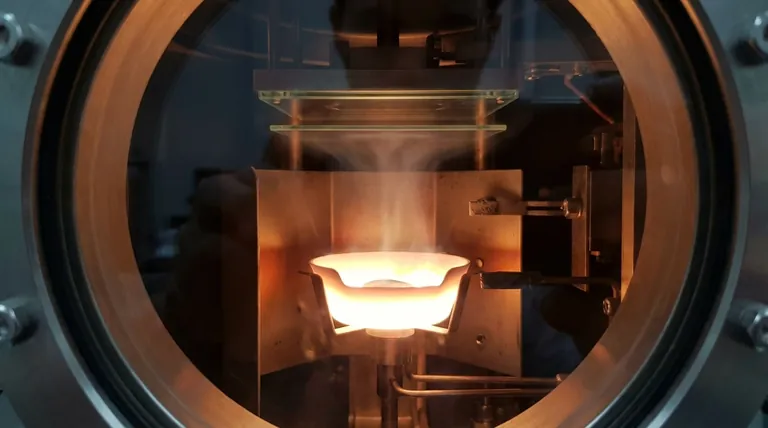
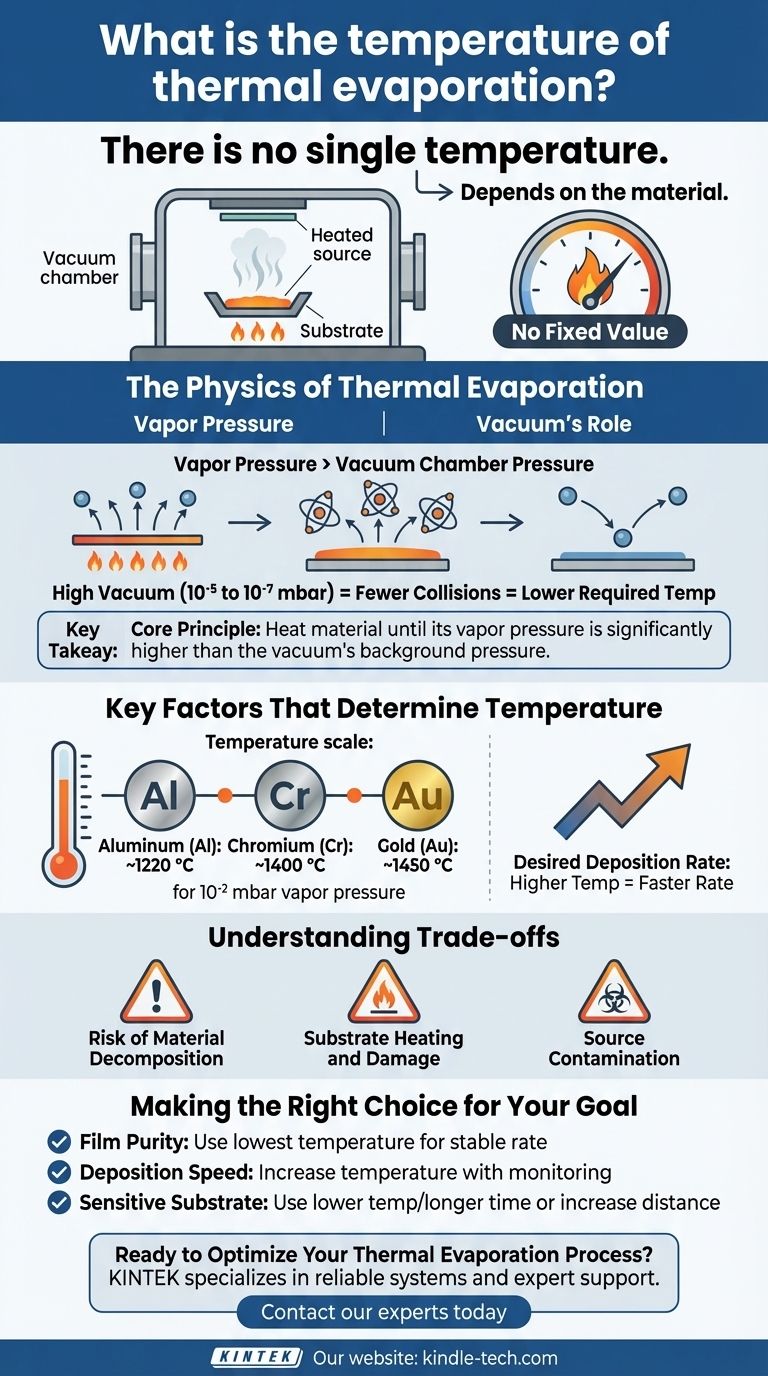
There is no single temperature for thermal evaporation. The required temperature is entirely dependent on the specific material being deposited. For example, evaporating aluminum requires a different temperature than evaporating gold, as each element has a unique point at which it generates sufficient vapor in a vacuum.

The core principle is not about reaching a fixed temperature, but about heating a material until its vapor pressure is significantly higher than the pressure of the surrounding vacuum chamber. This temperature-driven pressure difference is what allows atoms to leave the source and coat your substrate.
What is the temperature of thermal evaporation? It Depends on Your Material and Goals

The Physics of Thermal Evaporation

To truly understand the process, we must look beyond a simple temperature value and focus on the interplay between the material, heat, and the vacuum environment.

What is Vapor Pressure?

Vapor pressure is the natural pressure exerted by the vapor of a substance in a closed system. All materials, even solids like metals, have a vapor pressure.

This pressure increases dramatically with temperature. As you heat a material, you give its atoms more energy, making it easier for them to escape the surface.

How Temperature Drives Deposition

In thermal evaporation, the goal is to create a stream of vapor flowing from the source material to the substrate.

This is achieved by heating the source material until its vapor pressure is much higher than the chamber's background pressure. This pressure differential creates the necessary flow of atoms for deposition.

The Critical Role of Vacuum

A high-vacuum environment (typically 10⁻⁵ to 10⁻⁷ mbar) is essential for two reasons.

First, it removes air and other gas particles that would collide with the evaporated atoms, preventing them from reaching the substrate. This ensures a "mean free path" long enough for a clean deposition.

Second, by drastically lowering the ambient pressure, you make it possible to achieve the required vapor pressure at a much lower, more manageable temperature than you would need at atmospheric pressure.

Key Factors That Determine Evaporation Temperature

The specific temperature you need is a variable that depends on several critical process parameters.

The Source Material

This is the most significant factor. Materials with higher melting points and stronger atomic bonds generally require higher temperatures to generate sufficient vapor pressure.

For example, a common target is to achieve a vapor pressure of about 10⁻² mbar.

  • Aluminum (Al): Reaches this pressure around 1220 °C.
  • Chromium (Cr): Reaches this pressure around 1400 °C.
  • Gold (Au): Reaches this pressure around 1450 °C.

The Desired Deposition Rate

If you need to deposit a film more quickly, you must increase the evaporation rate.

This is done by raising the source temperature further, which increases the material's vapor pressure and, consequently, the flow of atoms toward the substrate.

Understanding the Trade-offs

Simply increasing the temperature is not always the best solution, as it introduces potential complications.

Risk of Material Decomposition

Some complex compounds or alloys can decompose or break apart if heated too aggressively. The material might break down into its constituent elements rather than evaporating as a uniform molecule, ruining the film's properties.

Substrate Heating and Damage

The hot evaporation source radiates significant heat. This can damage sensitive substrates, such as plastics or organic electronics, that cannot withstand high temperatures.

Source Contamination

At very high temperatures, the heated boat or crucible holding the source material can begin to react with or evaporate itself. This can introduce impurities from the holder (e.g., tungsten, molybdenum) into your deposited thin film.

Making the Right Choice for Your Goal

The optimal temperature is a carefully balanced process parameter, not a fixed number. Your specific goal determines how you should approach it.

  • If your primary focus is film purity: Use the lowest temperature that provides a stable and acceptable deposition rate to minimize the risk of source contamination.
  • If your primary focus is deposition speed: Carefully increase the temperature while monitoring film quality and potential substrate damage.
  • If your primary focus is coating a sensitive substrate: Use a lower source temperature for a longer time, or increase the distance between the source and the substrate to reduce radiative heating.

Ultimately, temperature is the primary control variable used to achieve the desired outcome in any thermal evaporation process.

Summary Table:

Material Approx. Temperature for 10⁻² mbar Vapor Pressure
Aluminum (Al) ~1220 °C
Chromium (Cr) ~1400 °C
Gold (Au) ~1450 °C

Ready to Optimize Your Thermal Evaporation Process?

Choosing the right temperature is critical for achieving high-purity, uniform thin films. KINTEK specializes in lab equipment and consumables, providing the reliable thermal evaporation systems and expert support you need to master your deposition parameters.

Contact our experts today to discuss your specific material and application requirements. Let us help you achieve superior coating results, whether your priority is film purity, deposition speed, or protecting sensitive substrates.

Visual Guide
What is the temperature of thermal evaporation? It Depends on Your Material and Goals Visual Guide

Related Products

People Also Ask

Related Products

RF PECVD System Radio Frequency Plasma-Enhanced Chemical Vapor Deposition RF PECVD

RF PECVD System Radio Frequency Plasma-Enhanced Chemical Vapor Deposition RF PECVD

RF-PECVD is an acronym for "Radio Frequency Plasma-Enhanced Chemical Vapor Deposition." It deposits DLC (Diamond-like carbon film) on germanium and silicon substrates. It is utilized in the 3-12um infrared wavelength range.

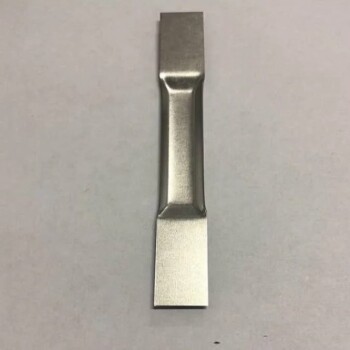
Molybdenum Tungsten Tantalum Evaporation Boat for High Temperature Applications

Molybdenum Tungsten Tantalum Evaporation Boat for High Temperature Applications

Evaporation boat sources are used in thermal evaporation systems and are suitable for depositing various metals, alloys and materials. Evaporation boat sources are available in different thicknesses of tungsten, tantalum and molybdenum to ensure compatibility with a variety of power sources. As a container, it is used for vacuum evaporation of materials. They can be used for thin film deposition of various materials, or designed to be compatible with techniques such as electron beam fabrication.

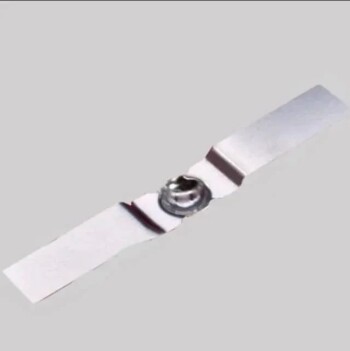
Evaporation Boat for Organic Matter

Evaporation Boat for Organic Matter

The evaporation boat for organic matter is an important tool for precise and uniform heating during the deposition of organic materials.

Hemispherical Bottom Tungsten Molybdenum Evaporation Boat

Hemispherical Bottom Tungsten Molybdenum Evaporation Boat

Used for gold plating, silver plating, platinum, palladium, suitable for a small amount of thin film materials. Reduce the waste of film materials and reduce heat dissipation.

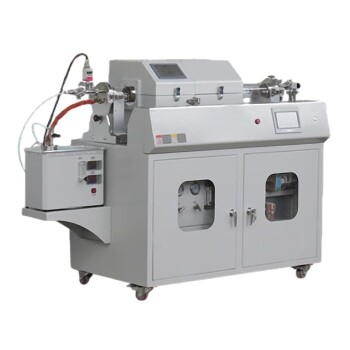
Chemical Vapor Deposition CVD Equipment System Chamber Slide PECVD Tube Furnace with Liquid Gasifier PECVD Machine

Chemical Vapor Deposition CVD Equipment System Chamber Slide PECVD Tube Furnace with Liquid Gasifier PECVD Machine

KT-PE12 Slide PECVD System: Wide power range, programmable temp control, fast heating/cooling with sliding system, MFC mass flow control & vacuum pump.

Aluminized Ceramic Evaporation Boat for Thin Film Deposition
Aluminized Ceramic Evaporation Boat for Thin Film Deposition

Vessel for depositing thin films; has an aluminum-coated ceramic body for improved thermal efficiency and chemical resistance. making it suitable for various applications.

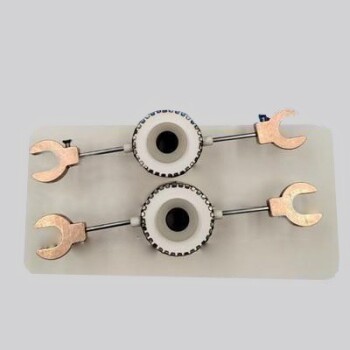
Electron Beam Evaporation Coating Oxygen-Free Copper Crucible and Evaporation Boat

Electron Beam Evaporation Coating Oxygen-Free Copper Crucible and Evaporation Boat

Electron Beam Evaporation Coating Oxygen-Free Copper Crucible enables precise co-deposition of various materials. Its controlled temperature and water-cooled design ensure pure and efficient thin film deposition.

Tungsten Evaporation Boat for Thin Film Deposition

Tungsten Evaporation Boat for Thin Film Deposition

Learn about tungsten boats, also known as evaporated or coated tungsten boats. With a high tungsten content of 99.95%, these boats are ideal for high-temperature environments and widely used in various industries. Discover their properties and applications here.

Ceramic Evaporation Boat Set Alumina Crucible for Laboratory Use

Ceramic Evaporation Boat Set Alumina Crucible for Laboratory Use

It can be used for vapor deposition of various metals and alloys. Most metals can be evaporated completely without loss. Evaporation baskets are reusable.1

Electron Beam Evaporation Coating Conductive Boron Nitride Crucible BN Crucible

Electron Beam Evaporation Coating Conductive Boron Nitride Crucible BN Crucible

High-purity and smooth conductive boron nitride crucible for electron beam evaporation coating, with high temperature and thermal cycling performance.

Cylindrical Resonator MPCVD Machine System Reactor for Microwave Plasma Chemical Vapor Deposition and Lab Diamond Growth

Cylindrical Resonator MPCVD Machine System Reactor for Microwave Plasma Chemical Vapor Deposition and Lab Diamond Growth

Learn about Cylindrical Resonator MPCVD Machine, the microwave plasma chemical vapor deposition method used for growing diamond gemstones and films in the jewelry and semi-conductor industries. Discover its cost-effective advantages over traditional HPHT methods.

Vacuum Cold Trap Direct Cold Trap Chiller

Vacuum Cold Trap Direct Cold Trap Chiller

Improve vacuum system efficiency and extend pump life with our Direct Cold Trap. No chilling fluid required, compact design with swivel casters. Stainless steel and glass options available.

E Beam Crucibles Electron Gun Beam Crucible for Evaporation

E Beam Crucibles Electron Gun Beam Crucible for Evaporation

In the context of electron gun beam evaporation, a crucible is a container or source holder used to contain and evaporate the material to be deposited onto a substrate.

304 316 Stainless Steel Vacuum Ball Valve Stop Valve for High Vacuum Systems

304 316 Stainless Steel Vacuum Ball Valve Stop Valve for High Vacuum Systems

Discover 304/316 stainless steel vacuum ball valves, Ideal for high vacuum systems, Ensure precise control and durability. Explore now!

Oil Free Diaphragm Vacuum Pump for Laboratory and Industrial Use

Oil Free Diaphragm Vacuum Pump for Laboratory and Industrial Use

Oil-free diaphragm vacuum pump for labs: clean, reliable, chemical-resistant. Ideal for filtration, SPE, and rotary evaporation. Maintenance-free operation.

Rotating Platinum Disk Electrode for Electrochemical Applications

Rotating Platinum Disk Electrode for Electrochemical Applications

Upgrade your electrochemical experiments with our Platinum Disc Electrode. High-quality and reliable for accurate results.

Polygon Press Mold for Lab

Polygon Press Mold for Lab

Discover precision polygon press molds for sintering. Ideal for pentagon-shaped parts, our molds ensure uniform pressure and stability. Perfect for repeatable, high-quality production.

Three-dimensional electromagnetic sieving instrument

Three-dimensional electromagnetic sieving instrument

KT-VT150 is a desktop sample processing instrument for both sieving and grinding. Grinding and sieving can be used both dry and wet. The vibration amplitude is 5mm and the vibration frequency is 3000-3600 times/min.

Variable Speed Peristaltic Pump

Variable Speed Peristaltic Pump

KT-VSP Series Smart Variable Speed Peristaltic Pumps offer precise flow control for labs, medical, and industrial applications. Reliable, contamination-free liquid transfer.

Graphite Vacuum Continuous Graphitization Furnace

Graphite Vacuum Continuous Graphitization Furnace

High-temperature graphitization furnace is a professional equipment for graphitization treatment of carbon materials. It is a key equipment for the production of high-quality graphite products. It has high temperature, high efficiency and uniform heating. It is suitable for various high-temperature treatments and graphitization treatments. It is widely used in metallurgy, electronics, aerospace, etc. industry.


Leave Your Message