Knowledge rotary furnace What is the temperature range of pyrolysis of wood? Control Temperature to Target Biochar, Bio-oil, or Syngas
Author avatar

Tech Team · Kintek Solution

Updated 2 months ago

What is the temperature range of pyrolysis of wood? Control Temperature to Target Biochar, Bio-oil, or Syngas


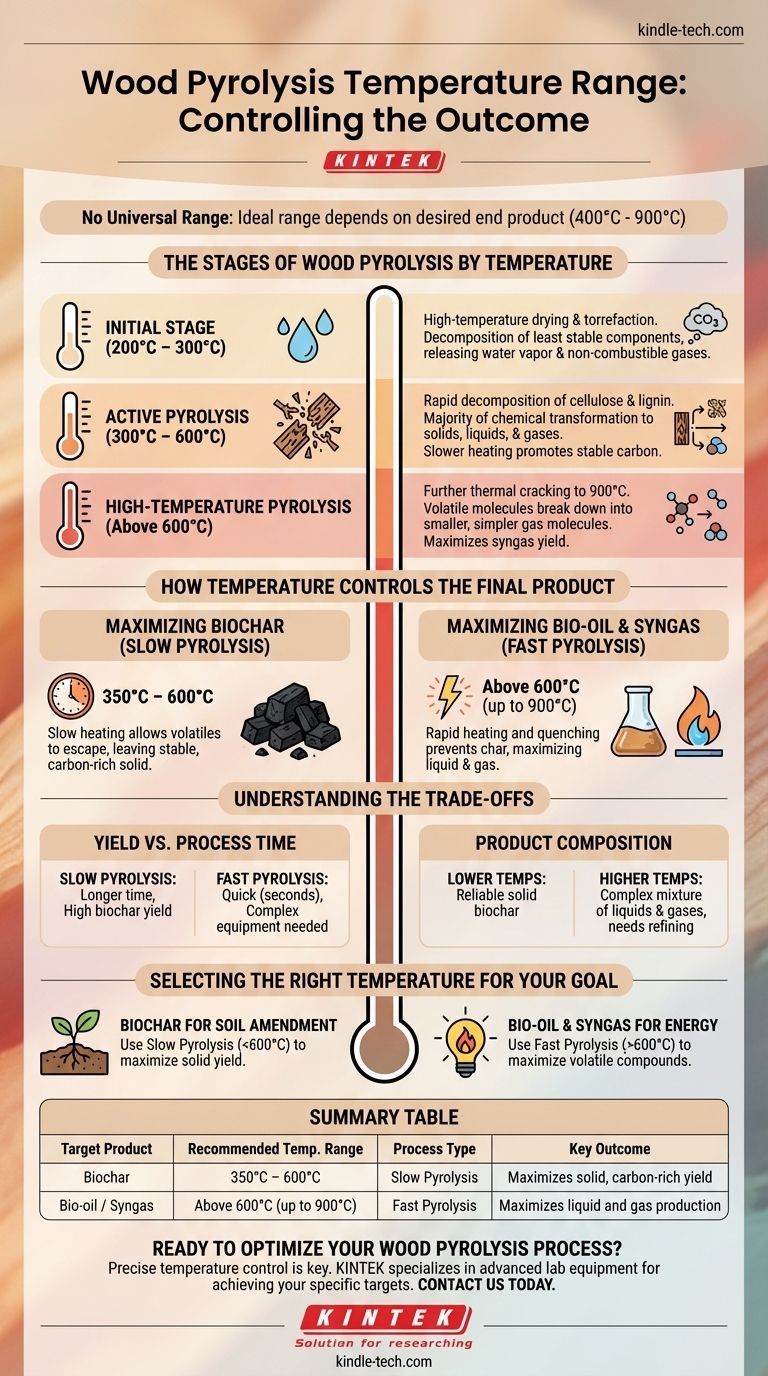
The pyrolysis of wood does not have a single, universal temperature range. While the process begins at temperatures as low as 200°C, the ideal range depends entirely on the desired end product. The full operational spectrum for wood pyrolysis typically spans from 400°C to 900°C, with different temperatures yielding vastly different outputs.

The specific temperature used in wood pyrolysis is the most critical factor determining the final output. Lower temperatures and slower heating rates maximize solid biochar production, while higher temperatures favor the creation of liquid bio-oils and flammable gases.
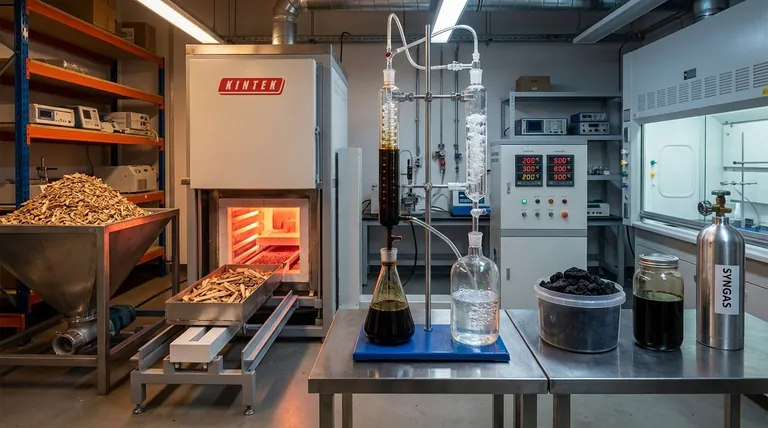
What is the temperature range of pyrolysis of wood? Control Temperature to Target Biochar, Bio-oil, or Syngas

The Stages of Wood Pyrolysis by Temperature

Understanding how wood decomposes under heat reveals why temperature control is so crucial. The process isn't a single event but a series of overlapping stages.

The Initial Stage (200°C – 300°C)

Pyrolysis technically begins in this lower range. The least stable components of the wood start to break down, releasing water vapor and some non-combustible gases like carbon dioxide. This is essentially a high-temperature drying and torrefaction phase.

Active Pyrolysis (300°C – 600°C)

This is the core range where the primary structural components of wood, cellulose and lignin, rapidly decompose. The majority of the chemical transformation happens here, breaking down large organic polymers into a mix of solids, liquids, and gases. Slower heating within this range promotes the formation of stable carbon structures.

High-Temperature Pyrolysis (Above 600°C)

Pushing the temperature beyond 600°C and up to 900°C causes further thermal cracking. Large volatile molecules are broken down into smaller, simpler gas molecules. This range is used when the primary goal is to maximize the yield of combustible synthesis gas (syngas).

How Temperature Controls the Final Product

The choice of temperature is a deliberate decision to steer the chemical reactions toward a specific outcome. The rate of heating is just as important as the final temperature.

Maximizing Biochar (Slow Pyrolysis)

To produce the highest yield and quality of biochar, a slow pyrolysis process is used. The wood is heated gradually over a longer period, often at temperatures in the 350°C to 600°C range. This slow "cooking" allows volatile compounds to escape while leaving a stable, carbon-rich solid structure behind.

Maximizing Bio-oil and Syngas (Fast Pyrolysis)

To produce liquid bio-oil and flammable syngas, a fast pyrolysis process is required. This involves rapidly heating the wood to higher temperatures (typically 600°C to 700°C or more) in the absence of oxygen. The goal is to quickly vaporize the organic material and then rapidly cool the vapor to condense it into a liquid, preventing it from forming solid char.

Understanding the Trade-offs

Choosing a temperature range is an exercise in balancing competing priorities. There is no single "best" method; only the best method for a specific goal.

Yield vs. Process Time

Slow pyrolysis takes significantly longer but produces a high yield of high-quality biochar. Fast pyrolysis is very quick, often completing in seconds, but requires more complex equipment to handle the rapid heating and quenching of vapors.

Product Composition

Lower temperatures reliably produce solid biochar. Higher temperatures create a more complex mixture of liquids and gases that may require further costly refining before they can be used as fuel or chemical feedstock.

Selecting the Right Temperature for Your Goal

Your intended application is the only factor that should guide your choice of pyrolysis temperature.

  • If your primary focus is creating high-quality biochar for soil amendment: Use a slow pyrolysis process with peak temperatures typically below 600°C to maximize the solid yield.
  • If your primary focus is producing liquid bio-oil or combustible syngas for energy: Use a fast pyrolysis process at higher temperatures, generally above 600°C, to maximize the yield of volatile compounds.

Ultimately, controlling the temperature is how you control the outcome of wood pyrolysis.

Summary Table:

Target Product Recommended Temperature Range Process Type Key Outcome
Biochar 350°C – 600°C Slow Pyrolysis Maximizes solid, carbon-rich yield
Bio-oil / Syngas Above 600°C (up to 900°C) Fast Pyrolysis Maximizes liquid and gas production

Ready to Optimize Your Wood Pyrolysis Process?

Whether your goal is high-yield biochar for soil enhancement or efficient bio-oil production for energy, precise temperature control is key. KINTEK specializes in advanced lab equipment and consumables, providing the reliable pyrolysis systems you need to achieve your specific product targets.

Contact us today to discuss how our solutions can enhance your laboratory's efficiency and output quality.

Visual Guide
What is the temperature range of pyrolysis of wood? Control Temperature to Target Biochar, Bio-oil, or Syngas Visual Guide

Related Products

People Also Ask

Related Products

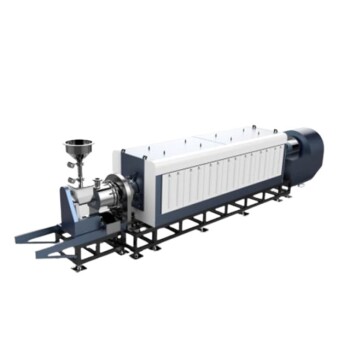
Electric Rotary Kiln Small Rotary Furnace Biomass Pyrolysis Plant

Electric Rotary Kiln Small Rotary Furnace Biomass Pyrolysis Plant

Learn about Rotary Biomass Pyrolysis Furnaces & how they decompose organic material at high temps without oxygen. Use for biofuels, waste processing, chemicals & more.

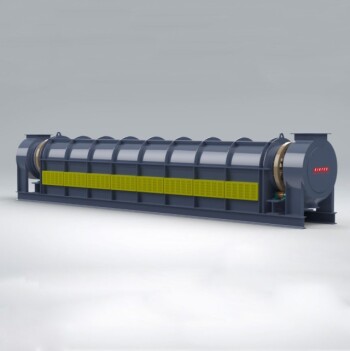
Electric Rotary Kiln Pyrolysis Furnace Plant Machine Calciner Small Rotary Kiln Rotating Furnace

Electric Rotary Kiln Pyrolysis Furnace Plant Machine Calciner Small Rotary Kiln Rotating Furnace

Electric rotary kiln - precisely controlled, it's ideal for calcination and drying of materials like lithium cobalate, rare earths, and non-ferrous metals.

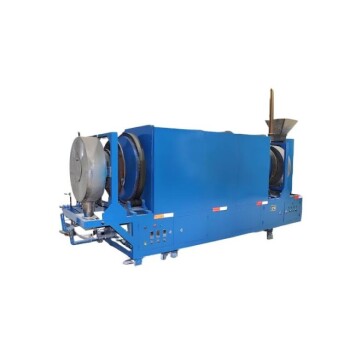
Electric Rotary Kiln Continuous Working Small Rotary Furnace Heating Pyrolysis Plant

Electric Rotary Kiln Continuous Working Small Rotary Furnace Heating Pyrolysis Plant

Efficiently calcine and dry bulk powder and lump fluid materials with an electric heating rotary furnace. Ideal for processing lithium ion battery materials and more.

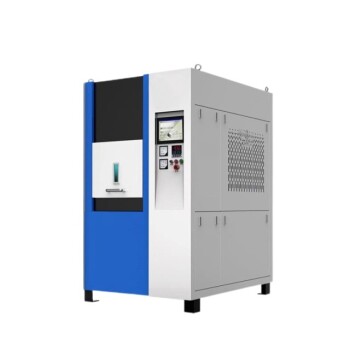
High Temperature Muffle Oven Furnace for Laboratory Debinding and Pre Sintering

High Temperature Muffle Oven Furnace for Laboratory Debinding and Pre Sintering

KT-MD High temperature debinding and pre-sintering furnace for ceramic materials with various molding processes. Ideal for electronic components such as MLCC and NFC.

Ultra-High Temperature Graphite Vacuum Graphitization Furnace

Ultra-High Temperature Graphite Vacuum Graphitization Furnace

The ultra-high temperature graphitization furnace utilizes medium frequency induction heating in a vacuum or inert gas environment. The induction coil generates an alternating magnetic field, inducing eddy currents in the graphite crucible, which heats up and radiates heat to the workpiece, bringing it to the desired temperature. This furnace is primarily used for graphitization and sintering of carbon materials, carbon fiber materials, and other composite materials.

Vertical High Temperature Graphite Vacuum Graphitization Furnace

Vertical High Temperature Graphite Vacuum Graphitization Furnace

Vertical high temperature graphitization furnace for carbonization and graphitization of carbon materials up to 3100℃.Suitable for shaped graphitization of carbon fiber filaments and other materials sintered in a carbon environment.Applications in metallurgy, electronics, and aerospace for producing high-quality graphite products like electrodes and crucibles.

Horizontal High Temperature Graphite Vacuum Graphitization Furnace

Horizontal High Temperature Graphite Vacuum Graphitization Furnace

Horizontal Graphitization Furnace: This type of furnace is designed with the heating elements placed horizontally, allowing for uniform heating of the sample. It's well-suited for graphitizing large or bulky samples that require precise temperature control and uniformity.

Large Vertical Graphite Vacuum Graphitization Furnace

Large Vertical Graphite Vacuum Graphitization Furnace

A large vertical high-temperature graphitization furnace is a type of industrial furnace used for the graphitization of carbon materials, such as carbon fiber and carbon black. It is a high-temperature furnace that can reach temperatures of up to 3100°C.

Graphite Vacuum Furnace Bottom Discharge Graphitization Furnace for Carbon Materials

Graphite Vacuum Furnace Bottom Discharge Graphitization Furnace for Carbon Materials

Bottom-out graphitization furnace for carbon materials, ultra-high temperature furnace up to 3100°C, suitable for graphitization and sintering of carbon rods and carbon blocks. Vertical design, bottom discharging, convenient feeding and discharging, high temperature uniformity, low energy consumption, good stability, hydraulic lifting system, convenient loading and unloading.

Graphite Vacuum Furnace High Thermal Conductivity Film Graphitization Furnace

Graphite Vacuum Furnace High Thermal Conductivity Film Graphitization Furnace

The high thermal conductivity film graphitization furnace has uniform temperature, low energy consumption and can operate continuously.

Spark Plasma Sintering Furnace SPS Furnace

Spark Plasma Sintering Furnace SPS Furnace

Discover the benefits of Spark Plasma Sintering Furnaces for rapid, low-temperature material preparation. Uniform heating, low cost & eco-friendly.

Graphite Vacuum Continuous Graphitization Furnace

Graphite Vacuum Continuous Graphitization Furnace

High-temperature graphitization furnace is a professional equipment for graphitization treatment of carbon materials. It is a key equipment for the production of high-quality graphite products. It has high temperature, high efficiency and uniform heating. It is suitable for various high-temperature treatments and graphitization treatments. It is widely used in metallurgy, electronics, aerospace, etc. industry.

Vacuum Arc Induction Melting Furnace

Vacuum Arc Induction Melting Furnace

Discover the power of Vacuum Arc Furnace for melting active & refractory metals. High-speed, remarkable degassing effect, and free of contamination. Learn more now!

Vacuum Heat Treat and Pressure Sintering Furnace for High Temperature Applications

Vacuum Heat Treat and Pressure Sintering Furnace for High Temperature Applications

Vacuum pressure sintering furnaces are designed for high temperature hot pressing applications in metal and ceramic sintering. Its advanced features ensure precise temperature control, reliable pressure maintenance, and a robust design for seamless operation.

Laboratory Muffle Oven Furnace Bottom Lifting Muffle Furnace

Laboratory Muffle Oven Furnace Bottom Lifting Muffle Furnace

Efficiently produce batches with excellent temperature uniformity using our Bottom Lifting Furnace. Features two electric lifting stages and advanced temperature control up to 1600℃.

Controlled Nitrogen Inert Hydrogen Atmosphere Furnace

Controlled Nitrogen Inert Hydrogen Atmosphere Furnace

KT-AH Hydrogen atmosphere furnace - induction gas furnace for sintering/annealing with built-in safety features, dual housing design, and energy-saving efficiency. Ideal for lab and industrial use.

600T Vacuum Induction Hot Press Furnace for Heat Treat and Sintering

600T Vacuum Induction Hot Press Furnace for Heat Treat and Sintering

Discover the 600T Vacuum Induction Hot Press Furnace, designed for high-temperature sintering experiments in vacuum or protected atmospheres. Its precise temperature and pressure control, adjustable working pressure, and advanced safety features make it ideal for nonmetal materials, carbon composites, ceramics, and metal powders.

Non Consumable Vacuum Arc Induction Melting Furnace

Non Consumable Vacuum Arc Induction Melting Furnace

Explore the benefits of Non-Consumable Vacuum Arc Furnace with high melting point electrodes. Small, easy to operate & eco-friendly. Ideal for laboratory research on refractory metals & carbides.

1700℃ Controlled Atmosphere Furnace Nitrogen Inert Atmosphere Furnace

1700℃ Controlled Atmosphere Furnace Nitrogen Inert Atmosphere Furnace

KT-17A Controlled atmosphere furnace: 1700℃ heating, vacuum sealing technology, PID temperature control, and versatile TFT smart touch screen controller for laboratory and industrial use.

Graphite Vacuum Furnace IGBT Experimental Graphitization Furnace

Graphite Vacuum Furnace IGBT Experimental Graphitization Furnace

IGBT experimental graphitization furnace, a tailored solution for universities and research institutions, with high heating efficiency, user-friendliness, and precise temperature control.


Leave Your Message