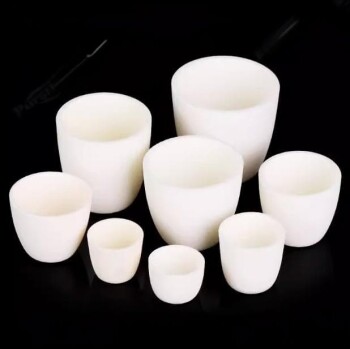
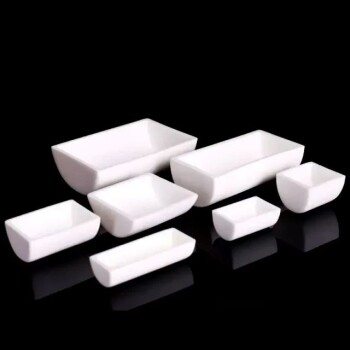
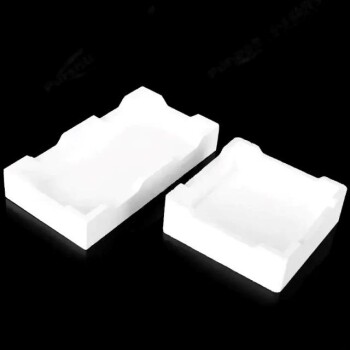
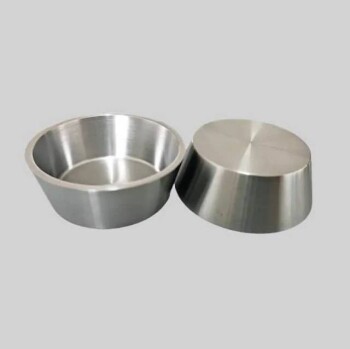
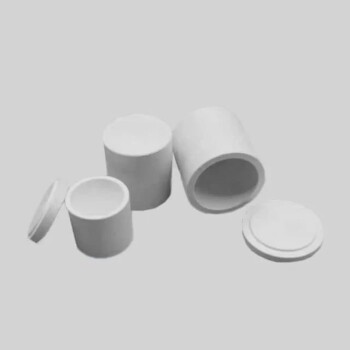
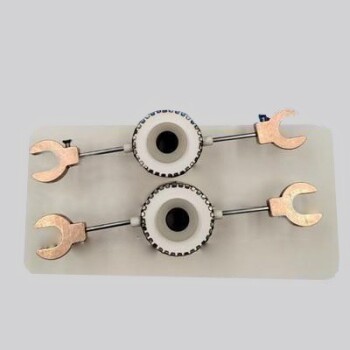
Alumina crucibles serve as the critical containment vessels for the preparation and purification of molten fluoride salts, specifically during the high-temperature dehydration phase. They are essential because they provide the chemical stability and thermal shock resistance necessary to heat salt mixtures, such as FLiNaK, above 300°C. This high-temperature capability allows researchers to effectively remove moisture without the crucible leaching impurities into the melt.
Core Takeaway The primary value of Alumina crucibles lies in their ability to maintain the purity of the salt melt during aggressive heating. By withstanding temperatures up to 650°C and resisting chemical erosion, they ensure that the dehydration process removes contaminants rather than introducing new ones from the container itself.
The Mechanics of Purification and Containment
Facilitating High-Temperature Dehydration
To prepare molten fluoride salts, one must remove moisture contamination that naturally occurs in the raw materials. Alumina crucibles are selected because they remain stable at the extremely high temperatures required for this process.
Effective dehydration often requires heating the salt mixtures above 300°C. Alumina crucibles allow the system to reach and maintain these temperatures without compromising the structural integrity of the vessel.
Resisting Chemical Erosion
Molten fluoride salts are inherently highly corrosive. Standard containment materials would degrade quickly, leaching container components into the salt.
High-purity alumina exhibits excellent chemical inertness. This resistance prevents the crucible material from reacting with the salt, thereby preserving the chemical composition of the sample.
Ensuring Analytical Accuracy
When the salt is used for downstream applications, such as electrochemical analyses or corrosion rate tests, purity is paramount. Impurities from a degrading crucible would skew these results.
By resisting erosion, Alumina crucibles prevent interference with corrosion kinetics and mass transport processes. This ensures that any data collected reflects the properties of the salt, not the degradation of the container.
Understanding the Material Requirements
The Necessity of High Purity
It is critical to note that not all alumina is suitable for this task. The references specifically highlight the use of high-purity alumina.
Lower-grade ceramics may contain binders or impurities that can react with the corrosive fluoride salts. To ensure the crucible functions as a truly inert barrier, the material quality must meet stringent purity standards.
Thermal Stability Limits
While Alumina is robust, it is generally cited for operations reaching up to 650°C in this context.
Operating beyond the rated thermal limits of specific alumina grades can induce failure. Users must verify that their specific dehydration or experimental protocols do not exceed the thermal shock resistance of the specific crucible being used.
Making the Right Choice for Your Goal
When selecting containment for molten salt preparation, align your choice with your specific experimental phase.
- If your primary focus is Salt Preparation (Dehydration): Prioritize high-purity Alumina crucibles to safely reach temperatures above 300°C for moisture removal without contaminating the batch.
- If your primary focus is Electrochemical Analysis: Rely on the inertness of Alumina to prevent container leaching, ensuring that your corrosion rate data remains accurate and unpolluted.
Select high-purity Alumina to decouple the integrity of your containment vessel from the chemistry of your molten salt.
Summary Table:
| Feature | Benefit for Molten Fluoride Salt Preparation |
|---|---|
| Thermal Stability | Enables safe dehydration and moisture removal at temperatures up to 650°C. |
| Chemical Inertness | Prevents the leaching of impurities into corrosive salt melts like FLiNaK. |
| High Purity | Minimizes interference with downstream electrochemical and corrosion kinetics analysis. |
| Erosion Resistance | Maintains structural integrity against aggressive chemical erosion from fluoride salts. |
Elevate Your Molten Salt Research with KINTEK
Precision in fluoride salt preparation requires containment materials that never compromise your results. KINTEK specializes in high-performance laboratory equipment and consumables, offering high-purity alumina crucibles and ceramics designed to withstand the most corrosive environments.
Beyond specialized ceramics, our comprehensive portfolio includes high-temperature furnaces (muffle, vacuum, and atmosphere), high-pressure reactors, and precision crushing and milling systems to support your entire material processing workflow. Whether you are conducting electrochemical analysis or advanced battery research, KINTEK provides the reliability and expertise your lab deserves.
Ready to secure the purity of your next melt? Contact our technical experts today to find the perfect solution for your high-temperature application.
References
- S. A. Dowben, Michael F. Simpson. Electrochemical Analysis of Metal Stability in Candidate Reference Electrode Fluoride Salts (FLiNaK + 1 wt% AgF, MnF<sub>2</sub>, or NiF<sub>2</sub>). DOI: 10.1149/1945-7111/ad2151
This article is also based on technical information from Kintek Solution Knowledge Base .
Related Products
- Arc-Shaped Alumina Ceramic Crucible High Temperature Resistant for Engineering Advanced Fine Ceramics
- Alumina Al2O3 Ceramic Crucible Semicircle Boat with Lid for Engineering Advanced Fine Ceramics
- Engineering Advanced Fine Ceramics Alumina Al2O3 Crucible With Lid Cylindrical Laboratory Crucible
- Engineering Advanced Fine Ceramics Alumina Crucibles (Al2O3) for Thermal Analysis TGA DTA
- Engineering Advanced Fine Alumina Al2O3 Ceramic Crucible for Laboratory Muffle Furnace
People Also Ask
- Why Use Alumina Crucibles & Powder Burial for NaSICON? Ensure Phase Purity and Prevent Elemental Volatilization
- What is the primary purpose of using alumina crucibles for LLTO ceramics? Optimize Your High-Temperature Sintering
- Why are alumina crucibles and mother powder essential for LATP sintering? Optimize Your Solid Electrolyte Performance
- Why are high-purity alumina crucibles used for liquid lead corrosion experiments? Ensure Data Accuracy at 550°C
- Primary considerations for choosing alumina crucibles and quartz tubes in indium intercalation: Ensure Material Purity