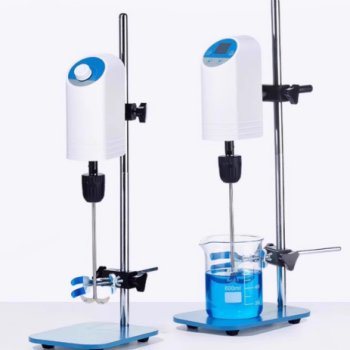
Laboratory magnetic stirrers and shakers serve as the critical mechanical drivers that ensure experimental validity in photocatalytic degradation.
Their primary function is to maintain a completely uniform mixture of the pollutant solution and the catalyst. By generating continuous agitation, these devices ensure that pollutant molecules effectively diffuse through the liquid to reach the active sites on the catalyst, whether it is a suspended powder or a nanofiber membrane. Without this agitation, "mass transfer limitations"—where the reaction is slowed by physical movement rather than chemical speed—would distort the data, making the degradation efficiency tests inaccurate.
The Core Insight
You cannot measure the true chemical efficiency of a photocatalyst if the pollutant cannot physically reach it. Stirrers and shakers eliminate physical barriers, ensuring that your data reflects the actual reaction kinetics rather than the slowness of diffusion.
The Mechanics of Interaction
Overcoming Mass Transfer Limitations
The central challenge in degradation experiments is moving the pollutant from the bulk liquid to the catalyst's surface.
Stirrers create forced convection, which is significantly faster than natural diffusion.
By continuously cycling the fluid, the device ensures pollutant molecules constantly collide with the "active sites" on the nanofiber membrane or nanoparticle surface.
Ensuring Homogeneity
For the reaction to be consistent, the concentration of the pollutant must be uniform throughout the reactor.
Stirrers prevent the formation of concentration gradients, where "pockets" of treated or untreated liquid might skew results.
This ensures that the solution contacting the catalyst is always representative of the overall current concentration.
Preventing Catalyst Precipitation (Suspension Systems)
When using powdered catalysts like Titanium Dioxide (TiO2) or Zinc Oxide (ZnO), gravity is an enemy.
Without high-frequency rotational force, these particles will settle at the bottom of the reactor.
A magnetic stirrer maintains a stable slurry, ensuring the catalyst remains suspended and fully available to react with the dye molecules.
Optimizing the Reaction Environment
Maximizing Light Utilization
Photocatalysis requires three components: the pollutant, the catalyst, and light (photons).
If a catalyst settles or clumps, the particles at the bottom or inside the clump are shielded from the light source.
Continuous stirring ensures all catalyst particles are uniformly exposed to UV or visible radiation, maximizing the total active surface area.
Establishing Accurate Baselines
Before the light is turned on, experiments often require a "dark" phase to reach adsorption-desorption equilibrium.
Shakers are used here to mix the solution until the catalyst surface is fully saturated with adsorbed dye molecules.
This step is vital to differentiate how much pollutant is removed by physical sticking (adsorption) versus actual chemical breakdown (photocatalysis).
Understanding the Trade-offs
Distinguishing Reaction Regimes
It is critical to understand what you are actually measuring.
If the stirring speed is too low, you are likely measuring the rate of mass transfer (how fast fluid moves), not the rate of the chemical reaction.
To obtain accurate kinetic data, you must increase agitation until the reaction rate stabilizes, indicating that mass transfer limitations have been eliminated.
Catalyst Form Factors
The type of agitation required depends heavily on the catalyst form.
Nanofiber Membranes (Primary Focus): The goal is flowing the pollutant over and through the stationary membrane to access active sites.
Powders/Slurries: The goal is keeping the solid catalyst physically suspended to prevent settling and light blocking.
Making the Right Choice for Your Goal
To ensure your degradation data is publishable and accurate, align your agitation strategy with your specific experimental needs:
- If your primary focus is Kinetic Accuracy: Ensure your stirring speed is high enough to eliminate mass transfer limitations, providing a true measure of chemical reaction rates.
- If your primary focus is Powder/Slurry Systems: Prioritize high-frequency mixing to prevent precipitation and ensure every particle receives uniform light exposure.
- If your primary focus is Membrane-based Catalysis: Focus on fluid circulation that forces the pollutant to diffuse into the membrane's structure to contact internal active sites.
Effective agitation is not just about mixing; it is about guaranteeing that every molecule has the opportunity to react.
Summary Table:
| Function | Benefit to Photocatalysis | Impact on Experimental Data |
|---|---|---|
| Mass Transfer | Moves pollutants to catalyst active sites | Eliminates physical diffusion barriers |
| Homogeneity | Maintains uniform solution concentration | Prevents skewed concentration gradients |
| Suspension | Prevents catalyst precipitation/settling | Maximizes active surface area & light exposure |
| Equilibrium | Facilitates dark-phase adsorption | Establishes accurate chemical baselines |
| Light Access | Ensures constant particle rotation | Prevents shadowing and catalyst clumping |
Precision mixing is the foundation of accurate photocatalytic research. KINTEK provides high-performance magnetic stirrers, shakers, and homogenizers designed to eliminate mass transfer limitations and optimize your reaction kinetics. Beyond agitation, we offer a full suite of laboratory solutions—from high-temperature furnaces and vacuum systems to high-pressure reactors and battery research tools.
Ensure your data reflects true chemical efficiency with equipment trusted by leading laboratories. Contact KINTEK today to find the perfect agitation or thermal processing solution for your application!
References
- He Lv, Deng‐Guang Yu. Recent Combinations of Electrospinning with Photocatalytic Technology for Treating Polluted Water. DOI: 10.3390/catal13040758
This article is also based on technical information from Kintek Solution Knowledge Base .
Related Products
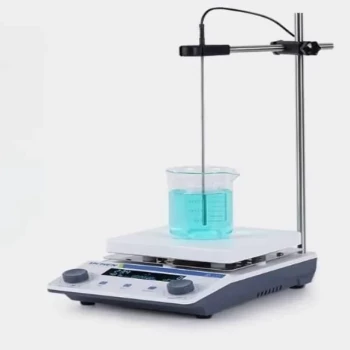
- Laboratory Small Constant Temperature Heated Magnetic Stirrer Heater and Stirrer
- Custom PTFE Teflon Parts Manufacturer for Magnetic Stirring Bar
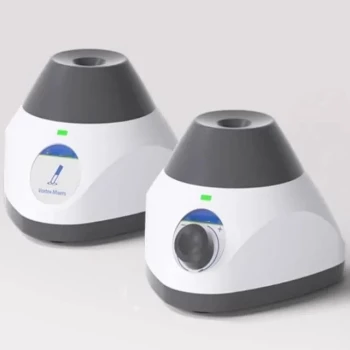
- Laboratory Vortex Mixer Orbital Shaker Multifunctional Rotation Oscillation Mixer
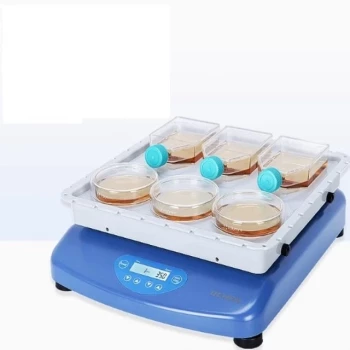
- Laboratory Oscillating Orbital Shaker
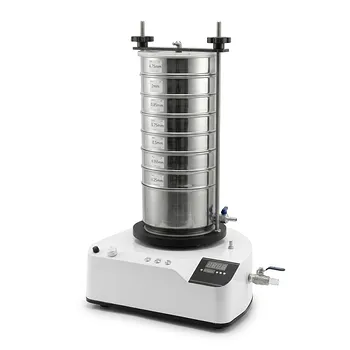
- Laboratory Vibratory Sieve Shaker Machine for Dry and Wet Three-Dimensional Sieving
People Also Ask
- What role does a magnetic stirrer with heating play in ZnO nanoparticle synthesis? Precision Control for Quality Results
- What role does a constant temperature heating magnetic stirrer play in MFC-HAp synthesis? Achieve Material Homogeneity
- What is the function of a laboratory magnetic stirrer in Ni–Cr–P electrodeposition? Optimize Ion Transport & Coating
- Why is a laboratory magnetic stirrer required for benzoic acid esters? Boost Reaction Speed & Yield with High RPM
- What role does a laboratory magnetic stirrer play in TiO2 and TiO2-Ag sol preparation? Master Chemical Kinetics