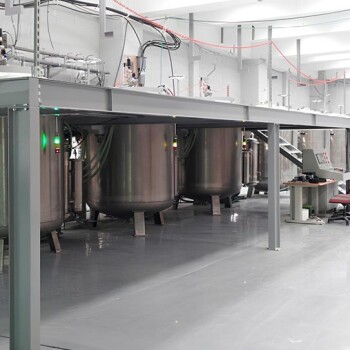
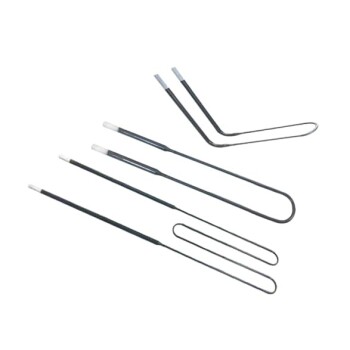
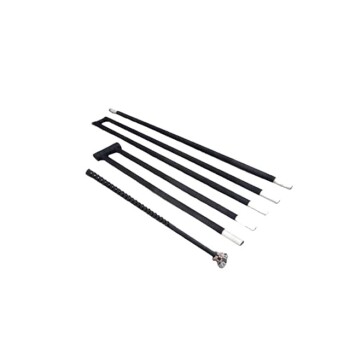
The industrial thermochemical treatment furnace with a resistive heating anode serves a dual function: it creates the necessary thermal environment by heating the chamber to 850°C and simultaneously acts as the electrical counter-electrode to maintain stable plasma discharge. This precise synchronization of heat and electricity is the mechanism that drives the decomposition of the reaction atmosphere, enabling the formation of thick, high-quality boride layers.
By integrating thermal control with plasma stability, this system creates the ideal conditions for deep thermochemical diffusion. This synergy allows for the efficient breakdown of boron trichloride (BCl3), resulting in dense Fe-Ni-B layers exceeding 100 microns in thickness.
The Mechanics of the Dual-Role System
Achieving Precise Thermal Control
The fundamental role of the furnace is to elevate the reaction chamber to the target boriding temperature.
The resistive heating element brings the environment to a steady 850°C. This specific thermal threshold is critical for initiating the diffusion process required for surface hardening.
Stabilizing the Plasma Environment
Beyond generating heat, the anode serves a vital electrical function.
It acts as the counter-electrode for the plasma discharge system. By completing the electrical circuit, the anode maintains a stable glow discharge environment, which is necessary to energize the reactive gases within the chamber.
Impact on Reaction Efficiency
Facilitating Gas Decomposition
The effectiveness of the boriding process relies on how well the reaction atmosphere is broken down.
The combination of the 850°C heat and the stable plasma discharge drives the efficient decomposition of the BCl3 (boron trichloride) reaction atmosphere. This ensures that active boron atoms are readily available at the substrate surface for diffusion.
Enhancing Layer Growth and Density
The stability provided by the resistive heating anode directly influences the quality of the final coating.
This controlled environment fosters the production of dense Fe-Ni-B layers. Because the discharge is stable and the temperature is precise, these layers can achieve thicknesses exceeding 100 microns, offering substantial wear resistance.
Understanding the Operational Factors
Integration Complexity
While highly effective, combining heating and plasma generation into a single system requires precise calibration.
The system relies on the simultaneous maintenance of temperature and electrical discharge. If the anode fails to maintain the glow discharge stability, the decomposition of BCl3 becomes inefficient, compromising the layer quality.
Environmental Demands
The anode operates in a harsh, high-temperature chemical environment.
It must withstand prolonged exposure to 850°C heat while interacting with corrosive BCl3 gas. This demands robust materials and engineering to ensure consistent performance over time without degradation.
Making the Right Choice for Your Goal
When evaluating this technology for your surface treatment projects, consider your specific output requirements.
- If your primary focus is Layer Depth: The stable high-temperature environment is essential for achieving thicknesses beyond 100 microns.
- If your primary focus is Coating Density: The stable glow discharge capability is the critical factor for ensuring the production of dense, high-quality Fe-Ni-B layers.
Success in this process depends entirely on the synchronized control of thermal energy and plasma stability.
Summary Table:
| Feature | Role & Specification |
|---|---|
| Operating Temperature | Steady 850°C for optimal diffusion |
| Electrical Function | Acts as counter-electrode for stable glow discharge |
| Gas Decomposition | Facilitates efficient breakdown of BCl3 (Boron Trichloride) |
| Layer Quality | Produces dense Fe-Ni-B layers exceeding 100 microns |
| System Synergy | Synchronized thermal control and plasma stability |
Elevate Your Surface Engineering with KINTEK Precision
Unlock superior material durability and achieve precision-engineered boride layers for your industrial applications. At KINTEK, we specialize in high-performance laboratory equipment and industrial furnace solutions designed to meet the rigorous demands of thermochemical treatments.
Whether you require advanced high-temperature furnaces (muffle, vacuum, or CVD), precise crushing and milling systems, or specialized boring and sintering consumables, KINTEK provides the technical expertise and robust hardware your research or production facility needs to succeed.
Ready to optimize your thermal processes? Contact us today to discover how our comprehensive range of high-temperature high-pressure reactors, electrolytic cells, and precision furnaces can enhance your material performance.
References
- M. Tacikowski, T. Wierzchoń. The Effect of Chemical Composition on the Microstructure and Properties of Multicomponent Nickel-Based Boride Layers Produced on C45 Steel by the Hybrid Method. DOI: 10.3390/coatings14020197
This article is also based on technical information from Kintek Solution Knowledge Base .
Related Products
- Molybdenum Vacuum Heat Treat Furnace
- 600T Vacuum Induction Hot Press Furnace for Heat Treat and Sintering
- 1400℃ Controlled Atmosphere Furnace with Nitrogen and Inert Atmosphere
- Vacuum Heat Treat Furnace with Ceramic Fiber Liner
- 2200 ℃ Graphite Vacuum Heat Treat Furnace
People Also Ask
- How does heat transmit in a vacuum? Mastering Thermal Radiation for Purity & Precision
- Why do you heat treat in a vacuum? Achieve Perfect Surface Finish and Material Integrity
- What is the process of vacuum heat treating? Achieve Superior Hardening with a Clean, Bright Finish
- How does a vacuum heat treat furnace work? Achieve Pristine, Oxide-Free Metal Parts
- What is a vacuum heat treatment furnace? The Ultimate Guide to Controlled Atmosphere Processing