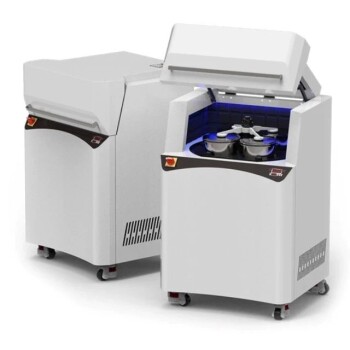
Industrial mechanical crushing serves as the foundational step in physical recycling, transforming bulky fiber-reinforced plastic (FRP) waste into reusable raw materials through specific force applications. By utilizing shear and compression forces, this equipment reduces complex composite structures into fine particles or powders, effectively preparing them for a second life as high-performance structural fillers.
Core Takeaway The true value of mechanical crushing lies not just in volume reduction, but in material preservation. By converting FRP waste into powder while retaining the residual epoxy resin matrix, the process creates an active filler that significantly enhances the ductility and fracture toughness of new concrete and composite materials.
The Mechanics of Material Transformation
Utilizing Shear and Compression
The primary function of industrial crushing equipment is the application of targeted physical forces.
Rather than simple impact, these machines employ shear and compression to break down the robust composite matrix.
Achieving Precise Size Reduction
The goal is to convert large, irregular waste into uniform outputs.
The process yields fine particles or powders, rendering the material suitable for integration into new mixtures.
Enhancing Material Properties
The Role of Residual Resin
Unlike methods that strip away the matrix, mechanical crushing preserves the residual epoxy resin.
This retained resin is not merely a contaminant; it serves a functional purpose in the new application.
Improving Bond Strength
When used as a filler in cement concrete, the residual resin facilitates a stronger interaction between the recycled particle and the cement paste.
This enhanced bond strength is critical for the structural integrity of the new material.
Applications in Construction
Increasing Ductility
Concrete is traditionally brittle, but the addition of mechanically recycled FRP powder alters this characteristic.
The composite filler improves the ductility of the building material, allowing for better deformation under stress without immediate failure.
Boosting Fracture Toughness
The inclusion of these particles helps resist crack propagation.
By integrating the recycled powder, the final concrete product exhibits superior fracture toughness compared to standard mixtures.
Understanding the Limitations
Loss of Long-Fiber Reinforcement
It is important to recognize that mechanical crushing reduces FRP to particles or powder.
This process destroys the continuous fiber structure, meaning the output acts as a filler rather than a primary tensile reinforcement.
Specificity of Application
The benefits described—specifically the bonding provided by residual resin—are contingent on the compatibility of the epoxy with the new matrix.
This method is most effective when the end goal is enhancing cement concrete or specific composite mixtures, rather than recreating the original FRP properties.
How to Apply This to Your Project
Integrating recycled FRP requires aligning the output form with your structural requirements.
- If your primary focus is concrete durability: Prioritize using the crushed powder as a structural filler to leverage the residual resin for improved fracture toughness and ductility.
- If your primary focus is material recovery: Utilize mechanical crushing to efficiently process bulk FRP waste into a uniform particulate size suitable for varied composite applications.
Ultimately, mechanical crushing transforms FRP from a waste product into a functional additive that actively improves the mechanical performance of the built environment.
Summary Table:
| Process Element | Mechanical Action | Impact on Material Output |
|---|---|---|
| Primary Force | Shear & Compression | Breaks down robust composite matrices into uniform sizes. |
| Output Form | Fine Powder/Particles | Preserves residual epoxy resin for better bonding in new matrices. |
| Structural Benefit | Ductility Enhancement | Increases deformation capacity in cement concrete applications. |
| Material Property | Fracture Toughness | Resists crack propagation when used as a functional filler. |
Elevate Your Recycling Efficiency with KINTEK
Transform your composite waste into valuable industrial resources with KINTEK’s advanced crushing and milling systems. As specialists in laboratory and industrial equipment, we provide the precision technology required to convert fiber-reinforced plastics into high-performance fillers that enhance the bond strength and durability of your end products.
From high-performance crushing systems and sieving equipment to specialized hydraulic presses and high-temperature reactors, KINTEK offers a comprehensive suite of tools for material science and battery research. Whether you are optimizing concrete ductility or developing new composite materials, our engineering expertise ensures your success.
Ready to refine your recycling process? Contact KINTEK today to discover how our tailored solutions can maximize the value of your materials.
References
- Carlos A. Navarro, Travis J. Williams. A structural chemistry look at composites recycling. DOI: 10.1039/d0mh01085e
This article is also based on technical information from Kintek Solution Knowledge Base .
Related Products
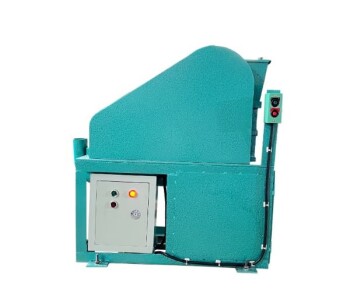
- Sealed Jaw Crusher High Efficiency Environmental Protection Safe and Reliable
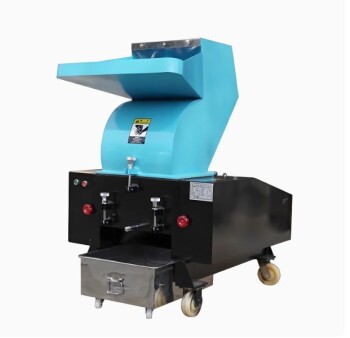
- Powerful Plastic Crusher Machine
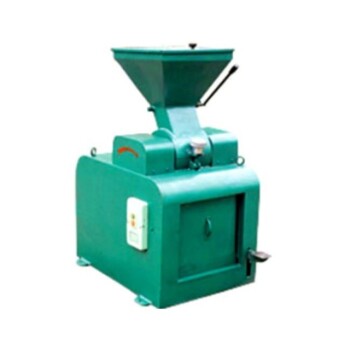
- Laboratory Jaw Crusher
- Laboratory Sealed Hammer Crusher for Efficient Sample Preparation
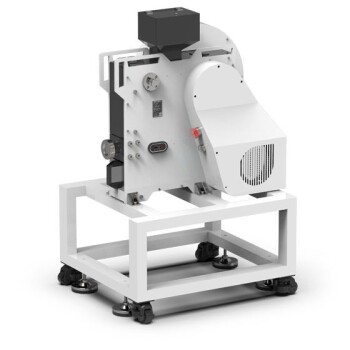
- Liquid Nitrogen Cryogenic Grinder Mill Cryomill with Screw Feeder
People Also Ask
- How does a jaw crusher contribute to the primary processing of slate waste? Optimize Your Size Reduction Workflow
- What is the primary function of a jaw crusher in ore pre-treatment? Optimize Your Magnesite & Limonite Processing
- What is the use of jaw crusher in laboratory? The Essential First Step for Sample Reduction
- What is a laboratory crusher? The First Step to Accurate Sample Analysis
- What is a jaw crusher for labs? The Essential First Step for Accurate Sample Analysis