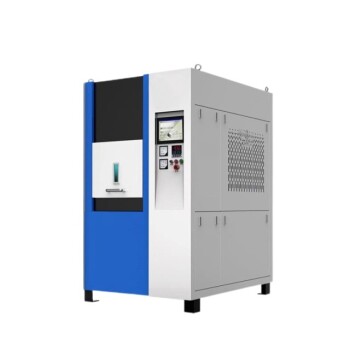
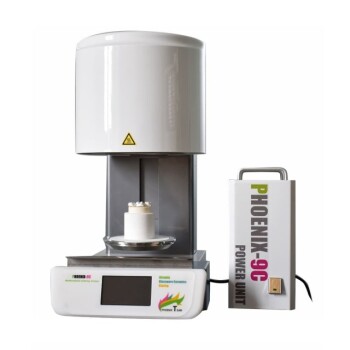
Spark Plasma Sintering (SPS) and hot pressing are utilized primarily to overcome the structural limitations inherent in polycrystalline sulfide solid electrolytes like Li3PS4. These techniques apply massive external mechanical pressure during high-temperature processing to physically suppress the large excess volume found at grain boundaries, a feat that standard thermal sintering cannot achieve alone.
Core Insight: The fundamental value of SPS and hot pressing lies in their ability to apply gigapascal-level pressure. This drives material densification and eliminates grain boundary voids, resulting in a mechanically stable electrolyte that effectively inhibits the growth of metallic lithium.
Overcoming Microstructural Challenges
The Issue of Excess Volume
Polycrystalline sulfide solid electrolytes naturally exhibit large "excess volumes" at their grain boundaries.
This structural characteristic creates voids and discontinuities between grains. Without intervention, these voids compromise the physical integrity of the material.
The Role of Gigapascal Pressure
SPS furnaces and hot presses are distinct from standard furnaces because they apply external mechanical pressure, often reaching the gigapascal (GPa) level.
This extreme pressure is applied simultaneously with high temperature. It forces the material grains into closer contact, effectively "squeezing out" the excess volume at the boundaries.
Promoting Densification
The primary outcome of this high-pressure processing is superior material densification.
By physically collapsing voids, the process creates a solid, non-porous structure. This results in a continuous path for ion transport and a physically robust final product.
Enhancing Battery Performance
Improving Mechanical Stability
The densification achieved through SPS significantly improves the mechanical stability of the electrolyte.
A denser, stronger material is less prone to cracking or structural failure during battery operation.
Inhibiting Lithium Deposition
High mechanical stability is directly linked to the electrolyte's ability to resist lithium dendrites.
By suppressing excess volume and hardening the material, SPS-processed electrolytes are better equipped to physically block the penetration and deposition of metallic lithium.
Critical Environmental Context
Handling Chemical Sensitivity
While pressure is the differentiator for SPS, the atmospheric control mentioned in standard furnace protocols remains relevant.
Sulfide electrolytes are extremely sensitive to moisture and oxygen. Exposure triggers hydrolysis or oxidation reactions that degrade the material.
Maintaining Inert Conditions
Regardless of the pressure applied, the sintering environment must be strictly controlled.
Processes are typically conducted in a water-free, oxygen-free inert gas environment (usually Argon). This ensures the raw materials maintain their high purity and ionic conductivity during the reaction.
Understanding the Trade-offs
Equipment Complexity and Cost
SPS and hot press systems are significantly more complex and expensive than standard vacuum tube furnaces.
They require precise synchronization of high current (in SPS), high mechanical force, and vacuum/inert atmospheres. This increases both capital expenditure and operational difficulty.
Throughput Limitations
These techniques are typically batch processes constrained by the size of the die.
While they produce superior quality electrolytes for research and high-performance applications, they generally offer lower throughput compared to conventional pressure-less sintering methods used in mass production.
Making the Right Choice for Your Goal
To select the appropriate processing method for your solid electrolyte project, consider the following:
- If your primary focus is suppressing lithium dendrites: Utilize Spark Plasma Sintering (SPS) or hot pressing to maximize density and eliminate grain boundary voids.
- If your primary focus is preventing chemical degradation: Verify that your equipment maintains a strict, moisture-free inert atmosphere (Argon) to prevent hydrolysis.
- If your primary focus is basic material synthesis: A standard vacuum tube furnace may suffice for chemical reaction studies where high mechanical density is not yet the critical variable.
Select the method that balances your need for structural density with your available resources and scale.
Summary Table:
| Feature | Spark Plasma Sintering (SPS) / Hot Press | Conventional Thermal Sintering |
|---|---|---|
| Primary Mechanism | Simultaneous Heat & GPa-level Pressure | Thermal Activation Only |
| Microstructure | High Density, Minimized Grain Voids | High Excess Volume at Boundaries |
| Li-Dendrite Resistance | High (Mechanical Suppression) | Low (Porosity allows growth) |
| Atmosphere Control | Required (Inert Argon) | Required (Inert Argon) |
| Application Focus | High-performance Solid-State Batteries | Basic Material Synthesis / Research |
Elevate Your Solid-State Battery Research with KINTEK
Achieving the perfect densification of Li3PS4 and other sulfide electrolytes requires precision and power. KINTEK specializes in advanced laboratory solutions, offering high-performance Spark Plasma Sintering (SPS) systems, hot presses, and high-temperature vacuum furnaces designed for air-sensitive material synthesis.
Our equipment ensures:
- Superior Densification: Eliminate grain boundary voids to inhibit lithium dendrites.
- Strict Atmospheric Control: Protect your materials from moisture and oxygen.
- Comprehensive Lab Support: From crushing and milling systems to PTFE consumables and ceramic crucibles, we provide everything needed for high-purity electrolyte processing.
Don't let structural limitations hinder your battery performance. Contact KINTEK today to find the right sintering solution for your lab!
Related Products
- Spark Plasma Sintering Furnace SPS Furnace
- Vacuum Heat Treat and Sintering Furnace with 9MPa Air Pressure
- High Temperature Muffle Oven Furnace for Laboratory Debinding and Pre Sintering
- 600T Vacuum Induction Hot Press Furnace for Heat Treat and Sintering
- Vacuum Heat Treat and Pressure Sintering Furnace for High Temperature Applications
People Also Ask
- What is SPS sintering method? A Guide to High-Speed, High-Performance Material Fabrication
- What is the difference between spark plasma sintering and flash sintering? A Guide to Advanced Sintering Methods
- What technical advantages does a Spark Plasma Sintering (SPS) furnace offer for LZP ceramics? Enhance Ionic Conductivity
- What is the theory of spark plasma sintering? A Guide to Rapid, Low-Temperature Densification
- What are the fundamentals of spark plasma sintering process? Unlock Rapid, High-Performance Material Consolidation