Knowledge Why is a Boron Nitride (BN) coating applied to the inner walls of graphite molds? Optimize Hot Pressing Results
Author avatar

Tech Team · Kintek Solution

Updated 3 days ago

Why is a Boron Nitride (BN) coating applied to the inner walls of graphite molds? Optimize Hot Pressing Results


Boron Nitride (BN) acts as a critical interface barrier between the graphite mold and the Tantalum Carbide (TaC) powder during hot pressing. Its primary function is to serve as a chemically inert isolation layer and a high-temperature lubricant. This coating prevents the ceramic powder from reacting with or sticking to the mold walls under extreme heat and pressure, preventing damage to both the sample and the tooling.

Core Insight: By functioning as a non-reactive release agent, the Boron Nitride coating prevents chemical and physical adhesion. This ensures the finished ceramic can be demolded without cracking and significantly extends the reusable life of expensive graphite mold components.

The Mechanics of Isolation

Preventing Chemical Reactions

At the elevated temperatures required for hot pressing, Tantalum Carbide and graphite are prone to interaction.

The Boron Nitride coating serves as a chemically inert shield. It creates a physical gap that stops carbon diffusion or other chemical reactions that would otherwise occur at the interface of the mold and the powder.

Eliminating Physical Adhesion

Beyond chemical reactivity, high pressure forces materials to bond physically.

BN acts as a high-temperature lubricant. Its crystal structure allows it to remain "slippery" even under load, preventing the TaC compact from fusing to the rigid graphite walls.

Operational Benefits

Ensuring Sample Integrity

The most immediate risk in hot pressing is damaging the sample during removal.

If adhesion occurs, the force required to eject the sample can cause cracks or surface defects. The BN coating ensures the sample can be demolded smoothly, preserving the structural integrity of the finished Tantalum Carbide ceramic.

Extending Mold Lifespan

Graphite molds are precision tools and represent a significant consumable cost.

Without a protective layer, the mold surface would deteriorate rapidly due to adhesion and the subsequent mechanical cleaning required. By preventing sticking, the BN coating extends the service life of the mold, allowing for more cycles before replacement is necessary.

Understanding the Risks of Omission

The Cost of Skipping the Coating

The application of BN is not merely a precautionary measure; it is a process requirement.

Failing to apply this layer typically results in catastrophic adhesion. This leads to the loss of the sample and often requires the destruction of the graphite mold to remove the fused material.

Process Consistency

The effectiveness of the isolation depends on the integrity of the coating.

The layer must be continuous and uniform. Any gaps in the coating will create localized sticking points, which can ruin an otherwise perfect pressing cycle.

Making the Right Choice for Your Goal

To maximize the success of your Tantalum Carbide sintering process, consider how the coating aligns with your specific objectives:

  • If your primary focus is Sample Quality: Ensure the BN coating is applied uniformly to guarantee a smooth surface finish and fracture-free demolding.
  • If your primary focus is Cost Efficiency: Prioritize the coating application to minimize wear on the graphite, maximizing the number of runs per mold.

Treat the Boron Nitride coating not as an optional additive, but as an essential structural component of the mold assembly.

Summary Table:

Feature Role of Boron Nitride (BN) Coating
Primary Function Chemically inert isolation layer & high-temperature lubricant
Chemical Impact Blocks carbon diffusion and reactions between TaC and graphite
Mechanical Impact Facilitates smooth demolding; prevents sample cracking
Tooling Benefit Extends the service life of expensive graphite molds
Failure Risk Catastrophic adhesion and potential destruction of mold/sample

Maximize Your Material Synthesis Success with KINTEK

Precision in hot pressing requires more than just high-quality powders; it demands the right equipment and consumables to protect your investment. KINTEK specializes in advanced laboratory solutions, providing the high-performance hydraulic presses (pellet, hot, isostatic) and high-temperature furnaces needed for demanding ceramic sintering.

Whether you are processing Tantalum Carbide or developing new composites, our comprehensive range—including crushing systems, graphite components, and essential ceramics—ensures your lab achieves consistent, high-integrity results. Don't risk sample loss or mold damage. Contact KINTEK today to discover how our expert-grade tools and consumables can streamline your research and production workflows.

Related Products

People Also Ask

Related Products

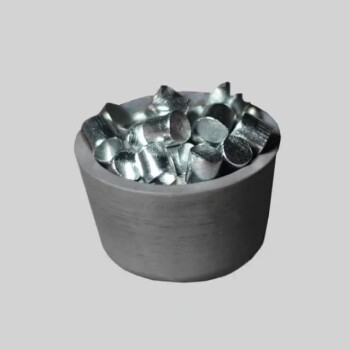
Electron Beam Evaporation Coating Conductive Boron Nitride Crucible BN Crucible

Electron Beam Evaporation Coating Conductive Boron Nitride Crucible BN Crucible

High-purity and smooth conductive boron nitride crucible for electron beam evaporation coating, with high temperature and thermal cycling performance.

Custom CVD Diamond Coating for Lab Applications

Custom CVD Diamond Coating for Lab Applications

CVD Diamond Coating: Superior Thermal Conductivity, Crystal Quality, and Adhesion for Cutting Tools, Friction, and Acoustic Applications

400-700nm Wavelength Anti Reflective AR Coating Glass

400-700nm Wavelength Anti Reflective AR Coating Glass

AR coatings are applied on optical surfaces to reduce reflection. They can be a single layer or multiple layers that are designed to minimize reflected light through destructive interference.

Electrolytic Electrochemical Cell for Coating Evaluation

Electrolytic Electrochemical Cell for Coating Evaluation

Looking for corrosion-resistant coating evaluation electrolytic cells for electrochemical experiments? Our cells boast complete specifications, good sealing, high-quality materials, safety, and durability. Plus, they're easily customizable to meet your needs.

Graphite Vacuum Continuous Graphitization Furnace

Graphite Vacuum Continuous Graphitization Furnace

High-temperature graphitization furnace is a professional equipment for graphitization treatment of carbon materials. It is a key equipment for the production of high-quality graphite products. It has high temperature, high efficiency and uniform heating. It is suitable for various high-temperature treatments and graphitization treatments. It is widely used in metallurgy, electronics, aerospace, etc. industry.

Graphite Vacuum Furnace High Thermal Conductivity Film Graphitization Furnace

Graphite Vacuum Furnace High Thermal Conductivity Film Graphitization Furnace

The high thermal conductivity film graphitization furnace has uniform temperature, low energy consumption and can operate continuously.

Graphite Vacuum Furnace Negative Material Graphitization Furnace

Graphite Vacuum Furnace Negative Material Graphitization Furnace

Graphitization furnace for battery production has uniform temperature and low energy consumption. Graphitization furnace for negative electrode materials: an efficient graphitization solution for battery production and advanced functions to enhance battery performance.

Ultra-High Temperature Graphite Vacuum Graphitization Furnace

Ultra-High Temperature Graphite Vacuum Graphitization Furnace

The ultra-high temperature graphitization furnace utilizes medium frequency induction heating in a vacuum or inert gas environment. The induction coil generates an alternating magnetic field, inducing eddy currents in the graphite crucible, which heats up and radiates heat to the workpiece, bringing it to the desired temperature. This furnace is primarily used for graphitization and sintering of carbon materials, carbon fiber materials, and other composite materials.

Horizontal High Temperature Graphite Vacuum Graphitization Furnace

Horizontal High Temperature Graphite Vacuum Graphitization Furnace

Horizontal Graphitization Furnace: This type of furnace is designed with the heating elements placed horizontally, allowing for uniform heating of the sample. It's well-suited for graphitizing large or bulky samples that require precise temperature control and uniformity.

Custom PTFE Teflon Parts Manufacturer Laboratory High Temperature Mixing Paddle Mixer

Custom PTFE Teflon Parts Manufacturer Laboratory High Temperature Mixing Paddle Mixer

The PTFE mixing paddle mixer is a versatile and robust tool designed for laboratory use, particularly in environments requiring high resistance to chemicals and extreme temperatures. Crafted from high-quality PTFE, this mixer boasts several key features that enhance its functionality and durability.

Platinum Sheet Electrode for Laboratory and Industrial Applications

Platinum Sheet Electrode for Laboratory and Industrial Applications

Elevate your experiments with our Platinum Sheet Electrode. Crafted with quality materials, our safe and durable models can be tailored to fit your needs.

Twin Screw Extruder Plastic Granulation Machine

Twin Screw Extruder Plastic Granulation Machine

Twin screw extruder plastic granulation machine is designed for the mixing and processing experiments of engineering plastics, modified plastics, waste plastics and masterbatches.

Precision Machined Zirconia Ceramic Ball for Engineering Advanced Fine Ceramics

Precision Machined Zirconia Ceramic Ball for Engineering Advanced Fine Ceramics

zirconia ceramic ball have the characteristics of high strength, high hardness, PPM wear level, high fracture toughness, good wear resistance, and high specific gravity.

Lab Scale Rotary Single Punch Tablet Press Machine TDP Tablet Punching Machine

Lab Scale Rotary Single Punch Tablet Press Machine TDP Tablet Punching Machine

This machine is a single-pressure automatic rotating, continuous tableting machine that compresses granular raw materials into various tablets. It is mainly used for tablet production in the pharmaceutical industry, and is also suitable for chemical, food, electronics and other industrial sectors.

Molybdenum Disilicide (MoSi2) Thermal Elements Electric Furnace Heating Element

Molybdenum Disilicide (MoSi2) Thermal Elements Electric Furnace Heating Element

Discover the power of Molybdenum Disilicide (MoSi2) Heating Element for high-temperature resistance. Unique oxidation resistance with stable resistance value. Learn more about its benefits now!

PTFE Electrolytic Cell Electrochemical Cell Corrosion-Resistant Sealed and Non-Sealed

PTFE Electrolytic Cell Electrochemical Cell Corrosion-Resistant Sealed and Non-Sealed

Choose our PTFE Electrolytic Cell for reliable, corrosion-resistant performance. Customize specifications with optional sealing. Explore now.

Engineering Advanced Fine Ceramics Alumina Crucibles (Al2O3) for Thermal Analysis TGA DTA

Engineering Advanced Fine Ceramics Alumina Crucibles (Al2O3) for Thermal Analysis TGA DTA

TGA/DTA thermal analysis vessels are made of aluminum oxide (corundum or aluminum oxide). It can withstand high temperature and is suitable for analyzing materials that require high temperature testing.

Stainless Steel Quick Release Vacuum Chain Three-Section Clamp

Stainless Steel Quick Release Vacuum Chain Three-Section Clamp

Discover our stainless steel quick release clamp vacuum clamp, Ideal for high vacuum applications, Strong connections, reliable sealing, Easy installation, and durable design.

Vertical High Temperature Graphite Vacuum Graphitization Furnace

Vertical High Temperature Graphite Vacuum Graphitization Furnace

Vertical high temperature graphitization furnace for carbonization and graphitization of carbon materials up to 3100℃.Suitable for shaped graphitization of carbon fiber filaments and other materials sintered in a carbon environment.Applications in metallurgy, electronics, and aerospace for producing high-quality graphite products like electrodes and crucibles.


Leave Your Message