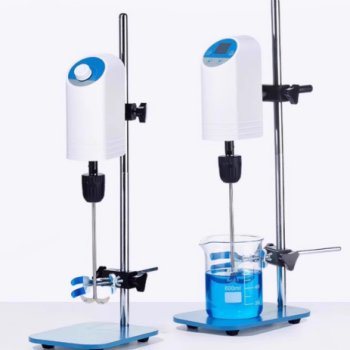
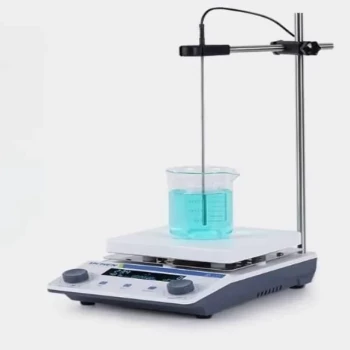
A high-speed magnetic stirrer is the critical engine for ensuring chemical uniformity during the complex processing of microfibrillated cellulose (MFC). By generating intense rotation, the device creates the necessary shear forces and fluid turbulence to force dense cellulose fibers into thorough contact with reactive chemicals. Without this aggressive mechanical agitation, the chemical treatments required for deacetylation, bleaching, and hydrolysis would be inefficient and uneven.
Core Takeaway: The primary role of high-speed stirring is to overcome physical resistance and maximize surface area contact between fibers and reagents. This mechanical energy drives faster reaction kinetics, reduces overall processing time, and guarantees the structural consistency essential for mass-produced MFC.
The Mechanics of Efficient Modification
Generating Necessary Shear Forces
To successfully modify cellulose, you must overcome the material's natural tendency to bundle and resist fluid penetration. A high-speed magnetic stirrer addresses this by creating strong shear forces.
These forces physically disrupt the fiber suspension. They ensure that the fibers remain dispersed rather than settling or clumping together. This constant motion is the baseline requirement for a homogeneous reaction environment.
Ensuring Uniform Reagent Contact
The chemical processes involved in MFC production—specifically deacetylation, bleaching, and acid hydrolysis—rely on potent reagents.
The stirrer ensures that sodium hydroxide, sodium chlorite, and concentrated sulfuric acid are distributed evenly throughout the mixture.
This prevents localized concentration gradients. Every fiber is exposed to the same chemical intensity, ensuring the modification occurs uniformly across the entire batch.
Operational Benefits for Production
Accelerating Reaction Kinetics
Mechanical agitation acts as a catalyst for the process workflow. By increasing the frequency of contact between the fibers and the chemical agents, the stirrer significantly enhances reaction kinetics.
This efficiency allows the chemical reactions to reach completion faster. Consequently, the total time required for chemical modification is drastically reduced, improving laboratory or production throughput.
Achieving Batch Consistency
For mass-produced microfibrillated cellulose, variability is a failure mode. High-speed stirring ensures that the physical and chemical properties of the final product are consistent.
Uniform fluid turbulence eliminates "dead zones" in the reaction vessel. This guarantees that the final MFC output maintains the same quality standards, regardless of the batch size.
Common Pitfalls to Avoid
The Risk of Insufficient Turbulence
If the stirring speed is too low, the shear forces will be inadequate to disperse the fibers fully.
This leads to heterogeneous reactions, where some fibers are over-processed while others remain under-reacted. This inconsistency compromises the structural integrity of the final MFC.
Ignoring Kinetic Requirements
Failing to utilize high-speed agitation results in sluggish reaction kinetics.
Without the mechanical energy to drive reagent contact, the chemical modification time extends unnecessarily. This not only slows down production but can also lead to inefficient use of chemical reagents.
Making the Right Choice for Your Process
When configuring your MFC production line, consider how agitation aligns with your specific constraints.
- If your primary focus is Production Speed: Prioritize high rotational speeds to maximize reaction kinetics and minimize the time your fibers spend in the modification stage.
- If your primary focus is Product Quality: Ensure the stirring generates uniform turbulence to guarantee consistent physical and chemical properties across every gram of the batch.
High-speed agitation is not just a mixing step; it is the fundamental driver of efficiency and uniformity in MFC synthesis.
Summary Table:
| Process Stage | Role of High-Speed Stirring | Key Outcome |
|---|---|---|
| Deacetylation | Uniform distribution of Sodium Hydroxide | Consistent chemical modification |
| Bleaching | Homogeneous contact with Sodium Chlorite | Even fiber decolorization |
| Acid Hydrolysis | Disruption of fiber bundles for Acid access | Efficient cellulose breakdown |
| General Mixing | Generation of intense shear forces | Prevention of fiber clumping |
Elevate Your MFC Synthesis with KINTEK Precision
Consistency is the hallmark of quality in microfibrillated cellulose production. KINTEK specializes in providing high-performance laboratory equipment designed to meet the rigorous demands of chemical processing. From high-speed magnetic stirrers and homogenizers that ensure perfect chemical uniformity to high-pressure reactors and centrifuges for advanced material synthesis, our solutions are engineered for reliability and throughput.
Whether you are refining deacetylation protocols or scaling up acid hydrolysis, KINTEK provides the tools and consumables—including PTFE products, ceramics, and specialized glassware—to optimize your workflow.
Ready to achieve superior batch consistency? Contact KINTEK today for a customized equipment consultation and see how our expertise can accelerate your research and production.
References
- Vipul Vilas Kusumkar, Martin Daňo. Sorptive Removal of 133Ba from Aqueous Solution Using a Novel Cellulose Hydroxyapatite Composite Derived from Cigarette Waste. DOI: 10.1007/s11270-024-07026-3
This article is also based on technical information from Kintek Solution Knowledge Base .
Related Products
- High Performance Laboratory Stirrers for Diverse Applications
- Laboratory Small Constant Temperature Heated Magnetic Stirrer Heater and Stirrer
- Custom PTFE Teflon Parts Manufacturer for Magnetic Stirring Bar
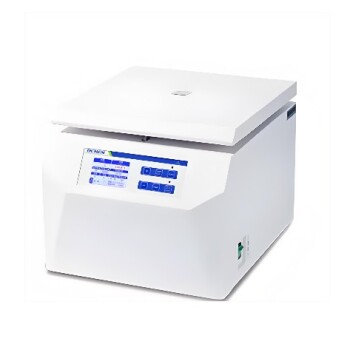
- Benchtop High Speed Small Lab Centrifuge for Serum Separation and Low Temperature Dehydration
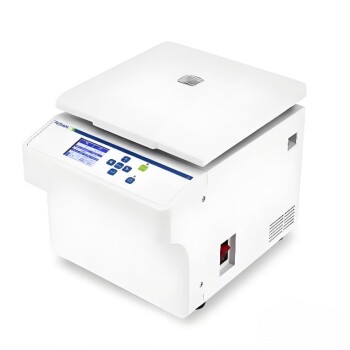
- High-Speed Desktop Centrifuge for Blood Sample Processing
People Also Ask
- How does a laboratory stirrer influence MOF product quality? Master Precision in Non-Solvothermal Synthesis
- What critical role does a Laboratory Stirrer play during leaching? Enhance Titanium-Magnesium Waste Recovery
- What is the primary function of laboratory stirring equipment in the preparation of compost leachate? Optimize Extraction
- What is a laboratory mixer? A Guide to Achieving Perfect Sample Homogeneity
- What is a laboratory mixer used for? Choose the Right Tool for Liquids or Solids