A high-temperature crucible is essential because it guarantees both the thermal stability and chemical inertness required to synthesize lithium-rich lithium-indium (Li13In3) alloys. Specifically, the crucible must withstand temperatures around 350°C to facilitate the melting process while preventing the reactive lithium from corroding or reacting with the container walls.
The crucible acts as a non-reactive containment shield that ensures the purity of the molten alloy. By resisting the corrosive nature of molten lithium at high heat, it allows the spontaneous alloying reaction to occur without introducing contaminants that would degrade electrode performance.
The Critical Role of Thermal Stability
Withstanding Synthesis Temperatures
The preparation of Li13In3 alloy electrodes requires a stable high-temperature environment, typically maintained around 350°C.
The crucible must maintain structural integrity at this specific thermal threshold without softening or deforming. This capability allows the lithium and indium foils to melt completely and undergo the necessary spontaneous alloying reaction.
Facilitating Melt Fluidity
Achieving the correct temperature is not just about melting the metals; it is about viscosity.
A crucible capable of sustaining this high heat ensures the resulting alloy melt achieves good fluidity. This liquid state is a prerequisite for the subsequent processing steps, particularly for wetting and infiltrating porous structures.
Preserving Chemical Integrity
Preventing Side Reactions
Molten lithium is highly reactive and chemically aggressive toward many standard container materials.
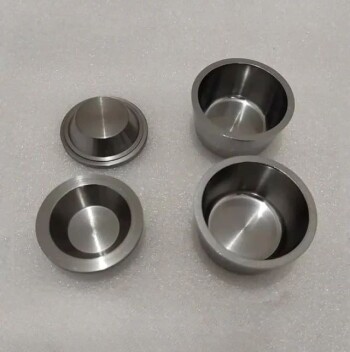
A specialized high-temperature crucible, often made of stainless steel, is selected for its chemical inertness. This prevents the container material from reacting with the lithium or indium, which would otherwise compromise the stoichiometry of the alloy.
Ensuring Compositional Purity
The quality of the final electrode is directly tied to the purity of the alloy.
By eliminating the risk of side reactions between the melt and the container walls, the crucible ensures that the final product is a pure Li13In3 alloy. This isolation is critical for maintaining a uniform alloy composition throughout the batch.
Enabling Complex Electrode Structures
Supporting Template Infiltration
High-performance electrodes often utilize complex frameworks, such as porous CNT@ZnO templates.
Because the crucible allows for stable high-temperature heating, the alloy maintains the fluidity required to successfully infiltrate these templates. This process relies on lithiophilic wetting to ensure the molten metal completely fills the porous structure.
Uniformity of the Final Product
The stability provided by the crucible contributes to the overall consistency of the melt.
Precise temperature control, enabled by a reliable container, ensures the alloy composition remains uniform. This uniformity is essential for the electrical and mechanical consistency of the final electrode.
Common Pitfalls to Avoid
Material Incompatibility
Not all high-temperature crucibles are suitable for this specific application.
A common error is selecting a crucible based solely on temperature rating without considering chemical resistance to lithium. If the material is not inert to lithium (like certain ceramics or glass), the vessel may crack or dissolve, leading to catastrophic failure.
Inconsistent Heating Profiles
If the crucible has poor thermal conductivity or stability, it can lead to "cold spots" in the melt.
This results in incomplete melting or uneven alloying, creating a heterogeneous mixture that fails to infiltrate electrode templates properly.
Optimizing Your Synthesis Setup
To ensure successful preparation of Li13In3 electrodes, align your equipment choice with your specific technical requirements:
- If your primary focus is Alloy Purity: Select a crucible material, such as stainless steel, that offers verified chemical inertness to molten lithium to prevent contamination.
- If your primary focus is Template Infiltration: Ensure your heating setup and crucible can maintain a stable 350°C to guarantee the melt fluidity required for filling porous CNT@ZnO structures.
The correct crucible is not just a container; it is the foundational tool that enables the safe, pure, and uniform chemical reaction necessary for high-performance electrodes.
Summary Table:
| Feature | Requirement for Li13In3 Synthesis | Benefit to Electrode Performance |
|---|---|---|
| Thermal Stability | Stable at 350°C+ without deformation | Enables complete melting and spontaneous alloying |
| Chemical Inertness | Resistance to molten lithium corrosion | Prevents contamination and maintains alloy stoichiometry |
| Material Choice | Typically Stainless Steel | Ensures zero side reactions with aggressive lithium melt |
| Melt Fluidity | Sustained high heat | Facilitates uniform infiltration into porous CNT@ZnO templates |
Elevate Your Material Research with KINTEK Precision
Don't let contamination or thermal instability compromise your battery research. KINTEK specializes in high-performance laboratory equipment designed for the most demanding synthesis environments.
Whether you are preparing advanced Li13In3 alloy electrodes or developing next-gen energy storage, we provide the essential tools you need, including:
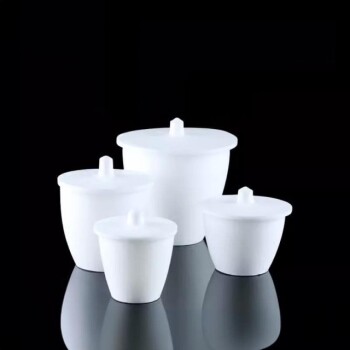
- High-Temperature Crucibles & Ceramics: Stainless steel, alumina, and PTFE options for chemical resistance.
- Advanced Furnaces: Muffle, tube, and vacuum systems for precise 350°C+ thermal profiles.
- Battery Research Tools: Hydraulic presses, crushing systems, and specialized electrolytic cells.
Ensure the purity and uniformity of your high-performance electrodes today. Contact our specialists at KINTEK to find the perfect equipment solution for your lab!
Related Products
- Arc-Shaped Alumina Ceramic Crucible High Temperature Resistant for Engineering Advanced Fine Ceramics
- High Purity Pure Graphite Crucible for Evaporation
- Electron Beam Evaporation Coating Tungsten Crucible and Molybdenum Crucible for High Temperature Applications
- Custom Machined and Molded PTFE Teflon Parts Manufacturer with PTFE Crucible and Lid
- Carbon Graphite Boat -Laboratory Tube Furnace with Cover
People Also Ask
- Why Use Alumina Crucibles & Powder Burial for NaSICON? Ensure Phase Purity and Prevent Elemental Volatilization
- What is the primary purpose of using alumina crucibles for LLTO ceramics? Optimize Your High-Temperature Sintering
- Why are alumina crucibles and mother powder essential for LATP sintering? Optimize Your Solid Electrolyte Performance
- Why are high-purity alumina crucibles used for liquid lead corrosion experiments? Ensure Data Accuracy at 550°C
- Primary considerations for choosing alumina crucibles and quartz tubes in indium intercalation: Ensure Material Purity