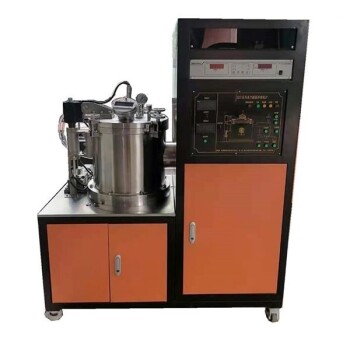
High vacuum annealing is the definitive solution for addressing the inherent brittleness often found in Ni-Cr-Si filler metal joints. It provides the precise thermal environment necessary to drive the deep diffusion of silicon atoms, transforming fragile phases into robust, ductile connections.
The central goal of this process is to dissolve brittle silicide phases that accumulate in joint gaps. By converting these phases into a solid solution, the treatment restores ductility and prevents failure under cyclic loading.
The Silicide Challenge
Formation in Large Gaps
When brazing with Ni-Cr-Si filler metals, the formation of specific microstructural phases is inevitable.
This is particularly problematic in larger joint gaps, where the volume of filler metal is higher. In these areas, silicon tends to segregate and form distinct compound phases.
The Risk of Brittleness
These segregated compounds are known as brittle silicide phases.
Unlike the flexible base metal, these phases are fragile. If left untreated, they act as stress concentrators that significantly weaken the structural integrity of the joint.
The Mechanics of Annealing
Driving Silicon Diffusion
The high vacuum annealing furnace provides the substantial thermal energy required to activate atomic movement.
Under these conditions, silicon atoms are forced to migrate out of the concentrated silicide phases. They undergo deep diffusion into the surrounding matrix.
Transforming the Microstructure
As diffusion occurs, the brittle silicide phases begin to dissolve.
They transform into a solid solution, which is metallurgically superior. This homogenization of the microstructure is the key to removing the joint's inherent weakness.
The Role of Thermal Precision
Achieving Uniformity
Successful annealing relies on consistency. The high vacuum furnace is selected specifically for its ability to deliver thermal uniformity.
Uniform heat ensures that diffusion happens evenly across the entire component, preventing localized brittle spots that could serve as crack initiation sites.
Preventing Fatigue Failure
The ultimate benefit of this transformation is the restoration of ductility.
A ductile joint can absorb energy and deform slightly without breaking. This is essential for preventing crack formation, especially when the component is subjected to cyclic loading conditions where repeated stress would otherwise snap a brittle joint.
Understanding the Constraints
Process Dependency
While effective, this process is strictly governed by physics. The transformation is not instantaneous; it requires sufficient time at temperature to allow the silicon atoms to physically move (diffuse) through the metal lattice.
Gap Limitations
Although annealing helps mitigates issues in larger gaps, it does not justify poor fit-up. Extremely wide gaps may still retain some segregated phases if the diffusion distance is too great for the annealing cycle to overcome.
Making the Right Choice for Your Goal
To ensure the longevity of your Ni-Cr-Si joints, align your heat treatment strategy with your performance requirements:
- If your primary focus is Durability: Ensure the annealing cycle is long enough to fully dissolve silicides, preventing cracks during cyclic loading.
- If your primary focus is Manufacturing Tolerance: Use this process to compensate for variations in joint gap size, ensuring consistent mechanical properties despite minor fit-up issues.
By leveraging high vacuum annealing, you convert a potential metallurgical weakness into a reliable, high-performance bond.
Summary Table:
| Feature | High Vacuum Annealing Benefit |
|---|---|
| Microstructure Transformation | Converts brittle silicide phases into a ductile solid solution |
| Structural Integrity | Prevents crack formation and failure under cyclic loading |
| Thermal Consistency | Provides uniform heat to ensure even diffusion across large gaps |
| Atmosphere Control | High vacuum environment prevents oxidation and ensures joint purity |
Elevate Your Brazing Precision with KINTEK
Don't let brittle joints compromise the integrity of your critical components. At KINTEK, we specialize in advanced thermal solutions designed for the most demanding laboratory and industrial applications. Whether you require high-performance high-temperature vacuum or atmosphere furnaces for annealing, or specialized crushing, milling, and hydraulic press systems for material preparation, our equipment is engineered to deliver the precision you need.
From high-pressure reactors and autoclaves to essential consumables like ceramics and crucibles, KINTEK provides the comprehensive tools necessary to transform fragile phases into robust, high-performance bonds. Ensure your materials withstand the test of cyclic loading and extreme environments.
Ready to optimize your post-brazing heat treatment? Contact our technical experts today to find the perfect furnace solution!
References
- Milena Penyaz, B.A. Kalin. Overview of nickel-based filler metals for brazing of austenitic stainless steels. DOI: 10.17580/nfm.2021.01.06
This article is also based on technical information from Kintek Solution Knowledge Base .
Related Products
- Vacuum Heat Treat Furnace with Ceramic Fiber Liner
- Laboratory High Pressure Vacuum Tube Furnace
- Vacuum Heat Treat and Pressure Sintering Furnace for High Temperature Applications
- Ultra-High Temperature Graphite Vacuum Graphitization Furnace
- 2200 ℃ Tungsten Vacuum Heat Treat and Sintering Furnace
People Also Ask
- What is a vacuum heat treatment furnace? The Ultimate Guide to Controlled Atmosphere Processing
- How does a vacuum heat treatment work? Achieve Superior Material Properties in a Pristine Environment
- What is a vacuum heat treatment furnace? Achieve Unmatched Purity and Control
- What is vacuum heat treatment process? Achieve Superior Control, Cleanliness, and Quality
- What is the temperature of vacuum heat treatment? Achieve Superior Material Properties & Pristine Finishes