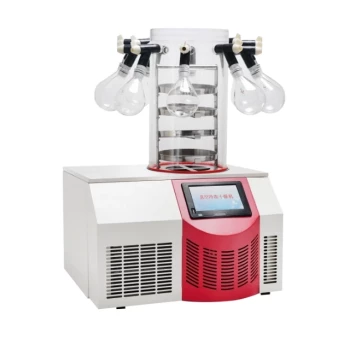
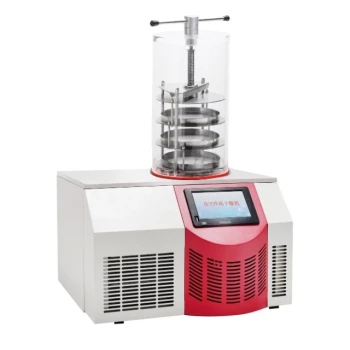
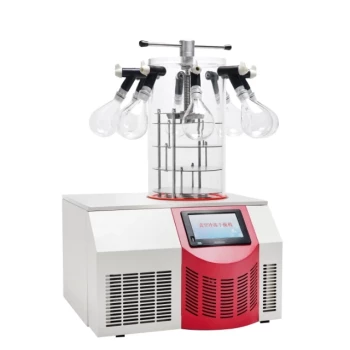
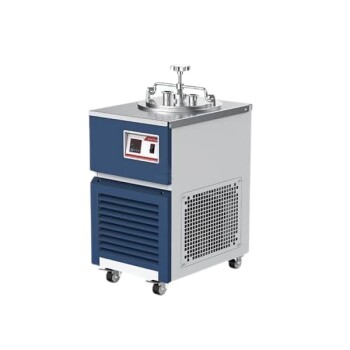
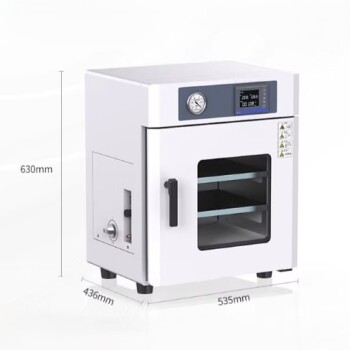
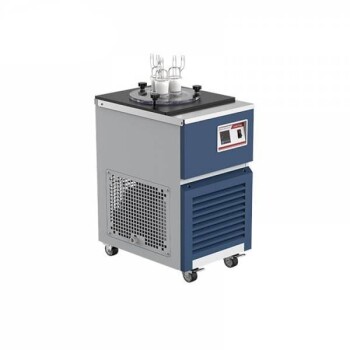
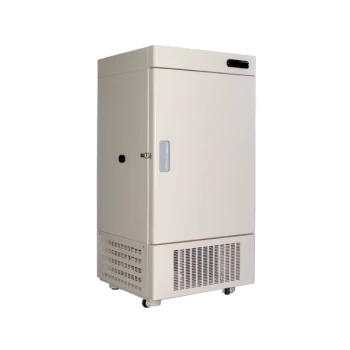
The superior performance of vacuum freeze drying stems from its ability to remove moisture through sublimation rather than evaporation. Unlike high-temperature ovens that subject materials to destructive heat, a vacuum freeze dryer operates under ultra-low temperatures and high vacuum conditions. This gentle process preserves the delicate physical structure of the microbial carrier and ensures the palladium ions remain evenly distributed.
Core Takeaway: By bypassing the liquid phase and avoiding thermal stress, vacuum freeze drying prevents the structural collapse of microbial cells. This is critical for maintaining an open pore structure and inhibiting the agglomeration of palladium nanoparticles, which ensures higher reactivity in the final material.
The Mechanics of Structural Preservation
The Advantage of Sublimation
Traditional drying relies on evaporation, which requires heat and passes moisture through a liquid phase. Vacuum freeze drying utilizes sublimation, transforming ice directly into vapor.
Protecting Morphology
Microbial carriers are often fragile. The heat from a traditional oven can cause the cell walls to shrink or melt.
Freeze drying maintains the original morphology of the cell. The "scaffold" of the microbe remains intact, preserving the shape and volume of the material.
Maintaining Pore Structure
The internal porosity of the carrier is vital for performance. High-temperature drying frequently results in the collapse of cellular structures.
By locking the structure in place through freezing before removing moisture, the dryer preserves the intricate pore structure. This leaves the material porous and accessible.
Optimizing Palladium Ion Distribution
Inhibiting Agglomeration
One of the greatest risks in drying metal-loaded biomass is the movement of particles. When water evaporates in a hot oven, surface tension and heat can pull palladium ions together.
This leads to agglomeration, where nanoparticles clump into larger masses. Freeze drying locks the ions in place, keeping them discrete and preventing this clumping.
Preparing for Thermal Processing
The drying step often precedes further treatment. If the structure collapses during drying, subsequent processing becomes less effective.
By preventing initial structural damage, freeze drying inhibits nanoparticle agglomeration during subsequent thermal processing. This ensures the final catalyst maintains a high surface area.
Understanding the Pitfalls of High-Temperature Ovens
Chemical Alterations
Heat does not just affect shape; it affects chemistry. Traditional thermal drying can induce unwanted changes in the chemical composition of the microbial surface.
These changes can alter how the palladium interacts with the carrier, potentially reducing the material's effectiveness.
Loss of Active Surface Area
The primary goal of using a microbial carrier is to provide a large surface area for the palladium ions.
When an oven causes structural collapse, the material densifies. This effectively buries the palladium ions, making them inaccessible and reducing the overall efficiency of the biosorption product.
Making the Right Choice for Your Project
While vacuum freeze drying is more time-consuming than oven drying, it is technically superior for maximizing material performance.
- If your primary focus is maximizing catalytic activity: Choose vacuum freeze drying to prevent nanoparticle agglomeration and maintain high surface area.
- If your primary focus is structural integrity: Choose vacuum freeze drying to preserve the original pore structure and prevent cellular collapse.
In summary, vacuum freeze drying is the definitive choice when the quality of nanoparticle distribution and the preservation of microscopic architecture are paramount.
Summary Table:
| Feature | Vacuum Freeze Drying | Traditional High-Temperature Oven |
|---|---|---|
| Moisture Removal | Sublimation (Ice to Vapor) | Evaporation (Liquid to Vapor) |
| Operating Temp | Ultra-low (Cold) | High-temperature (Heat) |
| Structural Integrity | Preserved (No collapse) | High risk of shrinkage/collapse |
| Pore Structure | Maintains open, porous network | Often densified and closed |
| Metal Ion State | Uniformly distributed/Discrete | High risk of agglomeration (clumping) |
| Surface Area | High active surface area | Reduced due to structural damage |
Maximize Your Material Reactivity with KINTEK Precision
Preserving the delicate architecture of microbial carriers and the uniform distribution of palladium ions requires more than just heat—it requires advanced sublimation technology. KINTEK specializes in providing high-performance laboratory solutions, including state-of-the-art vacuum freeze dryers and cold traps designed to protect your sensitive biosorption products from structural collapse and nanoparticle agglomeration.
Whether you are scaling up catalyst production or conducting precision battery research, our comprehensive range—from high-temperature furnaces and crushing systems to isostatic presses and specialized ceramics—is engineered to meet the rigorous demands of modern material science.
Ready to elevate your lab's drying performance? Contact KINTEK today to discover how our experts can tailor a cooling and drying solution to your specific research needs.
References
- Jingwen Huang, Yili Liang. The Effect of a Hydrogen Reduction Procedure on the Microbial Synthesis of a Nano-Pd Electrocatalyst for an Oxygen-Reduction Reaction. DOI: 10.3390/min12050531
This article is also based on technical information from Kintek Solution Knowledge Base .
Related Products
- Benchtop Laboratory Vacuum Freeze Dryer
- High Performance Laboratory Freeze Dryer
- High Performance Laboratory Freeze Dryer for Research and Development
- Benchtop Laboratory Freeze Dryer for Lab Use
- Vacuum Cold Mounting Machine for Sample Preparation
People Also Ask
- What are the technical advantages of using a laboratory freeze dryer for porous carbon precursors? Preserve 3D Networks
- How do laboratory freeze dryers support scientific research? Preserve Sample Integrity for Reproducible Results
- Why is a laboratory freeze dryer preferred over traditional heating? Preserve Biochar Structure & Maximize Porosity
- What types of liquid samples can be processed using a laboratory freeze dryer? Preserve Your Sensitive Materials
- What role do laboratory freeze dryers play in the food industry? Unlock Superior Food Preservation