High-precision temperature control is the defining factor that determines whether a Ti/Al3Ti composite becomes a high-performance material or a defective failure.
In the preparation of these composites, temperature is not merely a catalyst; it is the governor of atomic diffusion. Without exacting control, the disparate diffusion rates of aluminum and titanium trigger the Kirkendall effect, creating microscopic voids that compromise the material's structural integrity. Precision equipment is required to strictly enforce specific thermal ramps and holding periods—such as maintaining 710°C for 3 hours—to balance this diffusion, minimize delamination, and ensure the material achieves the density required for ballistic protection.
Core Takeaway The preparation of Ti/Al3Ti composites relies on precise thermal management to counteract the Kirkendall effect, where uneven diffusion creates structural voids. Strict adherence to temperature schedules ensures the elimination of these defects, guaranteeing the high density and mechanical robustness necessary for critical applications like ballistic armor.
Managing Microstructural Evolution
The Challenge of the Kirkendall Effect
The fundamental challenge in sintering Ti/Al3Ti is that aluminum and titanium atoms do not diffuse into one another at the same speed.
Aluminum typically diffuses faster than titanium. If the temperature is not precisely regulated to manage this inequality, the faster-moving atoms leave behind vacancies in the lattice structure. These vacancies coalesce to form "Kirkendall voids," which are essentially empty pockets within the material.
Preventing Voids and Delamination
If left unchecked, these microscopic voids grow and merge, leading to macroscopic defects.
These defects manifest as delamination cracks—separations between the material layers. High-precision control ensures the temperature profile keeps the diffusion rate manageable, preventing these voids from coalescing and maintaining the bond between the metallic and intermetallic phases.
Achieving Optimal Density
The ultimate goal of the sintering process is to create a fully dense material.
Voids represent a loss of density, which directly correlates to a loss in performance. By preventing void formation through precise thermal regulation, the equipment ensures the composite achieves near-theoretical density, which is a prerequisite for its effectiveness in ballistic protection.
Executing the Thermal Strategy
Strict Adherence to Holding Periods
Sintering is not just about reaching a peak temperature; it is about "soaking" the material at specific points to allow chemical reactions to complete.
For Ti/Al3Ti composites, this often requires holding the material at exactly 710°C for 3 hours. High-precision equipment utilizes advanced feedback loops to maintain this temperature without fluctuation, ensuring the diffusion process is uniform throughout the entire sample.
Controlling Heating Ramps
The rate at which temperature increases is just as critical as the final holding temperature.
Rapid, uncontrolled heating can induce thermal shock or accelerate the formation of brittle phases before the diffusion bond is secure. Controlled ramps allow the microstructure to evolve gradually, reducing internal stress and preventing the lattice disintegration that leads to failure.
Understanding the Trade-offs
Sensitivity to Process Deviations
The window for success in sintering these composites is narrow.
A deviation of even a few degrees or a slight variation in the holding time can shift the phase balance. This can result in either incomplete sintering (weak bonding) or the over-development of brittle intermetallic phases, both of which degrade mechanical properties.
The Necessity of Atmosphere Control
While temperature is the primary variable, it cannot be viewed in isolation from the atmospheric environment.
As noted in advanced sintering contexts, precise temperature control must often be paired with vacuum or controlled atmosphere environments. This prevents oxidation, which can interfere with the diffusion interface and introduce impurities that weaken the composite.
Making the Right Choice for Your Goal
To ensure the success of your Ti/Al3Ti composite preparation, consider your primary objective:
- If your primary focus is Ballistic Performance: Prioritize equipment with extremely stable holding capabilities to eliminate Kirkendall voids and maximize material density.
- If your primary focus is Process Validation: Ensure your furnace includes precise ramp control and data logging to correlate specific thermal histories with microstructural defects.
- If your primary focus is Defect Prevention: Verify that your thermal cycle includes a controlled debinding phase (200°C–650°C) to prevent gas-induced cracking before high-temperature sintering begins.
Precision in temperature control is not a luxury; it is the only way to convert raw powder into a battle-ready composite.
Summary Table:
| Parameter | Influence on Ti/Al3Ti Composites | Requirement for Success |
|---|---|---|
| Temperature Stability | Prevents Kirkendall voids and structural gaps | Precise feedback loops (e.g., 710°C) |
| Heating Ramp Control | Minimizes thermal shock and brittle phase formation | Gradual, controlled thermal increments |
| Soaking/Holding Time | Ensures uniform atomic diffusion and density | Exact adherence to schedules (e.g., 3 hrs) |
| Atmosphere Control | Prevents oxidation and interface impurities | Vacuum or inert gas integration |
Elevate Your Material Performance with KINTEK Precision
Don't let the Kirkendall effect compromise the structural integrity of your composites. KINTEK specializes in advanced laboratory solutions designed for the most demanding sintering applications. From high-stability muffle and vacuum furnaces to specialized crushing, milling, and hydraulic press systems, we provide the tools necessary to achieve near-theoretical density and superior mechanical robustness in Ti/Al3Ti preparation.
Whether you are focusing on ballistic armor research or industrial-grade material validation, our high-precision equipment ensures every thermal ramp and holding period is executed flawlessly. Contact KINTEK today to discuss your laboratory equipment needs and see how our comprehensive range of furnaces and consumables can optimize your research outcomes.
Related Products
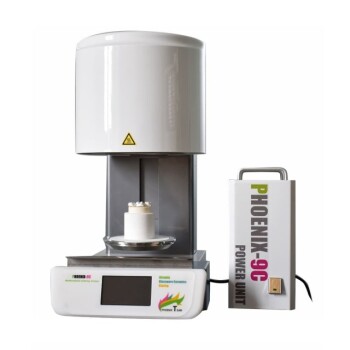
- Dental Porcelain Zirconia Sintering Ceramic Vacuum Press Furnace
- Dental Porcelain Zirconia Sintering Ceramic Furnace Chairside with Transformer
- Vacuum Dental Porcelain Sintering Furnace
- Spark Plasma Sintering Furnace SPS Furnace
- Mesh belt controlled atmosphere furnace
People Also Ask
- What does sintering do to zirconia? Unlock Its Full Strength and Aesthetic Potential
- What is the shrinkage of zirconia during sintering? Mastering the 20-25% Dimensional Change
- What is the sintering temperature of zirconia ceramic? Mastering the 1400°C-1600°C Thermal Profile
- What is the price of zirconia sintering furnace? Invest in Precision, Not Just a Price Tag
- What factors are important to consider when choosing a dental sintering furnace? Match Your Workflow for Optimal Results