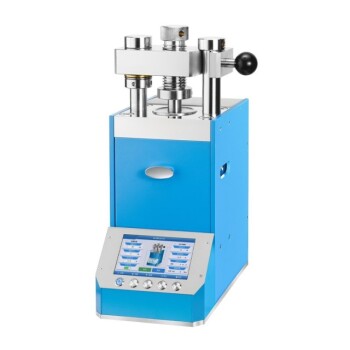
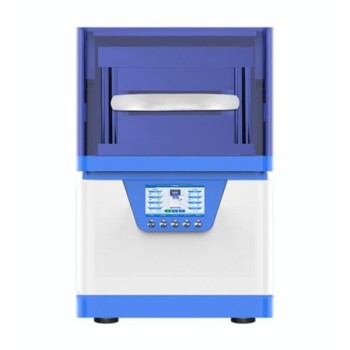
Hot Isostatic Pressing (HIP) is a critical post-processing step required to eliminate the microscopic defects inherent to additive manufacturing. While the printing and sintering process creates the general geometry of Inconel 718 parts, it frequently leaves behind residual micro-pores and structural discontinuities. HIP equipment subjects these components to extreme temperatures and uniform, high-pressure environments, forcing internal voids to close and "self-heal" to achieve maximum material density.
Additive manufacturing rarely achieves theoretical density on its own. HIP acts as a necessary densification event, utilizing omnidirectional pressure to collapse internal voids and micro-cracks, ensuring the component achieves the fatigue life and structural integrity required for high-performance applications.
The Problem: Residual Porosity in AM Parts
The Limits of Sintering
The primary driver for using HIP is the limitation of the initial sintering process in additive manufacturing. Even when printed with high precision, the material consolidation is rarely perfect.
Residual micro-pores and structural discontinuities often remain deep within the Inconel 718 alloy. These microscopic flaws prevent the material from reaching its full theoretical density.
The Threat to Structural Integrity
These internal defects are not merely cosmetic; they act as stress concentrators.
Under cyclic loading, these micro-pores serve as initiation sites for cracks. Without remediation, these voids significantly reduce the fatigue life and overall reliability of the final part.
How HIP Equipment Eliminates Defects
Applying Isostatic Pressure
HIP equipment places the part inside a pressure vessel and subjects it to high, uniform pressure from all directions (isostatic).
Commonly, pressures such as 160 MPa are applied using an inert gas. Because the pressure is omnidirectional, it compresses the part evenly without distorting its overall shape.
The Mechanism of "Self-Healing"
The process combines this extreme pressure with high temperatures, typically kept just below the melting point of the alloy.
Under these conditions, the material undergoes plastic deformation and creep. The solid material flows to fill the internal voids, effectively collapsing the micro-pores.
Diffusion Bonding
Once the voids collapse, the internal surfaces are pressed together so tightly that they undergo diffusion bonding.
This allows the metal to form bonds at an atomic level. The result is a unified, fully dense structure where the previous defects have been completely eliminated.
Critical Process Controls
The Necessity of an Inert Environment
A major operational constraint of HIP is the requirement for a strictly controlled chemical environment.
The equipment must use an inert gas, typically Argon, to pressurize the vessel. This ensures that no chemical reaction, such as oxidation, occurs with the Inconel 718 while it is in a heated, highly reactive state.
Precision Temperature Management
Success relies on maintaining the temperature high enough to induce plasticity but low enough to prevent melting.
If the temperature is not precisely controlled relative to the pressure and duration, the microstructure can be altered unfavorably. The goal is to improve microstructure uniformity, not to degrade the material properties through overheating.
Making the Right Choice for Your Goal
When evaluating the necessity of HIP for your Inconel 718 project, consider your specific performance requirements.
- If your primary focus is Fatigue Resistance: HIP is mandatory to remove internal stress concentrations that lead to premature crack initiation and failure.
- If your primary focus is Material Density: HIP is the only reliable method to transition a part from "relative high density" to 100% near-theoretical density.
- If your primary focus is Microstructure Uniformity: HIP standardizes the internal grain structure, correcting the inconsistencies often found in as-printed components.
By integrating Hot Isostatic Pressing, you transform a printed shape into an engineering-grade component capable of withstanding the most demanding operational environments.
Summary Table:
| Feature | Effect of HIP on Inconel 718 |
|---|---|
| Material Density | Reaches ~100% near-theoretical density |
| Internal Defects | Collapses micro-pores and self-heals micro-cracks |
| Structural Integrity | Significantly enhances fatigue life and reliability |
| Mechanism | Omnidirectional pressure (isostatic) + high temperature |
| Bonding Type | Atomic-level diffusion bonding for unified structure |
| Environment | Controlled inert gas (Argon) to prevent oxidation |
Elevate Your Additive Manufacturing Standards with KINTEK
Don't let residual porosity compromise the integrity of your high-performance Inconel 718 components. KINTEK provides state-of-the-art isostatic presses (HIP) and crushing systems designed to help laboratory and industrial users achieve maximum material density and superior fatigue resistance.
From advanced high-temperature furnaces to precision hydraulic presses, our comprehensive range of laboratory equipment and consumables ensures your materials meet the most demanding engineering specifications.
Ready to achieve 100% material density? Contact our experts today to find the perfect HIP or thermal processing solution for your research and production needs.
References
- О.S. Vodennikova, Сергій Анатолійович Воденніков. Investigation of Mechanical Properties and Structure of Inconel 718 Alloy Obtained by Selective Laser Sintering from Powder Produced by ‘LPW’. DOI: 10.15407/mfint.43.07.0925
This article is also based on technical information from Kintek Solution Knowledge Base .
Related Products
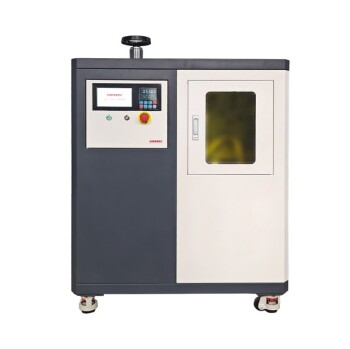
- Warm Isostatic Press for Solid State Battery Research
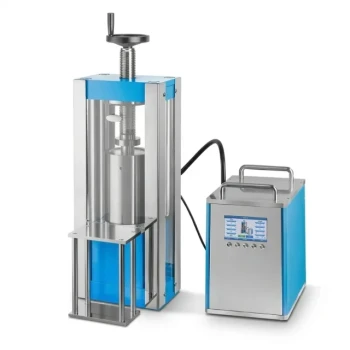
- Electric Split Lab Cold Isostatic Press CIP Machine for Cold Isostatic Pressing
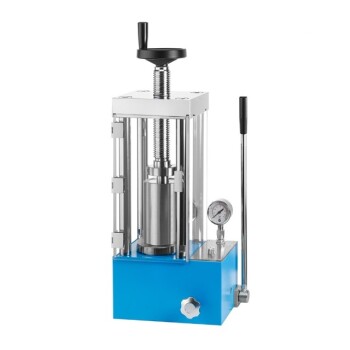
- Manual Cold Isostatic Pressing Machine CIP Pellet Press
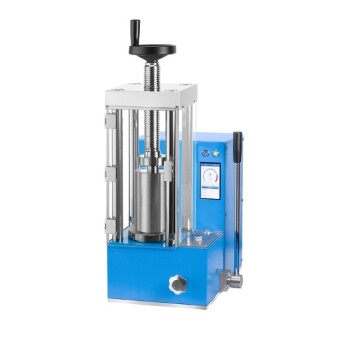
- Electric Lab Cold Isostatic Press CIP Machine for Cold Isostatic Pressing
- Automatic Lab Cold Isostatic Press CIP Machine Cold Isostatic Pressing
People Also Ask
- What is the temperature of a warm isostatic press? Achieve Optimal Densification for Your Materials
- What is the function of a Warm Isostatic Press (WIP) in all-solid-state pouch cells? Optimize Battery Density
- Why are Warm Isostatic Presses (WIP) necessary for solid-state batteries? Achieve Atomic-Level Contact
- What advantages does a warm isostatic press offer over a traditional uniaxial press for Li6PS5Cl electrolyte sheets?
- How do warm isostatic presses improve dry electrode performance? Enhance ASSB Conductivity with Heat & Pressure