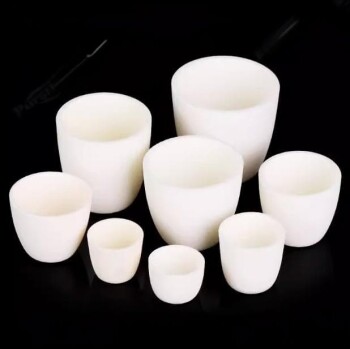
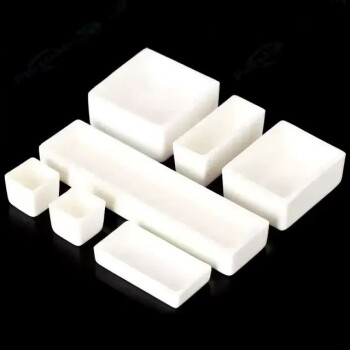
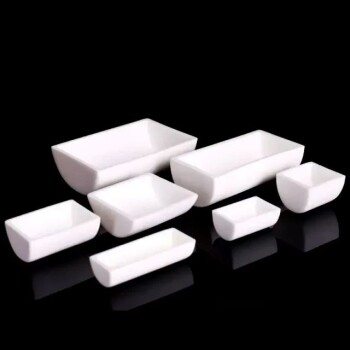
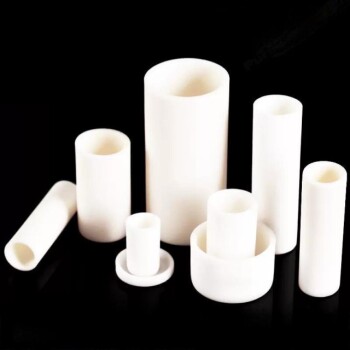
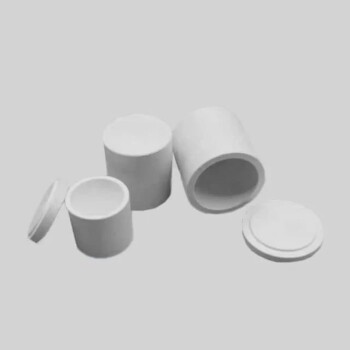
Reliable data is the primary driver. High-purity ceramic crucibles are essential for characterizing biomass ash because they can withstand the intense chemical erosion caused by molten salts at high temperatures. By using these chemically inert containers, you prevent the ash from reacting with the crucible, ensuring that the resulting data accurately reflects the fuel's potential to cause slagging and fouling in real-world boiler operations.
Biomass ash often behaves like a corrosive solvent when molten, attacking standard laboratory equipment. High-purity ceramics provide the necessary chemical inertness to isolate the sample, ensuring your thermal stability data reflects the fuel's actual chemistry rather than a reaction with the container.
The Chemistry of Biomass Ash Interactions
The Aggressive Nature of Alkali Metals
Biomass ash is chemically distinct from coal ash due to its high concentration of alkali metals, specifically Potassium (K) and Sodium (Na).
When heated, these elements do not simply remain static; they become highly reactive agents.
Formation of Molten Salts
As the temperature rises, alkali metals combine with silicates present in the ash to form molten salts.
These molten mixtures are chemically aggressive and act similarly to a flux, lowering melting points and increasing reactivity.
The Mechanism of Erosion
Standard crucibles cannot withstand this environment; the molten salts actively dissolve the container walls through chemical erosion.
This interaction degrades the crucible and compromises the physical containment of the sample during the test.
Securing Data Integrity
Preventing Sample Contamination
The most critical function of a high-purity ceramic crucible is its chemical inertness.
By resisting reaction with the molten ash, the crucible ensures that no foreign material from the container leaches into the sample.
Accurate Slagging Predictions
The goal of thermal stability characterization is to predict slagging and fouling tendencies within a boiler.
If the crucible reacts with the ash, the chemical composition of the sample changes, rendering the resulting data inaccurate.
Using high-purity ceramics guarantees that the data collected is a true representation of how the fuel will behave inside your combustion system.
Common Pitfalls in Analysis
The Risk of False Negatives
Using lower-grade crucibles can lead to data that underestimates the corrosivity of the fuel.
If the ash reacts with the crucible rather than retaining its original composition, you may miss critical indicators of fouling potential.
Interpreting Compromised Data
Data derived from reacted samples does not reflect the actual thermal stability of the biomass.
Basing operational decisions, such as boiler temperature settings or additive requirements, on this compromised data can lead to unexpected operational failures.
Making the Right Choice for Your Goal
To ensure your laboratory analysis translates effectively to industrial application, consider your specific objectives:
- If your primary focus is preventing boiler deposits: Prioritize high-purity ceramics to ensure alkali measurements accurately predict fouling risks.
- If your primary focus is fuel screening: Use chemically inert crucibles to compare different biomass sources without the variable of container interaction.
The reliability of your boiler operations depends entirely on the accuracy of your initial fuel characterization.
Summary Table:
| Feature | High-Purity Ceramic Crucibles | Standard Laboratory Crucibles |
|---|---|---|
| Chemical Inertness | High; Resists molten alkali salts | Low; Prone to chemical erosion |
| Data Integrity | Preserves sample chemistry | Risk of sample contamination |
| Erosion Resistance | Excellent against K and Na salts | Poor; Material leaches into sample |
| Primary Use Case | Slagging & fouling prediction | General non-corrosive heating |
| Result Accuracy | High; Reflects true thermal stability | Variable; Often produces false negatives |
Secure the Integrity of Your Biomass Analysis with KINTEK
Don’t let crucible contamination compromise your research or lead to costly boiler failures. KINTEK specializes in high-performance laboratory solutions, providing the high-purity ceramic crucibles and specialized heating equipment needed for precise thermal characterization.
Our extensive portfolio includes high-temperature furnaces (muffle, tube, and atmosphere), crushing and milling systems, and premium crucibles (alumina, zirconia, and ceramics) designed to withstand the most aggressive molten salts. Whether you are screening fuel sources or predicting fouling tendencies, KINTEK’s precision-engineered tools ensure your data is accurate and actionable.
Ready to upgrade your lab’s reliability? Contact KINTEK today to find the perfect high-purity solutions for your biomass research needs!
References
- María Luisa Martell Contreras, A. Bahillo. Prediction of biomass corrosiveness over different coatings in fluidized bed combustion. DOI: 10.1007/s40095-022-00544-y
This article is also based on technical information from Kintek Solution Knowledge Base .
Related Products
- High Purity Pure Graphite Crucible for Evaporation
- High Purity Pure Graphite Crucible for Electron Beam Evaporation
- Arc-Shaped Alumina Ceramic Crucible High Temperature Resistant for Engineering Advanced Fine Ceramics
- Engineering Advanced Fine Alumina Al2O3 Ceramic Crucible for Laboratory Muffle Furnace
- Alumina Al2O3 Ceramic Crucible Semicircle Boat with Lid for Engineering Advanced Fine Ceramics
People Also Ask
- Why are high-purity graphite crucibles preferred for sulfide solid electrolytes? Achieve Superior Material Purity
- Why is a high-purity graphite crucible required for Chromel-TaC composites? Ensure Peak Purity at 1400°C
- What role do high-purity graphite crucibles play in molten salt corrosion research? Ensure Reactor-Grade Precision
- Why are high-purity graphite crucibles used for magnesium distillation? Ensure 3N8 Purity & Thermal Stability
- Why is a high-purity graphite crucible ideal for nitrogen-doped graphene at 1500 °C? Maximize Purity and Stability