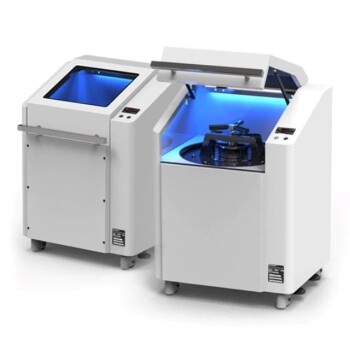
Ultrafine grinding is the critical enabler for processing boron carbide effectively. Because boron carbide is defined by extremely strong covalent bonds and a low self-diffusion coefficient, it is naturally resistant to sintering. You must use ultrafine grinding to reduce particles to the sub-micron level (approximately d50=0.56μm) to drastically increase the specific surface area, thereby generating the high surface energy necessary to drive densification.
The Thermodynamic Imperative Boron carbide lacks the natural atomic mobility required for easy sintering. Ultrafine grinding mechanically introduces the necessary surface energy into the system, serving as the primary thermodynamic driving force to achieve high density and controlled grain structures.
The Physics of Sintering Boron Carbide
Overcoming Atomic Inertia
Boron carbide is a rigid material characterized by strong covalent bonding.
While this makes the material incredibly hard, it also results in a low self-diffusion coefficient. This means the atoms within the material are reluctant to move or rearrange themselves, which is the fundamental requirement for fusing powder into a solid object.
The Role of Surface Energy
Standard grinding methods often fail to provide the energy required to overcome this atomic inertia.
By utilizing ultrafine grinding equipment to achieve sub-micron particle sizes, you significantly increase the specific surface area of the powder. This increase in surface area correlates directly to an increase in the system's surface energy.
Driving Densification
This elevated surface energy acts as the "fuel" for the sintering process.
Whether you are using pressureless sintering or hot-pressing techniques, this high energy state is the primary driving force that pulls particles together. It facilitates higher densification, ensuring the final ceramic product is solid rather than porous.
Controlling Microstructure
Regulating Grain Growth
Achieving a dense material is only half the battle; the internal structure matters equally.
The energy provided by sub-micron powders allows for better control over grain size during the heating process. Proper preparation prevents the formation of exaggerated grain structures that can weaken the final component.
Ensuring Uniformity
While not explicitly detailed in the primary boron carbide context, general powder processing principles (reinforced by supplementary data on other materials) suggest that particle uniformity is key.
Ultrafine grinding ensures a consistent particle size distribution. This uniformity promotes even heat transfer and reaction rates throughout the material matrix, leading to reproducible mechanical properties.
Understanding the Trade-offs
Increased Reactivity Risks
While high specific surface area is essential for sintering boron carbide, it introduces a vulnerability.
As seen in other fine powder applications (such as titanium alloys), increasing the surface area makes the powder more susceptible to oxidation. The same energy that drives sintering can also drive unwanted chemical reactions with the atmosphere if the environment is not strictly controlled.
Processing Complexity
Handling sub-micron powders requires precise equipment and safety protocols.
The shift from standard sieving to ultrafine grinding increases the complexity of raw material preparation. However, for boron carbide, this is not an optional luxury but a technical necessity to achieve viable material performance.
Making the Right Choice for Your Goal
To maximize the performance of your boron carbide components, align your processing strategy with your specific requirements:
- If your primary focus is Maximum Density: Ensure your grinding process reliably hits the sub-micron range (d50 ≈ 0.56μm) to maximize the surface energy needed for densification.
- If your primary focus is Structural Integrity: Monitor the particle size distribution closely to ensure uniformity, which controls grain growth and prevents structural defects.
- If your primary focus is Chemical Purity: Be vigilant regarding environmental controls, as the high surface area required for sintering increases the risk of oxidation and contamination.
Ultimately, the mechanical success of a boron carbide ceramic is predetermined by the surface energy generated during the raw material grinding phase.
Summary Table:
| Feature | Standard Grinding | Ultrafine Grinding (Sub-micron) |
|---|---|---|
| Particle Size (d50) | > 1.0 μ m | ≈ 0.56 μ m |
| Specific Surface Area | Low | Very High |
| Surface Energy | Insufficient for sintering | High (Primary driving force) |
| Sintering Result | High porosity, low density | High densification, controlled grains |
| Sintering Mechanism | Limited atomic mobility | Overcomes covalent bond inertia |
Elevate Your Material Performance with KINTEK Precision Solutions
High-performance boron carbide requires more than just heat; it requires meticulously prepared raw materials. At KINTEK, we specialize in providing the advanced crushing and milling systems and sieving equipment necessary to reach critical sub-micron levels.
Whether you are processing advanced ceramics, battery materials, or specialized alloys, our comprehensive portfolio—including high-temperature vacuum furnaces, hot presses, and isostatic presses—is designed to help you achieve maximum densification and structural integrity.
Ready to optimize your lab's output? Contact us today to discover how KINTEK’s expertise in laboratory equipment and consumables can streamline your research and production.
Related Products
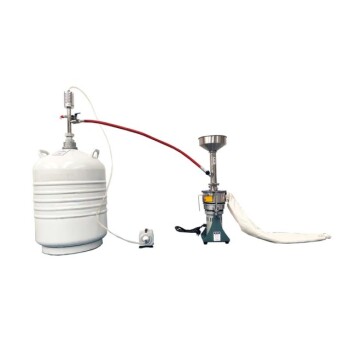
- Liquid Nitrogen Cryogenic Grinder Mill Cryomill Airflow Ultrafine Pulverizer
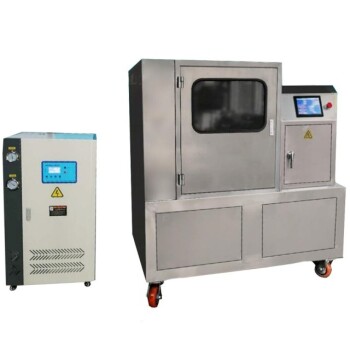
- Low-Temperature Water-Cooled Touchscreen Vibratory Ultrafine Pulverizer
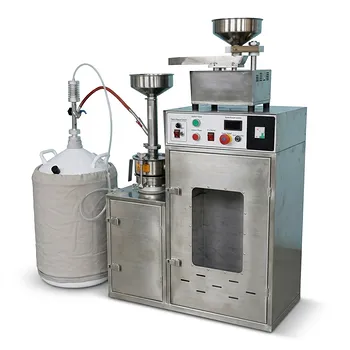
- Liquid Nitrogen Cryogenic Grinder Mill Cryomill with Screw Feeder
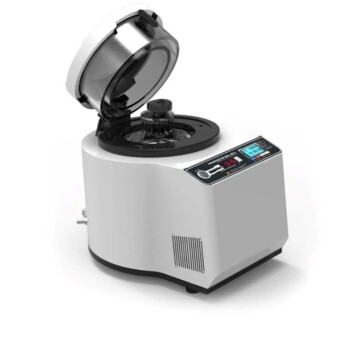
- Laboratory High Throughput Tissue Grinding Mill Grinder
- lab cryogenic grinding use liquid-nitrogen for pulverizing plastic raw materials and heat sensitive materials
People Also Ask
- What is cryogenic grinding of crumb rubber? Achieve Fine, High-Quality Rubber Powder
- What are the advantages of using a cryogenic grinder? Achieve Nanoscale Precision for All-Solid-State Battery Cathodes
- What is the role of a cryogenic grinder in PET recycling? Transform Waste into High-Reactive Micron Powders
- Why is a cryogenic grinder required for cured alkyd resin HRMAS NMR? Ensure Structural Integrity & Sample Precision
- What is the temperature of cryogenic grinding? Achieve Superior Particle Size & Preserve Heat-Sensitive Materials