Knowledge tube furnace Why must a pyrolysis furnace be equipped with a high-precision PID temperature controller? Ensure Precise Bio-oil Yields
Author avatar

Tech Team · Kintek Solution

Updated 3 months ago

Why must a pyrolysis furnace be equipped with a high-precision PID temperature controller? Ensure Precise Bio-oil Yields


The precise control of thermal energy is the single most important factor in determining the chemical output of biomass pyrolysis. A high-precision PID (Proportional-Integral-Derivative) temperature controller is essential because it provides real-time, closed-loop feedback to maintain the furnace at an exact set point, such as 550°C. This level of control prevents thermal fluctuations that would otherwise lead to incomplete cracking or excessive secondary decomposition, ensuring the bio-oil and biochar yields are both predictable and reproducible.

Core Takeaway: High-precision PID controllers eliminate "thermal noise" and prevent temperature overshoot, allowing researchers to isolate the exact impact of temperature on the metabolic and thermochemical conversion of oleaginous yeast into bio-oil.

The Critical Role of Thermal Stability in Pyrolysis

Governing Product Distribution

Temperature is the primary variable that dictates whether biomass converts into bio-oil, biochar, or non-condensable gases. Without a high-precision controller, the furnace may drift from the optimal range, leading to inconsistent product ratios.

A steady operating temperature ensures that the thermal energy provided is exactly sufficient to break specific molecular bonds without triggering unwanted side reactions.

Preventing Incomplete or Excessive Cracking

In experiments involving oleaginous yeast, maintaining a specific thermochemical window is vital for maximizing bio-oil yield. If the temperature drops, the biomass suffers from incomplete cracking, leaving behind unreacted solids and reducing efficiency.

Conversely, if the temperature exceeds the set point, excessive cracking occurs. This breaks down the desired bio-oil molecules into low-value gases, essentially "overcooking" the sample and ruining the experimental data.

Enhancing Data Integrity and Reproducibility

Eliminating Thermal "Noise"

High-precision controllers utilize closed-loop feedback to achieve minute heating and cooling adjustments, sometimes as granular as 0.2°C per hour. This precision eliminates non-physiological noise—random temperature spikes that can mask the true metabolic or chemical response of the yeast.

By stabilizing the environment, researchers can be confident that any changes in bio-oil quality or yield are the result of the experimental variables, not equipment instability.

Multi-Stage Reaction Management

Advanced pyrolysis often requires multiple heating zones to study primary yields and secondary conversions separately. A high-precision system allows for independent regulation of these stages, such as holding one zone at 600°C for primary yield while testing a second zone at 850°C.

This dual-zone control is critical for identifying the "critical transformation temperatures" where secondary vapors begin to break down into permanent gases.

Understanding the Trade-offs and Challenges

The Complexity of PID Tuning

While PID controllers offer extreme precision, they require careful "tuning" of the proportional, integral, and derivative constants. An improperly tuned controller can lead to oscillations, where the furnace temperature hunts back and forth across the set point rather than settling.

Sensitivity to Environmental Variables

High-precision systems are highly sensitive to external factors, such as changes in laboratory ambient temperature or gas flow rates. If the PID settings are too aggressive, the system may overreact to these minor changes, leading to temporary thermal instability.

How to Apply This to Your Project

Making the Right Choice for Your Goal

To achieve the best results in oleaginous yeast pyrolysis, your control strategy should align with your specific research objectives.

  • If your primary focus is maximizing bio-oil yield: Prioritize a controller with a strong anti-reset windup feature to prevent temperature overshoot during the initial heating phase.
  • If your primary focus is studying reaction kinetics: Select a multi-channel PID system that supports dynamic temperature ramping to accurately track how yeast decomposes at specific degrees per minute.
  • If your primary focus is secondary gas conversion: Ensure your furnace has multi-zone independent control to maintain a stable primary cracking temperature while varying the secondary stage.

Precise thermal regulation is the bridge between raw biomass and high-quality bio-oil, transforming a volatile chemical reaction into a repeatable scientific process.

Summary Table:

Key Feature Benefit for Pyrolysis Impact on Research Yields
Real-time PID Feedback Prevents temperature overshoot/undershoot Consistent bio-oil and biochar distribution
High-Precision Control Eliminates thermal "noise" (±0.2°C) Enhanced data integrity and reproducibility
Multi-zone Regulation Independent stage management Optimized primary and secondary cracking stages
Dynamic Ramping Controlled heating rates Accurate tracking of reaction kinetics

Elevate Your Research with KINTEK Precision

Maximize your biomass conversion efficiency with KINTEK’s advanced thermal solutions. As specialists in laboratory equipment, we provide the high-precision muffle, tube, rotary, and vacuum furnaces essential for maintaining the stable environments required for oleaginous yeast experiments.

Our comprehensive portfolio is designed for accuracy, featuring high-temperature high-pressure reactors, crushing and milling systems, and essential consumables like PTFE and ceramics. Whether you are optimizing bio-oil yields or studying complex reaction kinetics, KINTEK delivers the reliability and technical support your lab demands.

Ready to eliminate thermal instability? Contact KINTEK today to find the perfect equipment for your research!

References

  1. Pongsatorn Poopisut, Apichat Boontawan. Oleaginous yeast, Rhodotorula paludigena CM33, platform for bio-oil and biochar productions via fast pyrolysis. DOI: 10.1186/s13068-023-02270-x

This article is also based on technical information from Kintek Solution Knowledge Base .

Related Products

People Also Ask

Related Products

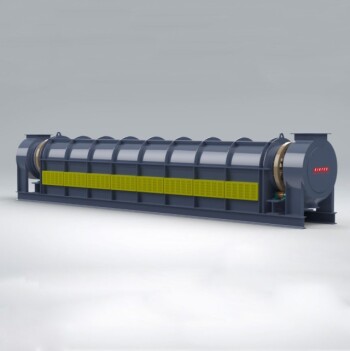
Electric Rotary Kiln Small Rotary Furnace Biomass Pyrolysis Plant

Electric Rotary Kiln Small Rotary Furnace Biomass Pyrolysis Plant

Learn about Rotary Biomass Pyrolysis Furnaces & how they decompose organic material at high temps without oxygen. Use for biofuels, waste processing, chemicals & more.

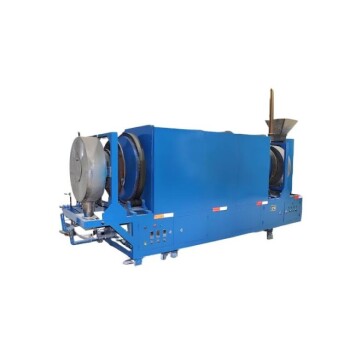
Electric Rotary Kiln Pyrolysis Furnace Plant Machine Calciner Small Rotary Kiln Rotating Furnace

Electric Rotary Kiln Pyrolysis Furnace Plant Machine Calciner Small Rotary Kiln Rotating Furnace

Electric rotary kiln - precisely controlled, it's ideal for calcination and drying of materials like lithium cobalate, rare earths, and non-ferrous metals.

Electric Rotary Kiln Continuous Working Small Rotary Furnace Heating Pyrolysis Plant

Electric Rotary Kiln Continuous Working Small Rotary Furnace Heating Pyrolysis Plant

Efficiently calcine and dry bulk powder and lump fluid materials with an electric heating rotary furnace. Ideal for processing lithium ion battery materials and more.

Ultra-High Temperature Graphite Vacuum Graphitization Furnace

Ultra-High Temperature Graphite Vacuum Graphitization Furnace

The ultra-high temperature graphitization furnace utilizes medium frequency induction heating in a vacuum or inert gas environment. The induction coil generates an alternating magnetic field, inducing eddy currents in the graphite crucible, which heats up and radiates heat to the workpiece, bringing it to the desired temperature. This furnace is primarily used for graphitization and sintering of carbon materials, carbon fiber materials, and other composite materials.

High Temperature Muffle Oven Furnace for Laboratory Debinding and Pre Sintering

High Temperature Muffle Oven Furnace for Laboratory Debinding and Pre Sintering

KT-MD High temperature debinding and pre-sintering furnace for ceramic materials with various molding processes. Ideal for electronic components such as MLCC and NFC.

Vertical High Temperature Graphite Vacuum Graphitization Furnace

Vertical High Temperature Graphite Vacuum Graphitization Furnace

Vertical high temperature graphitization furnace for carbonization and graphitization of carbon materials up to 3100℃.Suitable for shaped graphitization of carbon fiber filaments and other materials sintered in a carbon environment.Applications in metallurgy, electronics, and aerospace for producing high-quality graphite products like electrodes and crucibles.

Horizontal High Temperature Graphite Vacuum Graphitization Furnace

Horizontal High Temperature Graphite Vacuum Graphitization Furnace

Horizontal Graphitization Furnace: This type of furnace is designed with the heating elements placed horizontally, allowing for uniform heating of the sample. It's well-suited for graphitizing large or bulky samples that require precise temperature control and uniformity.

Large Vertical Graphite Vacuum Graphitization Furnace

Large Vertical Graphite Vacuum Graphitization Furnace

A large vertical high-temperature graphitization furnace is a type of industrial furnace used for the graphitization of carbon materials, such as carbon fiber and carbon black. It is a high-temperature furnace that can reach temperatures of up to 3100°C.

Graphite Vacuum Furnace Bottom Discharge Graphitization Furnace for Carbon Materials

Graphite Vacuum Furnace Bottom Discharge Graphitization Furnace for Carbon Materials

Bottom-out graphitization furnace for carbon materials, ultra-high temperature furnace up to 3100°C, suitable for graphitization and sintering of carbon rods and carbon blocks. Vertical design, bottom discharging, convenient feeding and discharging, high temperature uniformity, low energy consumption, good stability, hydraulic lifting system, convenient loading and unloading.

Spark Plasma Sintering Furnace SPS Furnace

Spark Plasma Sintering Furnace SPS Furnace

Discover the benefits of Spark Plasma Sintering Furnaces for rapid, low-temperature material preparation. Uniform heating, low cost & eco-friendly.

Graphite Vacuum Furnace High Thermal Conductivity Film Graphitization Furnace

Graphite Vacuum Furnace High Thermal Conductivity Film Graphitization Furnace

The high thermal conductivity film graphitization furnace has uniform temperature, low energy consumption and can operate continuously.

Graphite Vacuum Continuous Graphitization Furnace

Graphite Vacuum Continuous Graphitization Furnace

High-temperature graphitization furnace is a professional equipment for graphitization treatment of carbon materials. It is a key equipment for the production of high-quality graphite products. It has high temperature, high efficiency and uniform heating. It is suitable for various high-temperature treatments and graphitization treatments. It is widely used in metallurgy, electronics, aerospace, etc. industry.

Vacuum Arc Induction Melting Furnace

Vacuum Arc Induction Melting Furnace

Discover the power of Vacuum Arc Furnace for melting active & refractory metals. High-speed, remarkable degassing effect, and free of contamination. Learn more now!

Vacuum Heat Treat and Pressure Sintering Furnace for High Temperature Applications

Vacuum Heat Treat and Pressure Sintering Furnace for High Temperature Applications

Vacuum pressure sintering furnaces are designed for high temperature hot pressing applications in metal and ceramic sintering. Its advanced features ensure precise temperature control, reliable pressure maintenance, and a robust design for seamless operation.

Controlled Nitrogen Inert Hydrogen Atmosphere Furnace

Controlled Nitrogen Inert Hydrogen Atmosphere Furnace

KT-AH Hydrogen atmosphere furnace - induction gas furnace for sintering/annealing with built-in safety features, dual housing design, and energy-saving efficiency. Ideal for lab and industrial use.

Non Consumable Vacuum Arc Induction Melting Furnace

Non Consumable Vacuum Arc Induction Melting Furnace

Explore the benefits of Non-Consumable Vacuum Arc Furnace with high melting point electrodes. Small, easy to operate & eco-friendly. Ideal for laboratory research on refractory metals & carbides.

1700℃ Controlled Atmosphere Furnace Nitrogen Inert Atmosphere Furnace

1700℃ Controlled Atmosphere Furnace Nitrogen Inert Atmosphere Furnace

KT-17A Controlled atmosphere furnace: 1700℃ heating, vacuum sealing technology, PID temperature control, and versatile TFT smart touch screen controller for laboratory and industrial use.

600T Vacuum Induction Hot Press Furnace for Heat Treat and Sintering

600T Vacuum Induction Hot Press Furnace for Heat Treat and Sintering

Discover the 600T Vacuum Induction Hot Press Furnace, designed for high-temperature sintering experiments in vacuum or protected atmospheres. Its precise temperature and pressure control, adjustable working pressure, and advanced safety features make it ideal for nonmetal materials, carbon composites, ceramics, and metal powders.

1200℃ Controlled Atmosphere Furnace Nitrogen Inert Atmosphere Furnace

1200℃ Controlled Atmosphere Furnace Nitrogen Inert Atmosphere Furnace

Discover our KT-12A Pro Controlled atmosphere furnace - high precision, heavy duty vacuum chamber, versatile smart touch screen controller, and excellent temperature uniformity up to 1200C. Ideal for both laboratory and industrial application.

Laboratory Muffle Oven Furnace Bottom Lifting Muffle Furnace

Laboratory Muffle Oven Furnace Bottom Lifting Muffle Furnace

Efficiently produce batches with excellent temperature uniformity using our Bottom Lifting Furnace. Features two electric lifting stages and advanced temperature control up to 1600℃.


Leave Your Message