Articles
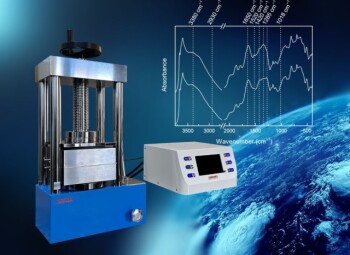
Unveiling the World of Heated Lab Presses: A Comprehensive Guide
2 years agoDiscover the versatility of heated lab presses in various applications, from sample preparation to material testing. Explore key factors to consider when purchasing a lab press, including pressure, temperature, platen size, and control options.
Learn More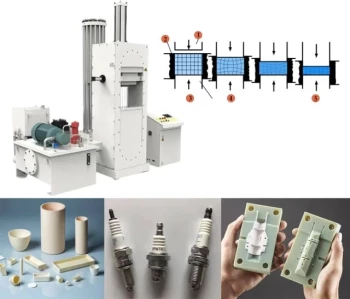
Understanding Cold Isostatic Pressing: Application, Advantages, and Limitations
2 years agoCold Isostatic Pressing (CIP) is a widely used manufacturing process in various industries, including ceramics, metalworking, and pharmaceuticals. It involves applying equal pressure from all directions to a material placed inside a flexible mold or bag. This process helps in achieving uniform density and shaping complex components with intricate geometries.
Learn More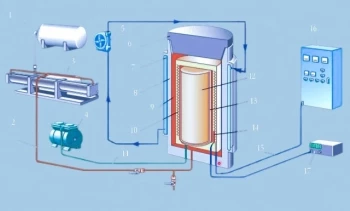
Understanding the Principles and Applications of Isostatic Pressing
2 years agoIn this process, the powder is filled in a mold and sealed tightly. This occurs outside the pressure vessel. After filling the mold with powder, the mold is submerged in the pressure fluid within the pressure vessel. Then isostatic pressure is applied to the external surface of the mold, compressing the powder into a solid mass.
Learn More
Isostatic Pressing: Methods, Applications and Comparison with Other Compaction Methods
2 years agoIsostatic pressing is a compaction method that offers unique advantages in achieving uniform density and creating complex shapes. Unlike other compaction methods, isostatic pressing utilizes flexible molds to reduce friction and allow for intricate designs.
Learn More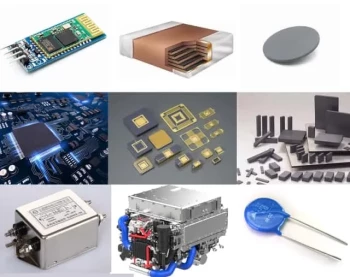
Comprehensive Overview of Warm Isostatic Press and Its Applications
2 years agoWarm isostatic pressing (WIP) is a variant of cold isostatic pressing (CIP) that includes a heating element. It employs warm water or a similar medium to apply uniform pressure to powdered products from all directions. WIP is a cutting-edge technology that enables isostatic pressing at a temperature that does not exceed the boiling point of the liquid medium.
Learn More
Understanding the Isostatic Pressing Process: Origins, Types, and Applications
2 years agoThe isostatic pressing process was pioneered in the mid-1950s and has steadily grown from a research curiosity to a viable production tool. Many industries apply this technique for consolidation of powders or defect healing of castings.
Learn More
Warm Isostatic Pressing: An Advanced Manufacturing Technology
2 years agoWarm Isostatic Pressing (WIP) is a cutting-edge technology that enables isostatic pressing at a temperature that does not exceed the boiling point of the liquid medium. It is a variant of cold isostatic pressing (CIP) that includes a heating element.
Learn More
Understanding Cold Isostatic Pressing and Its Applications
2 years agoCold isostatic pressing (CIP) is a method of processing materials. It involves compacting powders by enclosing them in an elastomer mold and applying uniform liquid pressure to compress the mold. This results in a highly compact solid. Cold isostatic pressing is commonly used for plastics, graphite, powdered metallurgy, ceramics, sputtering targets, and other materials.
Learn More
Determining Optimal Pressure for XRF Pellet Pressing
2 years agoThe process of XRF pellet pressing involves applying pressure to a sample to create a solid pellet that can be analyzed by an X-ray fluorescence (XRF) spectrometer. Optimal pressure is crucial for achieving accurate and reliable results in XRF analysis.
Learn More
Understanding Isostatic Pressing in Powder Metallurgy
2 years agoIsostatic pressing is a powder processing technique that uses fluid pressure to compact the part. It involves placing metal powders in a flexible container, which acts as the mold for the part. Fluid pressure is then exerted over the entire outside surface of the container, causing it to press and form the powder into the desired geometry.
Learn More
Understanding Isostatic Pressing: Cold and Hot Techniques
2 years agoIsostatic pressing is a powder processing technique that uses fluid pressure to compact the part. It involves placing metal powders in a flexible container, which acts as a mold for the part. Fluid pressure is exerted over the entire outside surface of the container, causing the powder to be formed into the desired geometry. Unlike other processes that exert force on the powder through an axis, isostatic pressing applies pressure equally from all directions.
Learn More
Dilution Ratios for XRF Pelletising Finding the Optimal Balance
2 years agoXRF analysis is a powerful technique used by researchers and scientists to determine the elemental composition of various materials. One of the most crucial steps in XRF analysis is the preparation of samples for analysis, which often involves creating pellets from powdered samples.
Learn More
Understanding Cold Isostatic Pressing (CIP) and Its Advantages
2 years agoCold Isostatic Pressing (CIP) is a unique technique used in the manufacturing industry for compacting and shaping materials. It involves subjecting a material to uniform pressure from all directions, resulting in a highly dense and uniform product. CIP is particularly useful for machining and metal forming tools, as well as for large parts that don't require high precision.
Learn More
Understanding Isostatic Pressing: Process, Benefits, Limitations, and Applications
2 years agoIsostatic pressing is a manufacturing process that offers numerous benefits and applications in various industries. It involves subjecting a material to equal pressure from all directions to achieve uniform density and shape. This method is particularly advantageous compared to other production techniques.
Learn More
Everything You Need to Know About FTIR Pellet Press
2 years agoFourier Transform Infrared (FTIR) spectroscopy is a non-destructive analytical technique used to identify and quantify the chemical composition of a sample. FTIR pellet presses are used to prepare solid samples for FTIR analysis by compressing them into pellets.
Learn More
Understanding Cold Isostatic Pressing (CIP) and Hot Isostatic Pressing (HIP) in Powder Metallurgy
2 years agoCold Isostatic Pressing (CIP) and Hot Isostatic Pressing (HIP) are two powder metallurgy techniques used to produce dense and high-quality metal components.
Learn More
Exploring the Applications of Isostatic Pressing
2 years agoIsostatic pressing is a powder metallurgy technique that applies equal pressure from all directions to a compacted powder. There are two types of isostatic pressing: cold isostatic pressing (CIP) and hot isostatic pressing (HIP). CIP uses pressure at room temperature, while HIP applies heat and pressure to the powder.
Learn More
Understanding Warm Isostatic Press: An Essential Tool in Electronics Manufacture
2 years agoWarm Isostatic Press (WIP) equipment, also known as Warm Isostatic Laminator, is a cutting-edge technology that combines isostatic pressing with a heating element. It utilizes warm water or a similar medium to apply uniform pressure to powdered products from all directions. The process involves shaping and pressing the powder material using flexible materials as a jacket mold and hydraulic pressure as a pressure medium.
Learn More
FTIR Pellet Press The Game-Changer in Spectroscopy Analysis
2 years agoFourier Transform Infrared Spectroscopy (FTIR) is a widely used analytical technique in the field of chemistry and materials science. It is a non-destructive method that allows the identification and quantification of chemical compounds in a sample.
Learn More
Understanding the Warm Isostatic Pressing Technique
2 years agoWarm Isostatic Pressing (WIP) is a technique used in the manufacturing industry to form and press powder materials. It involves the use of a flexible material as the envelope die and hydraulic pressure as the medium to shape the material. Unlike traditional pressing methods, WIP utilizes a liquid medium that is heated and injected into a sealed pressing cylinder. This technique is particularly beneficial for materials with special temperature requirements or those that cannot be formed at room temperature.
Learn More
Understanding Cold Isostatic Pressing: Process, Comparisons, and Applications
2 years agoCold isostatic pressing (CIP) is a method of processing materials that involves compacting powders by enclosing them in an elastomer mold. The process is based on Pascal's law, which states that pressure applied in an enclosed fluid is transmitted in all directions throughout the fluid without any change in magnitude.
Learn More
FTIR Pellet Press The Ultimate Solution for Precise Sample Preparation
2 years agoFourier Transform Infrared (FTIR) spectroscopy is a powerful analytical technique that can be used to identify and quantify the chemical components of a sample. However, to obtain accurate and reliable results, it is crucial to prepare the sample appropriately.
Learn More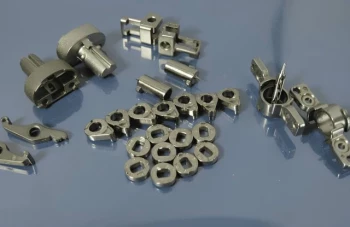
Understanding Cold Isostatic Pressing: Process, Advantages and Types
2 years agoCold Isostatic Pressing (CIP), also known as cold isostatic compaction, is a materials processing technique that involves subjecting a material to uniform pressure from all sides. This is achieved by immersing the material in a high-pressure fluid medium and applying hydraulic pressure. CIP is particularly effective for shaping and consolidating powdered materials, allowing for the creation of intricate shapes and achieving high green density.
Learn More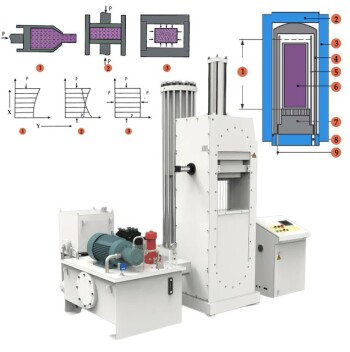
Understanding Cold Isostatic Pressing: Process, Advantages and Types
2 years agoCold Isostatic Pressing (CIP), also known as cold isostatic compaction, is a materials processing technique that involves subjecting a material to uniform pressure from all sides. This is achieved by immersing the material in a high-pressure fluid medium and applying hydraulic pressure.
Learn More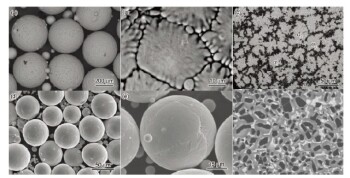
Hot Isostatic Pressing Achieving Optimal Microstructure Uniformity
2 years agoHot Isostatic Pressing(HIP ) is a technology used to densify materials at high temperatures and pressures. The process involves placing a material in a sealed container, which is then pressurized with an inert gas and heated to a high temperature.
Learn More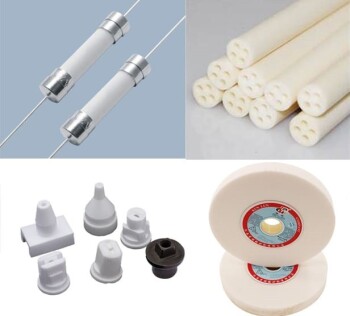
Technical Aspects of Cold Isostatic Pressing
2 years agoIsostatic pressing, is a process that involves compacting a dry or semi-dry powder in an elastomeric mold submerged in a pressurized liquid. One of the key advantages of isostatic compaction over cold pressing is the uniform pressure application.
Learn More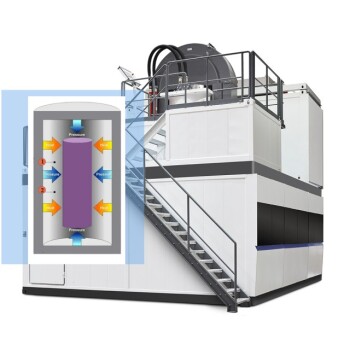
Hot & Cold Isostatic Pressing: Applications, Process, and Specifications
2 years agoHot Isostatic Pressing (HIP) is a manufacturing process that involves the simultaneous application of high temperature and pressure to metals and other materials. The purpose of HIP is to reduce the porosity of metals and increase the density of ceramic materials. This process improves the mechanical properties and workability of the materials.
Learn More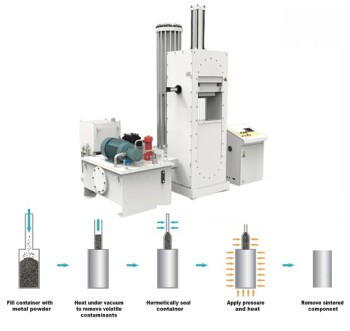
Hot Isostatic Pressing vs. Cold Isostatic Pressing
2 years agoIsostatic pressing is a manufacturing process used to produce high-density materials with improved mechanical properties. It operates by applying uniform pressure to the material from all directions to eliminate voids, cracks, and porosity.
Learn More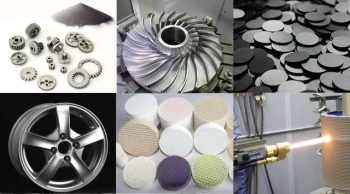
Understanding Isostatic Presses: Types, Processes, and Applications
2 years agoIsostatic presses are an essential tool in various industries, offering efficient and effective solutions for material processing. These presses utilize equal pressure in all directions to achieve uniform shaping and densification of materials.
Learn More
Comprehensive Overview of Cold Isostatic Pressing Services
2 years agoCold Isostatic Pressing (CIP) services play a crucial role in various industries, providing solutions for sterilization and compacting powders. These services offer a wide range of capabilities, ensuring the highest quality and efficiency.
Learn More