Blog The Inverted Cup: When Physics Hides a Lethal Trap in Vacuum Furnaces
The Inverted Cup: When Physics Hides a Lethal Trap in Vacuum Furnaces

The Inverted Cup: When Physics Hides a Lethal Trap in Vacuum Furnaces

11 hours ago

The Illusion of Safety

In high-stakes engineering, your intuition is often your worst enemy.

We are wired to believe that an open door equals safety. When the hearth of a bottom-loading vacuum furnace lowers and the chamber opens to the room, every instinct says the danger has passed. The cycle is over. The machinery is static. The path is clear.

Yet, this moment represents a specific, lethal blind spot in laboratory safety: Asphyxiation.

It happens not because the machine failed, but because the physics worked perfectly. The danger is invisible, odorless, and silent. It stems from a single, counter-intuitive interaction between heat and gas density.

The Shapeshifting Gas

To understand the trap, you have to understand the medium.

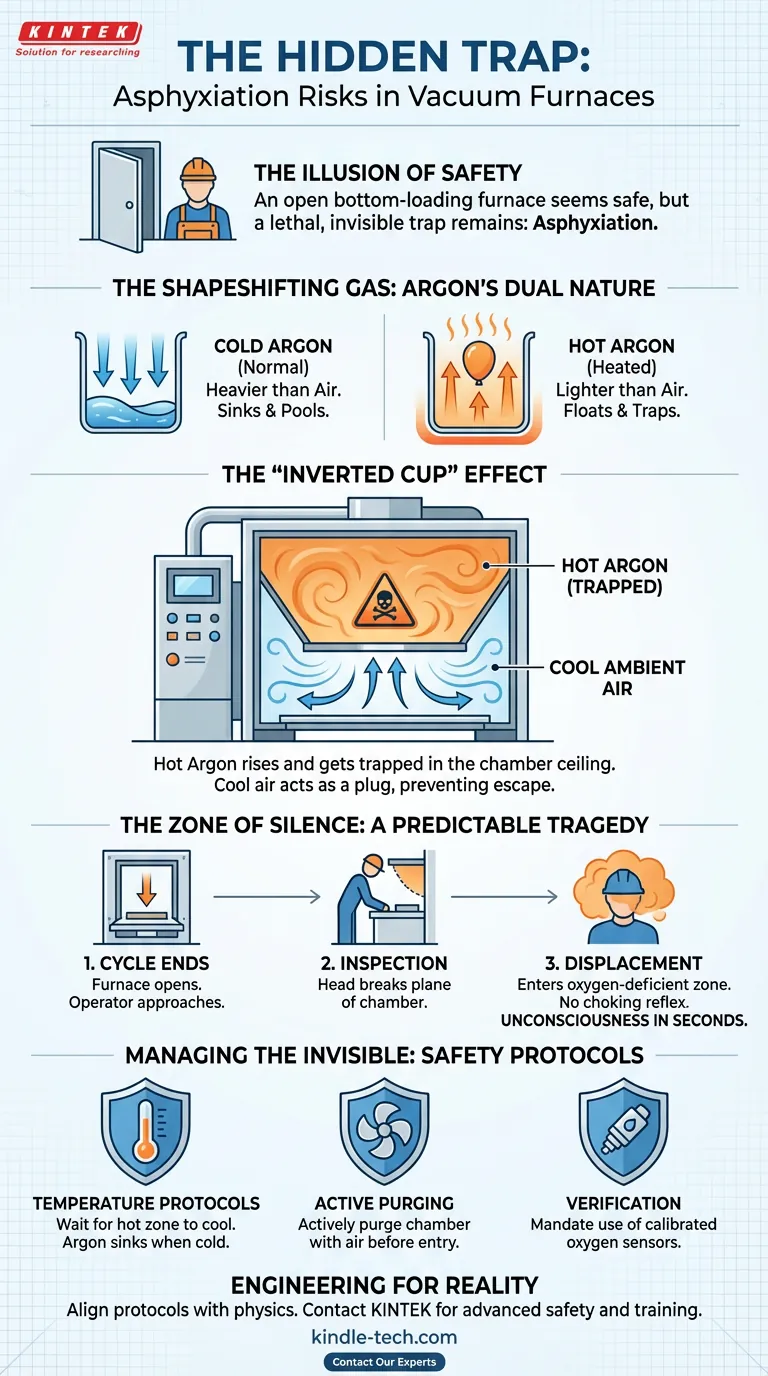
Argon is the standard choice for inert gas processing. Under normal conditions—at room temperature—Argon is roughly 38% denser than air. If you spilled a bucket of cold Argon, it would flow like water, pooling on the floor and draining out of low points.

Operators rely on this mental model: Argon sinks.

But heat changes the rules.

The Thermal Inversion

When gases heat up, their molecules vibrate violently and spread apart. This expansion drastically reduces density.

  • Cold Argon: Sinks like a stone.
  • Hot Argon: Floats like a balloon.

This is where the design of the furnace turns against the operator.

The "Inverted Cup" Effect

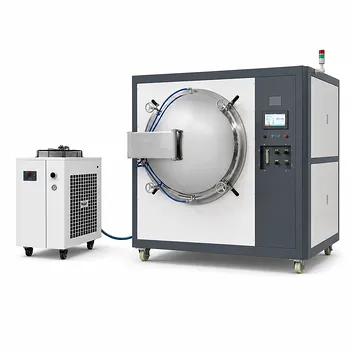
Consider the geometry of a bottom-loading vacuum furnace. It is essentially a bell jar or an inverted cup.

When the cycle ends, the bottom opens. If the Argon inside is still hot, it becomes significantly lighter than the cool, ambient air trying to enter from below.

Instead of flowing out, the hot Argon rises and becomes trapped in the "ceiling" of the furnace chamber.

The cool air from the room acts as a plug, holding the buoyant, deadly gas in place inside the chamber. The furnace has become a hot air balloon that cannot fly away.

The Zone of Silence

The tragedy usually unfolds in a predictable sequence:

  1. The Cycle Ends: The bottom lowers. The operator approaches.
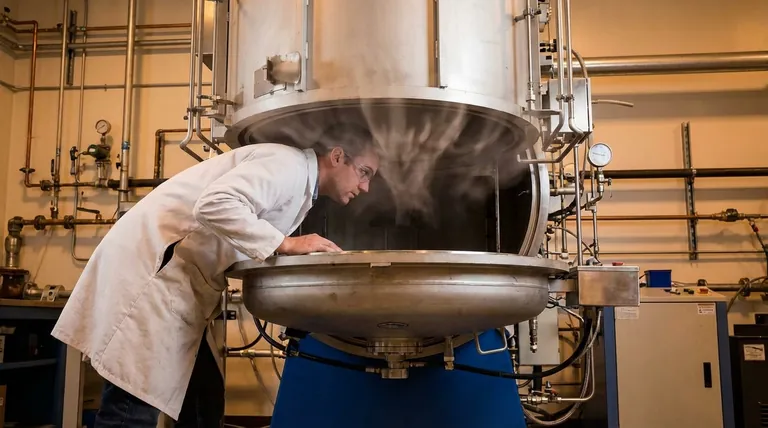
  2. The Inspection: The operator leans up and into the chamber to inspect the hot zone or heating elements.
  3. The Displacement: The operator’s head breaks the plane of the chamber, entering the pocket of trapped hot Argon.

This environment is oxygen-deficient.

Because Argon is inert, it does not trigger the body’s "choking" reflex, which is caused by carbon dioxide buildup, not oxygen lack. There is no gasping. No burning eyes. No warning.

Unconsciousness strikes in seconds.

Managing the Invisible

Safety in a laboratory setting isn't about buying the most expensive helmet. It is about aligning your protocols with the immutable laws of physics.

You cannot negotiate with gas density, but you can manage it.

The Three Rules of Entry

  • Temperature Protocols: Never break the plane of the furnace opening until the hot zone has cooled. Cooling restores Argon’s density, allowing it to sink and dissipate naturally.
  • Active Purging: Do not rely on passive ventilation. If speed is required, the chamber must be actively purged with air.
  • Verification: Intuition is not a measurement tool. Mandate the use of calibrated oxygen sensors before any physical entry.

Summary of the Hazard

Variable The Expectation The Physical Reality
Gas Behavior Argon is heavy and will fall out. Hot Argon is light and floats.
Furnace Geometry An open bottom allows drainage. The chamber acts as a trap (Inverted Cup).
Physiology I will feel like I'm choking. You will blackout without warning.

Engineering for Reality

The most dangerous risks are the ones that look like safety.

At KINTEK, we believe that high-performance equipment must be paired with high-level understanding. We design our vacuum furnaces and thermal solutions with the operator's reality in mind, but hardware is only half the equation. The other half is knowledge.

Don't let a "silent" hazard compromise your laboratory. Ensure your team understands the physics behind the equipment they use every day.

Is your safety protocol built on intuition or physics? Contact Our Experts to discuss advanced safety features, training, and equipment designed to protect your most valuable asset—your people.

Visual Guide
The Inverted Cup: When Physics Hides a Lethal Trap in Vacuum Furnaces Visual Guide

Related Products

Related Articles

Related Products

Vacuum Heat Treat Sintering Brazing Furnace

Vacuum Heat Treat Sintering Brazing Furnace

A vacuum brazing furnace is a type of industrial furnace used for brazing, a metalworking process that joins two pieces of metal using a filler metal that melts at a lower temperature than the base metals. Vacuum brazing furnaces are typically used for high-quality applications where a strong, clean joint is required.

High Pressure Laboratory Vacuum Tube Furnace Quartz Tubular Furnace

High Pressure Laboratory Vacuum Tube Furnace Quartz Tubular Furnace

KT-PTF High Pressure Tube Furnace: Compact split tube furnace with strong positive pressure resistance. Working temp up to 1100°C and pressure up to 15Mpa. Also works under controller atmosphere or high vacuum.

Vacuum Heat Treat and Molybdenum Wire Sintering Furnace for Vacuum Sintering

Vacuum Heat Treat and Molybdenum Wire Sintering Furnace for Vacuum Sintering

A vacuum molybdenum wire sintering furnace is a vertical or bedroom structure, which is suitable for withdrawal, brazing, sintering and degassing of metal materials under high vacuum and high temperature conditions. It is also suitable for dehydroxylation treatment of quartz materials.

Laboratory Vacuum Tilt Rotary Tube Furnace Rotating Tube Furnace

Laboratory Vacuum Tilt Rotary Tube Furnace Rotating Tube Furnace

Discover the versatility of Laboratory Rotary Furnace: Ideal for calcination, drying, sintering, and high-temperature reactions. Adjustable rotating and tilting functions for optimal heating. Suitable for vacuum and controlled atmosphere environments. Learn more now!

Graphite Vacuum Furnace High Thermal Conductivity Film Graphitization Furnace

Graphite Vacuum Furnace High Thermal Conductivity Film Graphitization Furnace

The high thermal conductivity film graphitization furnace has uniform temperature, low energy consumption and can operate continuously.

Laboratory Muffle Oven Furnace Bottom Lifting Muffle Furnace

Laboratory Muffle Oven Furnace Bottom Lifting Muffle Furnace

Efficiently produce batches with excellent temperature uniformity using our Bottom Lifting Furnace. Features two electric lifting stages and advanced temperature control up to 1600℃.

Molybdenum Vacuum Heat Treat Furnace

Molybdenum Vacuum Heat Treat Furnace

Discover the benefits of a high-configuration molybdenum vacuum furnace with heat shield insulation. Ideal for high-purity, vacuum environments like sapphire crystal growth and heat treatment.

Vacuum Hot Press Furnace Heated Vacuum Press Machine Tube Furnace

Vacuum Hot Press Furnace Heated Vacuum Press Machine Tube Furnace

Reduce forming pressure & shorten sintering time with Vacuum Tube Hot Press Furnace for high-density, fine-grain materials. Ideal for refractory metals.

Vacuum Dental Porcelain Sintering Furnace

Vacuum Dental Porcelain Sintering Furnace

Get precise and reliable results with KinTek's Vacuum Porcelain Furnace. Suitable for all porcelain powders, it features hyperbolic ceramic furnace function, voice prompt, and automatic temperature calibration.

2200 ℃ Tungsten Vacuum Heat Treat and Sintering Furnace

2200 ℃ Tungsten Vacuum Heat Treat and Sintering Furnace

Experience the ultimate refractory metal furnace with our Tungsten vacuum furnace. Capable of reaching 2200℃, perfect for sintering advanced ceramics and refractory metals. Order now for high-quality results.

Vacuum Heat Treat Furnace with Ceramic Fiber Liner

Vacuum Heat Treat Furnace with Ceramic Fiber Liner

Vacuum furnace with polycrystalline ceramic fiber insulation liner for excellent heat insulation and uniform temperature field. Choose from 1200℃ or 1700℃ max. working temperature with high vacuum performance and precise temperature control.

1200℃ Controlled Atmosphere Furnace Nitrogen Inert Atmosphere Furnace

1200℃ Controlled Atmosphere Furnace Nitrogen Inert Atmosphere Furnace

Discover our KT-12A Pro Controlled atmosphere furnace - high precision, heavy duty vacuum chamber, versatile smart touch screen controller, and excellent temperature uniformity up to 1200C. Ideal for both laboratory and industrial application.

Vacuum Heat Treat and Sintering Furnace with 9MPa Air Pressure

Vacuum Heat Treat and Sintering Furnace with 9MPa Air Pressure

The air pressure sintering furnace is a high-tech equipment commonly used for the sintering of advanced ceramic materials. It combines vacuum sintering and pressure sintering techniques to achieve high-density and high-strength ceramics.

Ultra-High Temperature Graphite Vacuum Graphitization Furnace

Ultra-High Temperature Graphite Vacuum Graphitization Furnace

The ultra-high temperature graphitization furnace utilizes medium frequency induction heating in a vacuum or inert gas environment. The induction coil generates an alternating magnetic field, inducing eddy currents in the graphite crucible, which heats up and radiates heat to the workpiece, bringing it to the desired temperature. This furnace is primarily used for graphitization and sintering of carbon materials, carbon fiber materials, and other composite materials.

Horizontal High Temperature Graphite Vacuum Graphitization Furnace

Horizontal High Temperature Graphite Vacuum Graphitization Furnace

Horizontal Graphitization Furnace: This type of furnace is designed with the heating elements placed horizontally, allowing for uniform heating of the sample. It's well-suited for graphitizing large or bulky samples that require precise temperature control and uniformity.

600T Vacuum Induction Hot Press Furnace for Heat Treat and Sintering

600T Vacuum Induction Hot Press Furnace for Heat Treat and Sintering

Discover the 600T Vacuum Induction Hot Press Furnace, designed for high-temperature sintering experiments in vacuum or protected atmospheres. Its precise temperature and pressure control, adjustable working pressure, and advanced safety features make it ideal for nonmetal materials, carbon composites, ceramics, and metal powders.

Vacuum Hot Press Furnace Machine Heated Vacuum Press

Vacuum Hot Press Furnace Machine Heated Vacuum Press

Discover the advantages of Vacuum Hot Press Furnace! Manufacture dense refractory metals & compounds, ceramics, and composites under high temp and pressure.

Vertical High Temperature Graphite Vacuum Graphitization Furnace

Vertical High Temperature Graphite Vacuum Graphitization Furnace

Vertical high temperature graphitization furnace for carbonization and graphitization of carbon materials up to 3100℃.Suitable for shaped graphitization of carbon fiber filaments and other materials sintered in a carbon environment.Applications in metallurgy, electronics, and aerospace for producing high-quality graphite products like electrodes and crucibles.

1700℃ Controlled Atmosphere Furnace Nitrogen Inert Atmosphere Furnace

1700℃ Controlled Atmosphere Furnace Nitrogen Inert Atmosphere Furnace

KT-17A Controlled atmosphere furnace: 1700℃ heating, vacuum sealing technology, PID temperature control, and versatile TFT smart touch screen controller for laboratory and industrial use.

Laboratory Quartz Tube Furnace Tubular RTP Heating Furnace

Laboratory Quartz Tube Furnace Tubular RTP Heating Furnace

Get lightning-fast heating with our RTP Rapid Heating Tube Furnace. Designed for precise, high-speed heating and cooling with convenient sliding rail and TFT touch screen controller. Order now for ideal thermal processing!


Leave Your Message