The Enemy Within: A Material's Hidden Flaw
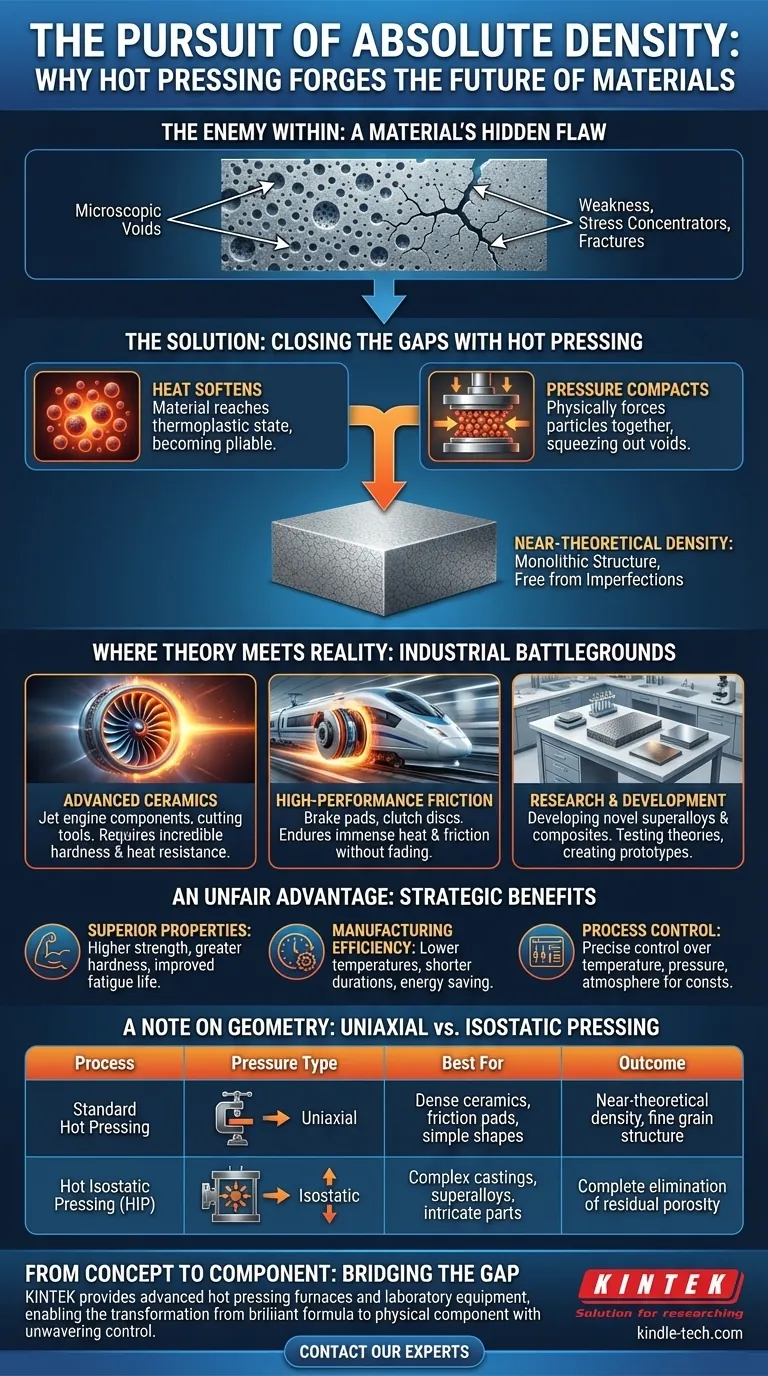
Every material failure begins with a flaw. Often, it's not a dramatic crack or visible defect, but a microscopic void—an empty space hidden deep within the structure.
In the world of high-performance engineering, these tiny pockets of nothingness are the ultimate enemy. They are points of weakness, stress concentrators where fractures are born. The grand ambition of materials science isn't just to create stronger materials, but to create perfect materials, free from these internal imperfections.
This is more than a technical challenge; it's a psychological one. It's about achieving certainty and control over a material's destiny. And one of the most powerful tools in this pursuit is a process that wages a direct war on voids: hot pressing.
Closing the Gaps, Literally
Traditional sintering involves heating a powder until its particles fuse together. But it often leaves behind residual porosity, those tiny voids that compromise integrity. It’s like building a wall with bricks but leaving small gaps in the mortar.
Hot pressing corrects this with a simple, yet profoundly effective, philosophy: if heat alone won't close the gaps, add force.
Heat Softens, Pressure Compacts
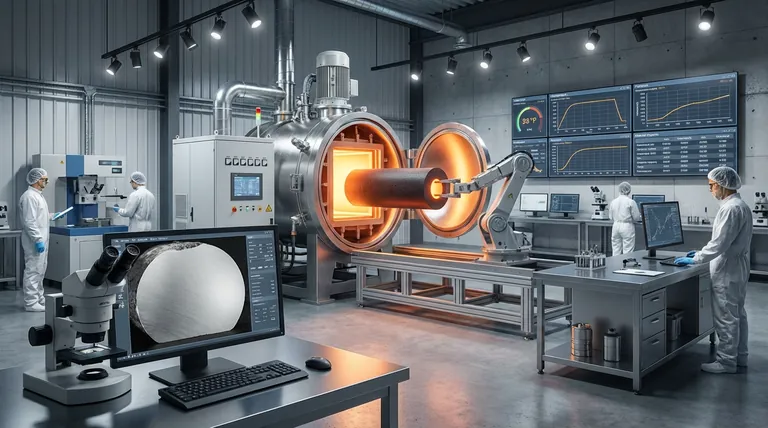
The process is an elegant dance of physics. A powdered material is placed into a die and subjected to two forces simultaneously:
- High Temperature: This brings the material to a thermoplastic state, softening the particles and making them pliable.
- High Pressure: This physically forces the softened particles together, squeezing out the air and eliminating the voids between them.
This combination dramatically accelerates densification, allowing materials to reach a state of near-theoretical density—a solid, monolithic structure that is as close to perfect as physically possible.
Where Theory Meets Reality: Industrial Battlegrounds
The value of this perfection is most evident where materials are pushed to their absolute limits.
The Unyielding Hardness of Advanced Ceramics
Imagine a cutting tool slicing through hardened steel or a component inside a jet engine glowing red-hot. These applications demand advanced ceramics, materials prized for their incredible hardness and heat resistance.
But these same properties make them notoriously difficult to densify. Without applied pressure, they simply won't form a fully solid structure. Hot pressing is the industry-standard method for forging these materials, transforming brittle powders into monolithic components that can withstand hellish environments.
The Unforgiving World of High-Performance Friction
Consider the brakes on a high-speed train. Bringing hundreds of tons to a stop from 300 km/h converts an immense amount of kinetic energy into heat. The brake pads must endure this abuse thousands of times without fading or failing.
This is the world of sintered friction materials. Hot pressing is the technique used to create these durable brake pads and clutch discs, ensuring they have the uniform density and fine-grained structure needed for extreme wear resistance and thermal stability.
The Frontier of Discovery: Research & Development
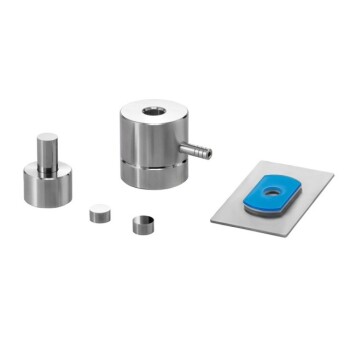
In laboratories, where the materials of tomorrow are born, hot pressing is a fundamental tool. Scientists developing novel superalloys, advanced composites, or new cemented carbides rely on smaller, precision-controlled hot pressing units to test theories and create prototypes. It allows them to engineer material properties from the ground up, turning a chemical formula into a tangible, high-performance solid.
An Unfair Advantage: The Logic of Pressure
Choosing hot pressing isn't just about achieving density; it's a strategic decision driven by tangible benefits.
- Superior Properties: By eliminating porosity, hot pressing directly enhances mechanical properties. The result is higher strength, greater hardness, and improved fatigue life.
- Manufacturing Efficiency: Because pressure assists the sintering process, it can be done at lower temperatures and for shorter durations than pressureless methods. This saves both time and energy.
- Process Control: Modern systems provide precise control over temperature, pressure, and atmosphere, ensuring consistent, repeatable results—a critical factor in both R&D and high-stakes production.
A Note on Geometry: Uniaxial vs. Isostatic Pressing
It's important to distinguish between two forms of the technique:
- Hot Pressing (Uniaxial): Pressure is applied along a single axis within a rigid die. Think of a powerful vise. This is ideal for producing accurately sized parts like discs, blocks, and cylinders.
- Hot Isostatic Pressing (HIP): The component is placed in a vessel and subjected to uniform pressure from an inert gas on all sides. Think of the pressure at the bottom of the ocean. This is superior for eliminating all residual porosity in complex shapes or castings.
| Process | Pressure Type | Best For | Outcome |
|---|---|---|---|
| Standard Hot Pressing | Uniaxial | Dense ceramics, friction pads, simple shapes | Near-theoretical density, fine grain structure |
| Hot Isostatic Pressing (HIP) | Isostatic | Complex castings, superalloys, intricate parts | Complete elimination of residual porosity |
From Concept to Component: Bridging the Gap
A brilliant material formula is only a theory until it can be reliably transformed into a physical component. The bridge between concept and reality is built with precision equipment capable of exerting extreme temperature and pressure with unwavering control.
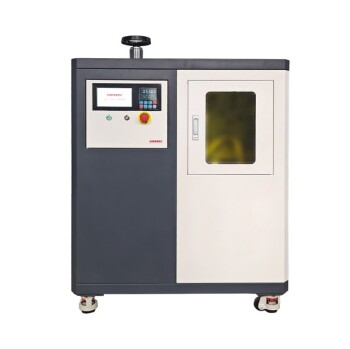
KINTEK provides the advanced hot pressing furnaces and laboratory equipment that enable this transformation. For researchers pushing the boundaries of material science and manufacturers producing critical components, our systems offer the control and reliability needed to conquer the challenge of densification.
Whether you are pioneering new alloys or scaling production of critical components, achieving material perfection starts with the right process and the right partner. Contact Our Experts
Visual Guide
Related Products
- Automatic Heated Hydraulic Press Machine with Heated Plates for Laboratory Hot Press 25T 30T 50T
- Manual High Temperature Heated Hydraulic Press Machine with Heated Plates for Lab
- Touchscreen Automatic Vacuum Heat Press
- 30T 40T Split Automatic Heated Hydraulic Press Machine with Heated Plates for Laboratory Hot Press
- Vacuum Hot Press Furnace Machine Heated Vacuum Press
Related Articles
- Why Your Composite and Polymer Parts Keep Failing: The Secret Is Simultaneous Heat and Pressure
- The Physics of Flawless Materials: Deconstructing the Hydraulic Hot Press
- Precision Under Pressure: The Physics and Psychology of the Hydraulic Hot Press
- Hydraulic Hot Press: Principles, Components, Features, Advantages, and Applications
- Comprehensive Guide to Hydraulic Hot Press: Function, Features and Applications