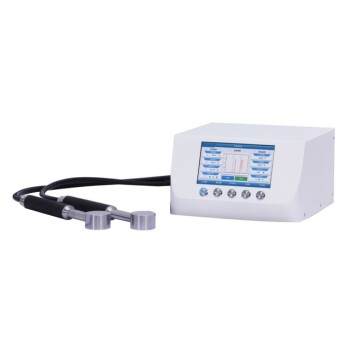
High-precision PID controllers ensure data accuracy by leveraging closed-loop feedback mechanisms to maintain strict adherence to programmed temperature profiles. By continuously adjusting heating and cooling outputs, these controllers enable precise dynamic ramps—such as gradual changes of 0.2–0.3 °C per hour—ensuring that environmental conditions within the bioreactor exactly match the experimental design.
Core Takeaway The primary function of high-precision control in this context is the elimination of non-physiological noise caused by thermal fluctuations. By stabilizing the environment, researchers can attribute observed changes in metabolic activity solely to the intended temperature ramp, rather than equipment instability.
The Mechanics of Precision Control
Utilizing Closed-Loop Feedback
To maintain accuracy, high-precision controllers rely on closed-loop feedback.
This system continuously monitors the actual temperature and compares it to the target setpoint. It instantly adjusts energy output to correct even microscopic deviations.
Achieving Precise Dynamic Ramps
Standard controllers often struggle with slow, deliberate temperature changes.
High-precision units are specifically engineered to manage extremely slow rates, such as 0.2–0.3 °C per hour. This capability allows for smooth, linear transitions rather than jagged "steps" in temperature.
Strict Path Adherence
The ultimate goal is for the bioreactor's internal environment to follow the programmed path without deviation.
This strict adherence ensures that the physical reality of the experiment matches the theoretical model being tested.
Impact on Data Integrity
Eliminating Environmental Noise
Temperature fluctuations act as "noise" in an experimental dataset.
If the temperature oscillates unintentionally, it creates data artifacts. High-precision PIDs eliminate these fluctuations, ensuring the signal remains pure.
Isolating Metabolic Activity
In biological experiments, such as those involving halophilic archaea, organisms are highly sensitive to their environment.
Precise control ensures that any observed change in metabolic activity is a genuine physiological response to the temperature ramp.
Quantitative Accuracy
Process optimization relies on hard numbers, not general trends.
By removing thermal instability, researchers can extract reliable quantitative information. This data forms the backbone of accurate process modeling.
Common Pitfalls to Avoid
Misinterpreting System Noise as Data
A common error in process optimization is failing to distinguish between biological response and equipment variation.
If a controller allows temperature to drift, the resulting data may look like a metabolic shift. This leads to false conclusions about the organism's behavior.
Underestimating Low-Rate Ramps
It is a mistake to assume all controllers can handle low-rate ramps (e.g., < 0.5 °C/h).
Many standard controllers overshoot or oscillate at these speeds. Only high-precision units can maintain linearity at such slow rates.
Making the Right Choice for Your Goal
When designing temperature ramp experiments for biological process optimization, consider the following:
- If your primary focus is quantitative modeling: Prioritize a controller capable of closed-loop feedback to eliminate non-physiological noise from your dataset.
- If your primary focus is metabolic analysis: Ensure your system can execute slow dynamic ramps (0.2–0.3 °C/h) without oscillation to isolate true physiological responses.
Precision in control is not just about stability; it is the prerequisite for data validity in dynamic experiments.
Summary Table:
| Feature | High-Precision PID Controller | Impact on Data Accuracy |
|---|---|---|
| Feedback Mechanism | Continuous Closed-Loop | Eliminates microscopic temperature deviations |
| Ramp Capability | 0.2–0.3 °C per hour | Ensures smooth, linear transitions without 'steps' |
| Noise Reduction | Removes thermal fluctuations | Isolates true metabolic responses from equipment noise |
| Path Adherence | Strict adherence to profile | Aligns physical reality with the theoretical model |
| Outcome | Quantitative Reliability | Provides hard data for accurate process modeling |
Elevate Your Research Precision with KINTEK
Don't let equipment instability compromise your process optimization. KINTEK specializes in providing high-performance laboratory solutions—from advanced high-temperature furnaces (muffle, vacuum, and CVD) to precision high-temperature high-pressure reactors and autoclaves—designed to meet the most rigorous experimental standards.
Whether you are conducting metabolic analysis or quantitative modeling, our equipment ensures the stability and accuracy your data deserves. Our extensive portfolio also includes crushing systems, hydraulic presses, and specialized battery research tools to support every stage of your workflow.
Ready to achieve superior data integrity? Contact KINTEK today to find the perfect precision tools for your laboratory!
References
- Bettina Lorántfy, Christoph Herwig. Dynamic Experiments for Bioprocess Parameter Optimization with Extreme Halophilic Archaea. DOI: 10.3390/bioengineering1010001
This article is also based on technical information from Kintek Solution Knowledge Base .
Related Products
People Also Ask
- Can a heat press be used as a laminator? Why It's a Risky Choice for Your Projects
- What is the difference between manual and air compressed heat press? Choose the Right Tool for Your Production Needs
- Can you use a heat press for transfers? The Definitive Tool for Professional Results
- What is the standard temperature for heat press? Master the Perfect Settings for Durable Transfers
- What is the process of hot press molding? A Guide to High-Density Material Manufacturing