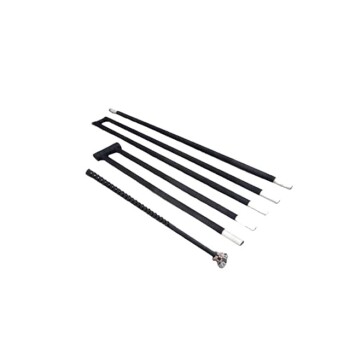
Induction heating furnaces paired with graphite tube heaters serve as the critical thermal engine for Aluminum Nitride (AlN) synthesis. By utilizing electromagnetic induction to generate heat directly within high-purity graphite, these systems establish the precise, high-temperature environment—specifically between 1450°C and 1700°C—required to drive the reaction.
The synergy between induction heating and graphite components provides the rapid thermal response and uniform temperature distribution necessary to control the melting of Aluminum-Silicon alloys, directly determining the kinetics and quality of the nitridation reaction.
The Role of High-Precision Thermal Control
To understand why this specific hardware combination is used, we must look at the strict demands of growing Aluminum Nitride. The process relies on achieving a stable environment where thermal conductivity and resistance are maximized.
Generating Heat via Induction
The furnace operates by using electromagnetic induction. Rather than using an external heat source that radiates energy inward, induction generates heat directly within the conductive material.
This method allows for highly efficient energy transfer. It eliminates the thermal lag often associated with conventional resistance heating elements.
The Function of Graphite Tube Heaters
High-purity graphite tube heaters are the vessel of choice for this induction process. Graphite is selected for its superior thermal conductivity and exceptional resistance to extreme temperatures.
Because the heat is generated within the graphite itself, the system achieves a rapid thermal response. This allows operators to adjust process temperatures quickly and accurately.
Impact on Reaction Kinetics
The ultimate goal of the heating system is to facilitate the growth of AlN crystals. The interaction between the furnace and the heaters plays a pivotal role in chemical kinetics.
Managing the Reaction Zone
Graphite tube heaters ensure a uniform temperature distribution throughout the reaction zone. This uniformity is non-negotiable for consistent material quality.
Without a uniform thermal profile, gradients can form, leading to inconsistent growth rates or structural defects in the final product.
Controlling Alloy Melting
The synthesis process involves the melting of Aluminum-Silicon alloys. The precise control offered by induction heating is critical for managing this phase change.
By maintaining temperatures strictly between 1450°C and 1700°C, the system ensures the alloy melts predictably. This directly influences the kinetics of the subsequent nitridation reaction, ensuring the AlN grows correctly.
Understanding the Operational Requirements
While this system offers high performance, it requires strict adherence to material and control standards to function correctly.
The Necessity of High Purity
The reference specifies the use of high-purity graphite. Using lower-grade graphite can introduce impurities into the reaction zone.
At the target temperatures of 1700°C, contaminants can degrade the quality of the Aluminum Nitride or alter the electrical properties of the heater itself.
Sensitivity to Thermal Response
The "rapid thermal response" capability is powerful but requires precise control logic. Because the system reacts so quickly, the control mechanism must be equally fast to prevent overshoot.
Instability in temperature regulation can disrupt the delicate kinetics of the nitridation process, leading to suboptimal crystal formation.
Optimizing Your Synthesis Setup
When configuring an AlN synthesis process, your equipment choices should be dictated by your specific output goals.
- If your primary focus is Crystal Quality: Prioritize the uniformity of the graphite heater design to eliminate thermal gradients across the reaction zone.
- If your primary focus is Process Control: Leverage the rapid thermal response of induction heating to fine-tune the melting phase of the Aluminum-Silicon alloys.
Success in Aluminum Nitride synthesis ultimately depends on the ability to maintain absolute thermal stability during the critical nitridation phase.
Summary Table:
| Feature | Induction Heating & Graphite Heaters | Benefit to AlN Synthesis |
|---|---|---|
| Heating Method | Direct Electromagnetic Induction | Rapid thermal response and high energy efficiency. |
| Temperature Range | 1450°C to 1700°C | Ideal range for Aluminum-Silicon alloy melting. |
| Material | High-Purity Graphite | Exceptional conductivity and resistance to contamination. |
| Thermal Profile | Uniform Distribution | Eliminates gradients for consistent crystal growth. |
Elevate Your Advanced Material Synthesis with KINTEK
Precise thermal management is the cornerstone of high-quality Aluminum Nitride production. At KINTEK, we specialize in providing state-of-the-art laboratory equipment designed to meet the most demanding synthesis requirements.
Our extensive portfolio includes:
- High-Performance Induction Melting Furnaces: Engineered for rapid thermal response and absolute stability.
- Specialized Graphite Components: High-purity heaters and crucibles to ensure process integrity.
- Advanced High-Temperature Systems: Including tube, vacuum, and atmosphere furnaces for diverse research needs.
- Comprehensive Lab Solutions: From crushing systems to hydraulic presses and cooling solutions.
Whether you are focusing on reaction kinetics or material purity, KINTEK’s expertise in laboratory equipment and consumables ensures your research achieves superior results. Contact us today to optimize your laboratory setup!
References
- Ryota Kobayashi, Takayuki TAKAGI. Synthesis of AlN needles by nitridation of Al–Si melt. DOI: 10.2109/jcersj2.16137
This article is also based on technical information from Kintek Solution Knowledge Base .
Related Products
- 600T Vacuum Induction Hot Press Furnace for Heat Treat and Sintering
- Lab-Scale Vacuum Induction Melting Furnace
- Controlled Nitrogen Inert Hydrogen Atmosphere Furnace
- Vacuum Heat Treat Furnace with Ceramic Fiber Liner
- Rotary Tube Furnace Split Multi Heating Zone Rotating Tube Furnace
People Also Ask
- What role does an induction vacuum hot pressing furnace play in sintering? Achieve 98% Density in Carbide Blocks
- What advantages does a vacuum hot press furnace provide for LSLBO ceramic electrolytes? Achieve 94% Relative Density
- What role does a Vacuum Hot Press (VHP) furnace play in the densification of austenitic stainless steel 316 composites?
- What role does mechanical pressure play during the vacuum diffusion bonding of tungsten and copper? Keys to Solid Bonding
- What are the advantages of a vacuum hot press furnace for W-50%Cu? Achieve 99.6% Density at Lower Temperatures