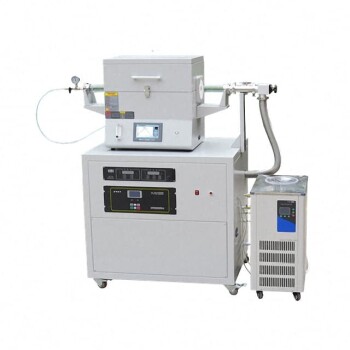
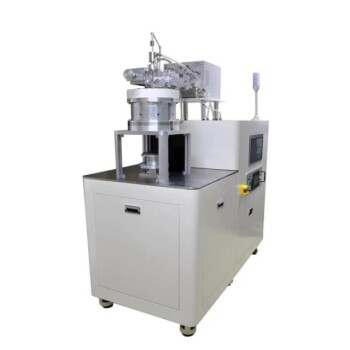
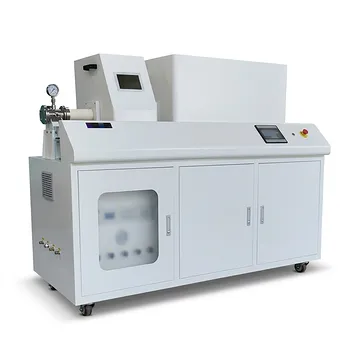
A Chemical Vapor Deposition (CVD) system serves as a high-precision manufacturing tool for growing advanced 1D or 2D nanomaterials, such as carbon nanotubes or graphene, directly onto electrode substrates. By orchestrating precursor gas flow rates and reaction times within a high-temperature vacuum environment, the system constructs specific nanostructures tailored for performance. This process is fundamental to preparing electrodes that possess the high conductivity and large specific surface area necessary for efficient microbial fuel cell (MFC) operation.
The CVD process allows for the creation of electrodes with optimized nanostructures that significantly reduce charge transfer resistance, a critical factor in maximizing the efficiency of microbial fuel cells.
The Mechanics of Material Growth
Precision Environment Control
The core of a CVD system typically involves a high-precision tube furnace coupled with vacuum control units. This setup creates a strictly controlled environment, isolating the substrate from atmospheric contaminants.
Precursor Gas Regulation
To facilitate material growth, the system introduces specific precursor gases into the chamber. The flow rates of these gases are managed with extreme accuracy to ensure the correct chemical composition is available for deposition.
Temperature and Time Management
The system operates at high temperatures to trigger the necessary chemical reactions. By modulating the reaction time, operators can precisely control the density and geometry of the nanomaterials growing on the substrate.
Impact on Electrode Performance
Creation of Nanostructures
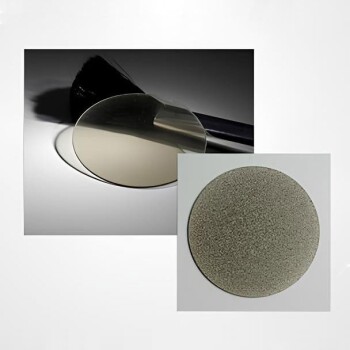
The primary output of this process is the growth of 1D or 2D nanomaterials, specifically carbon nanotubes or graphene. These materials are not merely coatings but are structurally grown to enhance the physical properties of the electrode.
Maximizing Surface Area
The nanostructures created by CVD are characterized by a large specific surface area. In the context of an MFC, a larger surface area provides more interaction sites for microbes and chemical reactions, directly improving efficiency.
Enhancing Conductivity
The materials grown, such as graphene and carbon nanotubes, are inherently highly conductive. This structural integrity ensures that electrons generated by microbes are transferred efficiently, reducing charge transfer resistance across the system.
Understanding the Operational Trade-offs
High Energy and Equipment Demands
The requirement for high-temperature environments and vacuum conditions implies that CVD is an energy-intensive process. It requires specialized, robust equipment capable of maintaining strict atmospheric controls, unlike simpler deposition methods.
Sensitivity to Process Parameters
Because the system relies on the precise control of gas flow and reaction times, slight deviations can alter the quality of the nanostructures. This requires rigorous calibration and monitoring to ensure consistent electrode performance.
Making the Right Choice for Your Goal
When deciding if CVD is the right method for your electrode preparation, consider your specific performance requirements:
- If your primary focus is maximizing power density: CVD is ideal because it creates high-surface-area nanostructures that minimize charge transfer resistance.
- If your primary focus is advanced material integration: CVD is necessary if your design relies on the specific properties of carbon nanotubes or graphene.
The precision of a CVD system ultimately transforms standard substrates into high-performance interfaces capable of driving modern microbial fuel cell technology.
Summary Table:
| Feature | CVD Impact on MFC Electrodes | Benefit to Fuel Cell Performance |
|---|---|---|
| Material Type | 1D/2D Nanomaterials (Graphene/CNTs) | Superior electrical conductivity |
| Surface Structure | High Specific Surface Area | Increased microbial interaction sites |
| Interface Quality | Direct Chemical Deposition | Significantly reduced charge transfer resistance |
| Process Control | Precise Gas & Temperature Regulation | Consistent, high-density nanostructure growth |
| Environment | High-Temperature Vacuum | Elimination of atmospheric contaminants |
Elevate Your MFC Research with KINTEK Precision CVD Systems
Unlock the full potential of your microbial fuel cell research by mastering the interface between microbes and electrodes. KINTEK specializes in high-performance laboratory equipment designed for the most demanding material synthesis. Our advanced CVD and PECVD systems, integrated with high-precision tube furnaces, provide the exact atmospheric and thermal control needed to grow high-density carbon nanotubes and graphene.
Beyond CVD, KINTEK offers a comprehensive ecosystem for energy research, including electrolytic cells, electrodes, and high-temperature reactors, ensuring your lab is equipped with the tools to minimize resistance and maximize power density. Partner with KINTEK for reliable, high-tech solutions tailored to your specific research goals.
Ready to optimize your electrode performance? Contact KINTEK today for a consultation!
References
- Luis Alberto Estudillo‐Wong, Nicolás Alonso‐Vante. Revisiting Current Trends in Electrode Assembly and Characterization Methodologies for Biofilm Applications. DOI: 10.3390/surfaces6010002
This article is also based on technical information from Kintek Solution Knowledge Base .
Related Products
- Chemical Vapor Deposition CVD Equipment System Chamber Slide PECVD Tube Furnace with Liquid Gasifier PECVD Machine
- Customer Made Versatile CVD Tube Furnace Chemical Vapor Deposition Chamber System Equipment
- HFCVD Machine System Equipment for Drawing Die Nano-Diamond Coating
- Split Chamber CVD Tube Furnace with Vacuum Station Chemical Vapor Deposition System Equipment Machine
- Multi Heating Zones CVD Tube Furnace Machine Chemical Vapor Deposition Chamber System Equipment
People Also Ask
- What are the advantages of chemical vapor deposition? Achieve Superior Thin Films for Your Lab
- What types of substrates are used in CVD to facilitate graphene films? Optimize Graphene Growth with the Right Catalyst
- What is the chemical vapor deposition growth process? Build Superior Thin Films from the Atom Up
- How expensive is chemical vapor deposition? Understanding the True Cost of High-Performance Coating
- Why is Chemical Vapor Deposition (CVD) equipment uniquely suited for constructing hierarchical superhydrophobic structures?