Chemical Vapor Deposition (CVD) drastically improves catalyst performance by enabling the precise growth of nanoscale oxide thin films, such as ZrO2, directly onto metal surfaces. Unlike traditional methods that struggle with uniformity, CVD facilitates the formation of monolayer-dispersed, metastable structures. This atomic-level control generates specific active sites at the oxide-metal boundaries, directly enhancing reaction efficiency and structural durability.
The Core Insight: Traditional impregnation methods often lead to grain sintering and phase separation, compromising catalyst life. CVD overcomes this by utilizing gas-phase transport to create a highly uniform, coordinatively unsaturated interface that boosts carbon dioxide activation and significantly strengthens anti-coking capabilities.
Engineering the Inverse Metal-Support Interface
Creating Metastable Structures
The primary advantage of a CVD system is its ability to deposit oxide films (like ZrO2) with fine control. This allows for the creation of monolayer-dispersed structures that are metastable—meaning they maintain a high-energy state beneficial for catalysis.
Maximizing Active Sites
By precisely growing these thin films on metal, the system creates coordinatively unsaturated metal active sites. These specific sites are located at the boundaries between the oxide and the metal, serving as the critical zones where chemical reactions are accelerated.
Superiority Over Traditional Methods
Preventing Grain Sintering
Traditional thermal annealing often results in the aggregation of particles, known as grain sintering. CVD mitigates this by using gas-phase transport for directional deposition, ensuring the active components remain distinct and effective.
Eliminating Phase Separation
Traditional impregnation can lead to phase separation, where the catalyst components drift apart and lose efficacy. CVD ensures high phase purity and a homogenous distribution of components, solving the inconsistency issues inherent in older techniques.
Precise Loading Control
CVD offers superior control over metal loading compared to wet impregnation. This precision ensures that the optimal amount of material is used, reducing waste while maximizing the surface area available for reactions.
Operational Impact on Performance
Enhanced CO2 Activation
The unique boundary sites created by the inverse structure significantly improve the activation efficiency of carbon dioxide. The specific geometry and electronic properties of the CVD-deposited interface lower the energy barrier for this reaction.
Robust Anti-Coking Resistance
Coking—the buildup of carbon deposits that foul catalysts—is a major failure mode in traditional systems. The structures formed via CVD possess strengthened anti-coking capabilities, extending the operational lifespan of the catalyst even under harsh conditions.
Understanding the Trade-offs
Process Sensitivity
While CVD offers superior uniformity, it is governed by strict limitations regarding deposition temperature and pressure. Deviating from these parameters can compromise the film quality, requiring rigorous process monitoring compared to simpler methods.
Equipment Complexity
Unlike simple dipping or spraying methods, CVD requires a controlled environment, typically a vacuum chamber and specific precursor gases. Managing the flow of reactive gases and the safe disposal of waste gases adds a layer of operational complexity.
Making the Right Choice for Your Goal
To determine if CVD is the correct approach for your catalyst synthesis, consider your specific performance metrics:
- If your primary focus is longevity and maintenance: The superior anti-coking capabilities of CVD-produced inverse structures will significantly extend the time between catalyst regeneration cycles.
- If your primary focus is reaction efficiency: The creation of coordinatively unsaturated sites makes CVD the optimal choice for difficult reactions, such as Carbon Dioxide activation.
By shifting from random distribution to precise atomic engineering, CVD transforms the catalyst from a passive mixture into a highly tuned reactive surface.
Summary Table:
| Feature | Traditional Impregnation | CVD-System Synthesis |
|---|---|---|
| Structural Control | Random distribution; prone to sintering | Atomic-level monolayer dispersion |
| Interface Quality | Phase separation & grain aggregation | Highly uniform, metastable active sites |
| CO2 Activation | Lower efficiency due to bulk structures | High efficiency via unsaturated boundaries |
| Durability | Vulnerable to coking & fouling | Superior anti-coking resistance |
| Process Precision | Variable metal loading | Precise gas-phase deposition control |
Elevate Your Catalyst Research with KINTEK Precision Engineering
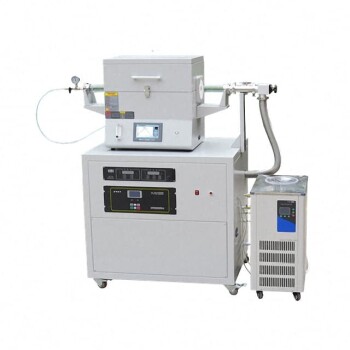
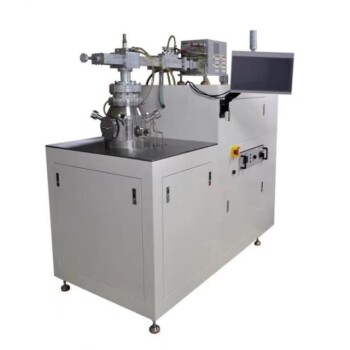
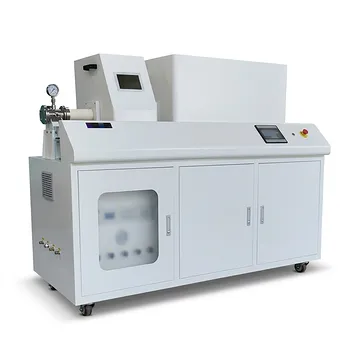
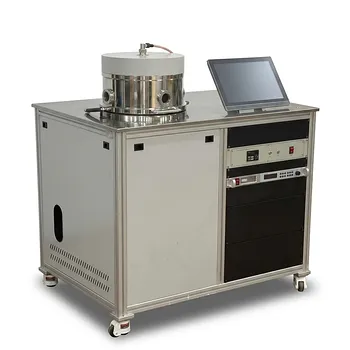
Maximize your material performance with KINTEK’s advanced CVD and PECVD systems. Whether you are engineering metastable oxide thin films or developing next-generation inverse metal-support structures, our equipment provides the vacuum stability and thermal precision required for atomic-level control.
Why choose KINTEK?
- High-Temperature Expertise: From tube and atmosphere furnaces to specialized CVD systems.
- Comprehensive Lab Solutions: We offer high-pressure reactors, autoclaves, and crushing/milling systems to support your entire synthesis workflow.
- Advanced Materials Support: Access premium consumables, including ceramics, crucibles, and PTFE products.
Contact KINTEK today to discuss how our custom laboratory solutions can solve your most complex catalysis challenges and accelerate your research breakthroughs.
References
- Minghui Wei, Xiangjun Shi. Research Progress on Stability Control on Ni-Based Catalysts for Methane Dry Reforming. DOI: 10.3390/methane3010006
This article is also based on technical information from Kintek Solution Knowledge Base .
Related Products
- Chemical Vapor Deposition CVD Equipment System Chamber Slide PECVD Tube Furnace with Liquid Gasifier PECVD Machine
- Microwave Plasma Chemical Vapor Deposition MPCVD Machine System Reactor for Lab and Diamond Growth
- 915MHz MPCVD Diamond Machine Microwave Plasma Chemical Vapor Deposition System Reactor
- Customer Made Versatile CVD Tube Furnace Chemical Vapor Deposition Chamber System Equipment
- HFCVD Machine System Equipment for Drawing Die Nano-Diamond Coating
People Also Ask
- What are the advantages of chemical vapor deposition? Achieve Superior Thin Films for Your Lab
- What types of substrates are used in CVD to facilitate graphene films? Optimize Graphene Growth with the Right Catalyst
- What is the chemical vapor deposition growth process? Build Superior Thin Films from the Atom Up
- How expensive is chemical vapor deposition? Understanding the True Cost of High-Performance Coating
- Why is Chemical Vapor Deposition (CVD) equipment uniquely suited for constructing hierarchical superhydrophobic structures?