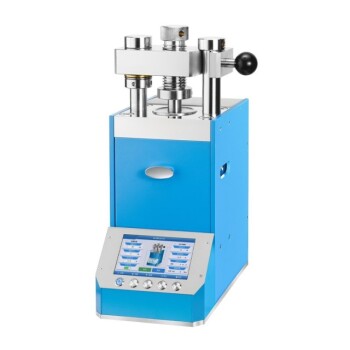
Hot Isostatic Pressing (HIP) improves metal castings by simultaneously applying elevated temperature and isostatic gas pressure to eliminate internal defects. Through a physical process combining plastic deformation, creep, and diffusion bonding, HIP collapses internal voids and microporosity. This densification significantly enhances the material's mechanical properties, particularly fatigue resistance, ductility, and structural consistency.
The Core Takeaway
HIP transforms the internal structure of a casting, upgrading its integrity to be comparable with high-quality wrought alloys. By effectively healing internal porosity, it dramatically extends component service life and ensures predictable performance under stress.
The Mechanism of Densification
Eliminating Internal Voids
The primary function of HIP is the eradication of internal microporosity and shrinkage defects. The process applies uniform pressure from all directions, forcing the material to consolidate.
The Physics at Work
This consolidation is not merely mechanical crushing; it is a complex metallurgical healing process. It relies on plastic deformation to collapse voids, creep to fill gaps over time, and diffusion bonding to fuse the metal surfaces together permanently.
Achieving Theoretical Density
By closing these microscopic pores, the process increases the density of the alloy. In many cases, the component reaches its theoretical density, resulting in a solid, homogenous structure free of the weak points typical in standard castings.
Improvements in Mechanical Performance
Drastic Increase in Fatigue Life
The most significant benefit of HIP is the improvement in fatigue resistance. Because internal pores often act as initiation sites for cracks, removing them can increase fatigue life by 1.5 to 10 times, depending on the alloy and initial quality.
Enhanced Ductility and Toughness
While tensile strength typically sees a modest increase of around 5%, ductility can improve by up to 50%. This increase in elongation and impact strength makes the component much more resilient to shock loading and less prone to brittle failure.
Improved Consistency and Homogeneity
Castings often suffer from segregation, where chemical composition varies across the part. HIP homogenizes the material structure, reducing the variation in mechanical properties and ensuring that every part performs reliably.
Superior Surface Finish After Machining
When a standard casting is machined, internal pores can be exposed, creating a pitted surface. Because HIP creates a pore-free internal structure, machined areas exhibit a smooth, high-quality wear surface essential for sealing or bearing applications.
Understanding the Limitations
Surface-Connected Porosity
It is critical to understand that HIP cannot close surface-connected porosity. If a pore is open to the surface, the high-pressure gas used in the vessel will enter the void rather than crush it, leaving the defect unhealed.
Weldability Factors
While HIP generally improves weldability by homogenizing the structure, it creates a denser material. Engineers must account for the altered material state when planning subsequent welding operations to maintain the integrity of the heat-affected zone.
Making the Right Choice for Your Goal
To maximize the value of Hot Isostatic Pressing, align the process with your specific performance requirements:
- If your primary focus is Fatigue Life: Use HIP to eliminate internal microporosity, as this removes the crack initiation sites that cause failure under cyclic loading.
- If your primary focus is Precision Machining: Employ HIP to ensure that subsurface voids do not ruin your surface finish during grinding or polishing operations.
- If your primary focus is Reliability: Implement HIP to homogenize the alloy, reducing statistical variation and ensuring every casting meets minimum property specifications.
By integrating HIP, you effectively upgrade a cast component to possess the reliability and strength of a wrought part.
Summary Table:
| Property Improved | Impact of HIP Process | Key Benefit for Castings |
|---|---|---|
| Density | Reaches theoretical density | Eliminates internal voids and microporosity |
| Fatigue Life | Increases 1.5x to 10x | Removes crack initiation sites for longer service |
| Ductility | Up to 50% improvement | Greater resilience to shock loading and brittle failure |
| Consistency | Material homogenization | Reduces statistical variation in mechanical properties |
| Surface Quality | Pore-free internal structure | Prevents pitting during precision machining and polishing |
Elevate Your Component Integrity with KINTEK Advanced Solutions
Don't let internal defects compromise your project's reliability. KINTEK specializes in precision laboratory and industrial equipment, including high-temperature high-pressure reactors and isostatic presses designed to transform your materials. Whether you are aiming to reach theoretical density or maximize fatigue resistance, our expert-grade solutions ensure your castings meet the most rigorous standards.
Ready to upgrade your casting performance? Contact KINTEK today to explore our isostatic and hydraulic press solutions!
Related Products
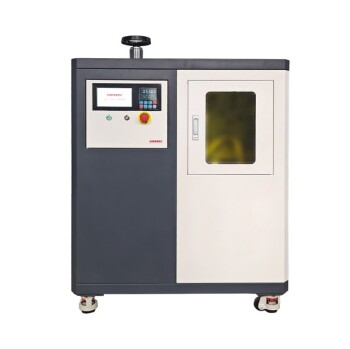
- Warm Isostatic Press for Solid State Battery Research
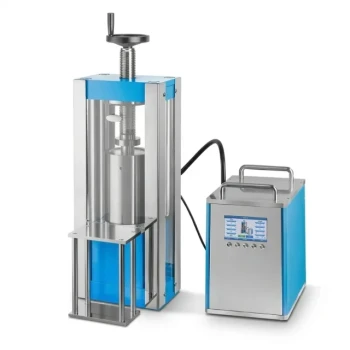
- Electric Split Lab Cold Isostatic Press CIP Machine for Cold Isostatic Pressing
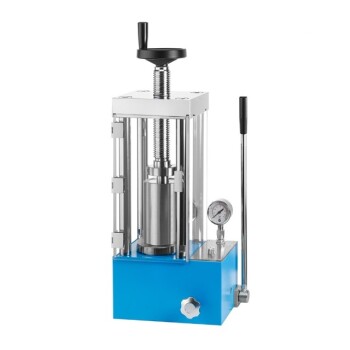
- Manual Cold Isostatic Pressing Machine CIP Pellet Press
- Automatic High Temperature Heated Hydraulic Press Machine with Heated Plates for Lab
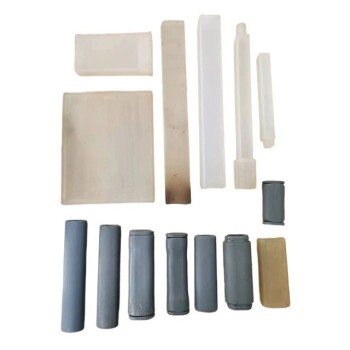
- Isostatic Molding Pressing Molds for Lab
People Also Ask
- What is the temperature of a warm isostatic press? Achieve Optimal Densification for Your Materials
- What is the function of a Warm Isostatic Press (WIP) in all-solid-state pouch cells? Optimize Battery Density
- Why are Warm Isostatic Presses (WIP) necessary for solid-state batteries? Achieve Atomic-Level Contact
- What advantages does a warm isostatic press offer over a traditional uniaxial press for Li6PS5Cl electrolyte sheets?
- How do warm isostatic presses improve dry electrode performance? Enhance ASSB Conductivity with Heat & Pressure