Knowledge Is calcination bad for the environment? The Truth About Its Major Carbon Footprint
Author avatar

Tech Team · Kintek Solution

Updated 6 days ago

Is calcination bad for the environment? The Truth About Its Major Carbon Footprint


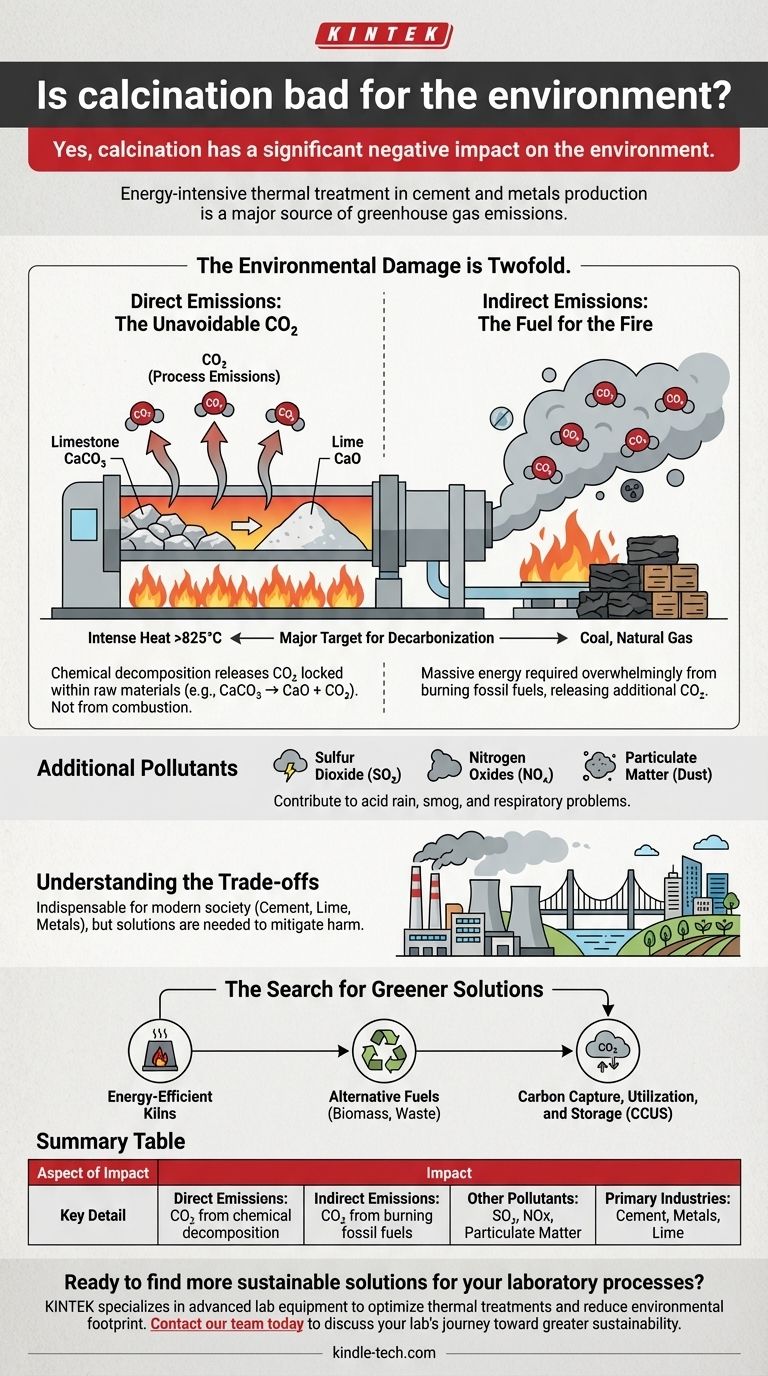
Yes, calcination has a significant negative impact on the environment. This thermal treatment process is fundamental to major industries like cement and metals production, but it is inherently energy-intensive and a major source of greenhouse gas emissions. The core environmental harm stems from both the chemical reactions it triggers and the massive amount of fuel required to generate the necessary heat.

The environmental damage from calcination is twofold: it directly releases CO₂ locked within raw materials and indirectly releases more CO₂ from burning fossil fuels to power the process. This makes it a primary target for decarbonization efforts in heavy industry.

Is calcination bad for the environment? The Truth About Its Major Carbon Footprint

What is Calcination? A Fundamental Look

The Core Process: Heat and Transformation

Calcination is a process of heating a solid material to a high temperature, typically in the absence or with a limited supply of air. The goal isn't to melt the material but to cause a chemical decomposition or a physical transformation.

This process is used to remove volatile substances, such as water or carbon dioxide, from raw materials. It's a foundational step in creating products like cement, lime, and refined metal ores.

A Critical Industrial Example: Cement

The most prominent example of calcination is in cement production. Limestone (calcium carbonate, CaCO₃) is heated in a kiln to over 825°C (1517°F).

This intense heat breaks the limestone down into lime (calcium oxide, CaO), which is the primary ingredient in cement, and carbon dioxide (CO₂). The chemical reaction itself—CaCO₃ → CaO + CO₂—liberates vast quantities of CO₂ that was stored in the rock.

The Two Sources of Environmental Impact

Direct Emissions: The Unavoidable CO₂

The chemical decomposition of materials during calcination is a major source of direct, or "process," emissions. In the case of cement, this accounts for over half of the industry's total CO₂ output.

This CO₂ is released directly from the raw material as a result of the chemical change. It is not a byproduct of combustion and would be released even if the heat were generated from a completely clean energy source.

Indirect Emissions: The Fuel for the Fire

Calcination requires incredibly high temperatures. Achieving and maintaining these temperatures in industrial kilns consumes an enormous amount of energy, which is overwhelmingly supplied by burning fossil fuels like coal and natural gas.

The combustion of these fuels releases additional CO₂, alongside other pollutants, into the atmosphere. This represents the second major environmental impact of the process.

Additional Pollutants: Beyond Carbon Dioxide

Depending on the specific material being processed and the fuel used, calcination can also release other harmful air pollutants.

These often include sulfur dioxide (SO₂), which contributes to acid rain, and nitrogen oxides (NOx), which contribute to smog and respiratory problems. Particulate matter (dust) is also a significant concern, requiring control systems to mitigate its release.

Understanding the Trade-offs

An Essential Industrial Process

Despite its environmental drawbacks, calcination is indispensable for modern society. Without it, we could not produce the cement needed for our infrastructure, the lime used in agriculture and chemical manufacturing, or refine many of the metals that form the backbone of our economy.

The challenge is not simply to stop calcination, but to find ways to mitigate its harm while it remains a necessary process.

The Search for Greener Solutions

The significant environmental footprint of calcination has made it a key focus for innovation. Researchers and engineers are actively exploring solutions to reduce its impact.

These efforts include developing more energy-efficient kilns, using alternative fuels like biomass or waste, and pioneering carbon capture, utilization, and storage (CCUS) technologies to trap CO₂ emissions before they reach the atmosphere.

How to Contextualize Calcination's Impact

  • If your primary focus is on industrial emissions: Recognize that calcination is a dominant source of CO₂ in non-energy sectors, with the cement industry being the most significant contributor.
  • If your primary focus is on climate solutions: Understand that meaningful industrial decarbonization is impossible without addressing the emissions from calcination through new technologies like carbon capture or entirely new chemical pathways.
  • If your primary focus is on material science: The environmental cost of calcination is a major driver for developing novel building materials and refining processes that require less heat or different chemical inputs.

Ultimately, understanding the environmental impact of calcination is key to appreciating the immense challenge of decarbonizing our most fundamental industries.

Summary Table:

Aspect of Impact Key Detail
Direct Emissions CO₂ released from chemical decomposition of raw materials (e.g., limestone).
Indirect Emissions CO₂ from burning fossil fuels to generate the intense heat required.
Other Pollutants Can release sulfur dioxide (SO₂), nitrogen oxides (NOx), and particulate matter.
Primary Industries Cement production, metals refining, lime manufacturing.

Ready to find more sustainable solutions for your laboratory processes? KINTEK specializes in advanced lab equipment and consumables that can help you optimize your thermal treatments and reduce your environmental footprint. Our experts can help you select energy-efficient technologies tailored to your research and production goals. Contact our team today to discuss how we can support your lab's journey toward greater sustainability.

Visual Guide
Is calcination bad for the environment? The Truth About Its Major Carbon Footprint Visual Guide

Related Products

People Also Ask

Related Products

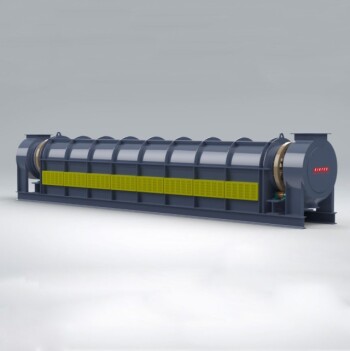
Electric Rotary Kiln Pyrolysis Furnace Plant Machine Calciner Small Rotary Kiln Rotating Furnace

Electric Rotary Kiln Pyrolysis Furnace Plant Machine Calciner Small Rotary Kiln Rotating Furnace

Electric rotary kiln - precisely controlled, it's ideal for calcination and drying of materials like lithium cobalate, rare earths, and non-ferrous metals.

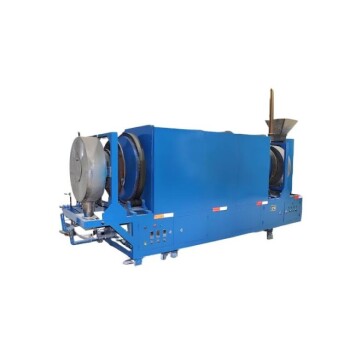
Electric Rotary Kiln Continuous Working Small Rotary Furnace Heating Pyrolysis Plant

Electric Rotary Kiln Continuous Working Small Rotary Furnace Heating Pyrolysis Plant

Efficiently calcine and dry bulk powder and lump fluid materials with an electric heating rotary furnace. Ideal for processing lithium ion battery materials and more.

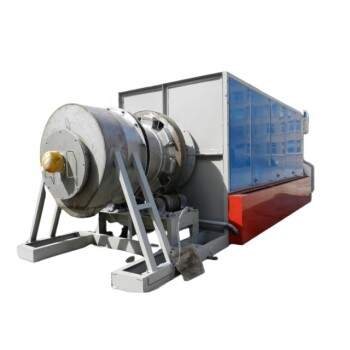
Electric Rotary Kiln Small Rotary Furnace for Activated Carbon Regeneration

Electric Rotary Kiln Small Rotary Furnace for Activated Carbon Regeneration

Revitalize your activated carbon with KinTek's Electric Regeneration Furnace. Achieve efficient and cost-effective regeneration with our highly automated rotary kiln and intelligent thermal controller.

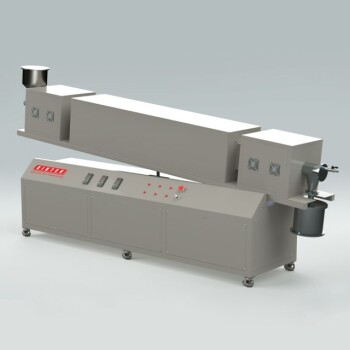
Vacuum Sealed Continuous Working Rotary Tube Furnace Rotating Tube Furnace

Vacuum Sealed Continuous Working Rotary Tube Furnace Rotating Tube Furnace

Experience efficient material processing with our vacuum-sealed rotary tube furnace. Perfect for experiments or industrial production, equipped with optional features for controlled feeding and optimized results. Order now.

Three-dimensional electromagnetic sieving instrument

Three-dimensional electromagnetic sieving instrument

KT-VT150 is a desktop sample processing instrument for both sieving and grinding. Grinding and sieving can be used both dry and wet. The vibration amplitude is 5mm and the vibration frequency is 3000-3600 times/min.

High Temperature Constant Temperature Heating Circulator Water Bath Chiller Circulator for Reaction Bath

High Temperature Constant Temperature Heating Circulator Water Bath Chiller Circulator for Reaction Bath

Efficient and reliable, KinTek KHB Heating Circulator is perfect for your lab needs. With a max. heating temperature of up to 300℃, it features accurate temperature control and fast heating.

Mesh belt controlled atmosphere furnace

Mesh belt controlled atmosphere furnace

Discover our KT-MB mesh belt sintering furnace - perfect for high-temperature sintering of electronic components & glass insulators. Available for open air or controlled atmosphere environments.

Laboratory Disc Rotary Mixer for Efficient Sample Mixing and Homogenization

Laboratory Disc Rotary Mixer for Efficient Sample Mixing and Homogenization

Efficient Laboratory Disc Rotary Mixer for Precise Sample Mixing, Versatile for Various Applications, DC Motor and Microcomputer Control, Adjustable Speed and Angle.

Graphite Vacuum Furnace High Thermal Conductivity Film Graphitization Furnace

Graphite Vacuum Furnace High Thermal Conductivity Film Graphitization Furnace

The high thermal conductivity film graphitization furnace has uniform temperature, low energy consumption and can operate continuously.

Laboratory Muffle Oven Furnace Bottom Lifting Muffle Furnace

Laboratory Muffle Oven Furnace Bottom Lifting Muffle Furnace

Efficiently produce batches with excellent temperature uniformity using our Bottom Lifting Furnace. Features two electric lifting stages and advanced temperature control up to 1600℃.

1700℃ Laboratory Quartz Tube Furnace with Alumina Tube Tubular Furnace

1700℃ Laboratory Quartz Tube Furnace with Alumina Tube Tubular Furnace

Looking for a high-temperature tube furnace? Check out our 1700℃ Tube Furnace with Alumina Tube. Perfect for research and industrial applications up to 1700C.

Ultra-High Temperature Graphite Vacuum Graphitization Furnace

Ultra-High Temperature Graphite Vacuum Graphitization Furnace

The ultra-high temperature graphitization furnace utilizes medium frequency induction heating in a vacuum or inert gas environment. The induction coil generates an alternating magnetic field, inducing eddy currents in the graphite crucible, which heats up and radiates heat to the workpiece, bringing it to the desired temperature. This furnace is primarily used for graphitization and sintering of carbon materials, carbon fiber materials, and other composite materials.

Graphite Vacuum Continuous Graphitization Furnace

Graphite Vacuum Continuous Graphitization Furnace

High-temperature graphitization furnace is a professional equipment for graphitization treatment of carbon materials. It is a key equipment for the production of high-quality graphite products. It has high temperature, high efficiency and uniform heating. It is suitable for various high-temperature treatments and graphitization treatments. It is widely used in metallurgy, electronics, aerospace, etc. industry.

Platinum Sheet Electrode for Laboratory and Industrial Applications

Platinum Sheet Electrode for Laboratory and Industrial Applications

Elevate your experiments with our Platinum Sheet Electrode. Crafted with quality materials, our safe and durable models can be tailored to fit your needs.

Small Jaw Crusher for Laboratory and Small Mines Efficient Flexible Affordable Laboratory Ore Crusher Coal Crusher

Small Jaw Crusher for Laboratory and Small Mines Efficient Flexible Affordable Laboratory Ore Crusher Coal Crusher

Discover the small jaw crusher for efficient, flexible, and affordable crushing in labs and small mines. Ideal for coal, ores, and rocks. Learn more now!

Small Vacuum Heat Treat and Tungsten Wire Sintering Furnace

Small Vacuum Heat Treat and Tungsten Wire Sintering Furnace

The small vacuum tungsten wire sintering furnace is a compact experimental vacuum furnace specially designed for universities and scientific research institutes. The furnace features a CNC welded shell and vacuum piping to ensure leak-free operation. Quick-connect electrical connections facilitate relocation and debugging, and the standard electrical control cabinet is safe and convenient to operate.

1400℃ Controlled Atmosphere Furnace with Nitrogen and Inert Atmosphere

1400℃ Controlled Atmosphere Furnace with Nitrogen and Inert Atmosphere

Achieve precise heat treatment with KT-14A controlled atmosphere furnace. Vacuum sealed with a smart controller, it's ideal for lab and industrial use up to 1400℃.

Vertical High Temperature Graphite Vacuum Graphitization Furnace

Vertical High Temperature Graphite Vacuum Graphitization Furnace

Vertical high temperature graphitization furnace for carbonization and graphitization of carbon materials up to 3100℃.Suitable for shaped graphitization of carbon fiber filaments and other materials sintered in a carbon environment.Applications in metallurgy, electronics, and aerospace for producing high-quality graphite products like electrodes and crucibles.

Automatic Laboratory Heat Press Machine

Automatic Laboratory Heat Press Machine

Precision automatic heat press machines for labs—ideal for material testing, composites, and R&D. Customizable, safe, and efficient. Contact KINTEK today!

Graphite Vacuum Furnace IGBT Experimental Graphitization Furnace

Graphite Vacuum Furnace IGBT Experimental Graphitization Furnace

IGBT experimental graphitization furnace, a tailored solution for universities and research institutions, with high heating efficiency, user-friendliness, and precise temperature control.


Leave Your Message