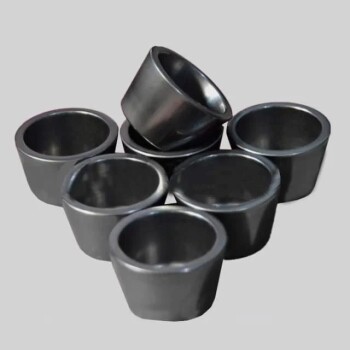
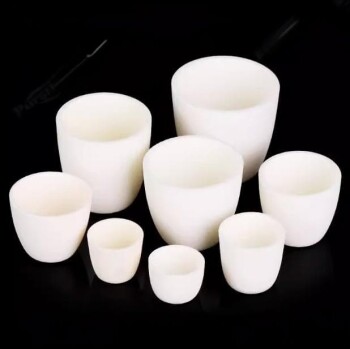
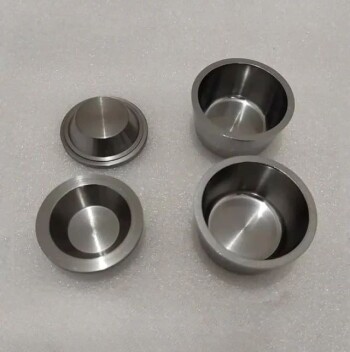
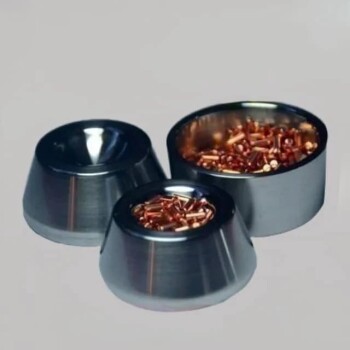
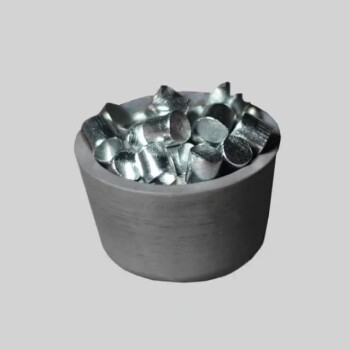
The superior performance of a graphite crucible in vacuum carbothermic magnesium reduction stems from its unique ability to withstand extreme conditions while chemically complementing the reaction process. Its advantages include exceptional high-temperature resistance, superior thermal conductivity, and the ability to maintain magnesium vapor purity by eliminating foreign impurities.
By aligning the vessel material with the reducing agent, graphite crucibles provide a chemically stable and thermally efficient environment that maximizes structural integrity and product purity.
Thermal and Structural Integrity
withstanding Extreme Temperatures
Vacuum carbothermic reduction requires intense heat to initiate the reaction. A graphite crucible offers excellent high-temperature resistance, allowing it to maintain its structural form without softening or deforming under these extreme conditions.
Efficient Heat Transfer
Graphite possesses superior thermal conductivity compared to many ceramic alternatives. This ensures that heat is transferred efficiently and uniformly to the reactants, promoting a consistent reduction rate throughout the vessel.
Chemical Compatibility and Purity
Synergy with the Reducing Agent
In this specific reduction system, carbon acts as the reducing agent. Because the crucible is also composed of carbon, it remains chemically stable within the vacuum environment, preventing the vessel from reacting negatively with the process ingredients.
Elimination of Contamination
Crucibles made from other materials can degrade and release foreign substances into the reaction chamber. Graphite does not introduce such impurities, ensuring that the resulting magnesium vapor remains uncontaminated.
Understanding the Trade-offs
Lack of Optical Transparency
While graphite excels in durability, it is opaque. Unlike quartz vessels used in other laboratory-scale research, graphite prevents in-situ observation of the reaction process or phase changes, making it a "black box" environment.
Consumable Nature
The primary reference categorizes the graphite crucible as a "consumable." While it is robust, the harsh environment of vacuum reduction implies that the crucible will eventually degrade and require replacement, unlike more permanent metallic reactor walls.
Making the Right Choice for Your Project
Choosing the correct vessel depends on the specific parameters and goals of your experiment.
- If your primary focus is Production Purity: Choose graphite to ensure the magnesium vapor is not contaminated by the vessel material.
- If your primary focus is Thermal Stability: Choose graphite to maintain structural integrity and efficient heat transfer at extreme reduction temperatures.
- If your primary focus is Visual Mechanism Study: Acknowledge that graphite is unsuitable for in-situ observation; consider alternative setups like quartz only if the temperature and pressure conditions permit.
Graphite remains the industry standard for this application because it turns the vessel from a potential contaminant into a chemically neutral partner in the reduction process.
Summary Table:
| Feature | Advantage in Magnesium Reduction | Benefit |
|---|---|---|
| High-Temp Resistance | Withstands extreme vacuum reduction heat | Prevents deformation or structural failure |
| Thermal Conductivity | Rapid and uniform heat transfer | Ensures consistent reduction rates |
| Chemical Synergy | Matches the carbon reducing agent | Maintains a stable, non-reactive environment |
| Material Purity | No release of foreign substances | Produces uncontaminated magnesium vapor |
| Durability | Robust structural integrity | Reliable performance in harsh conditions |
Elevate Your Vacuum Reduction Precision with KINTEK
Ready to optimize your magnesium reduction experiments? KINTEK specializes in high-performance laboratory solutions, providing the high-temperature resistance and chemical purity your research demands.
Our extensive portfolio includes:
- Premium Graphite & Ceramic Crucibles: Engineered for extreme stability and zero contamination.
- Advanced High-Temperature Furnaces: Including vacuum, tube, and atmosphere furnaces tailored for reduction processes.
- Processing Excellence: High-pressure reactors, autoclaves, and specialized crushing systems for reactant preparation.
Don't let vessel degradation compromise your results. Partner with KINTEK for durable consumables and precision equipment designed for the most demanding thermal environments.
Contact KINTEK Today for a Custom Quote
Related Products
- High Purity Pure Graphite Crucible for Evaporation
- High Purity Pure Graphite Crucible for Electron Beam Evaporation
- Carbon Graphite Boat -Laboratory Tube Furnace with Cover
- Arc-Shaped Alumina Ceramic Crucible High Temperature Resistant for Engineering Advanced Fine Ceramics
- Engineering Advanced Fine Ceramics Alumina Al2O3 Crucible With Lid Cylindrical Laboratory Crucible
People Also Ask
- Why are high-purity graphite crucibles preferred for sulfide solid electrolytes? Achieve Superior Material Purity
- Why is a high-purity graphite crucible required for Chromel-TaC composites? Ensure Peak Purity at 1400°C
- What role do high-purity graphite crucibles play in molten salt corrosion research? Ensure Reactor-Grade Precision
- Why are high-purity graphite crucibles used for magnesium distillation? Ensure 3N8 Purity & Thermal Stability
- Why is a high-purity graphite crucible ideal for nitrogen-doped graphene at 1500 °C? Maximize Purity and Stability