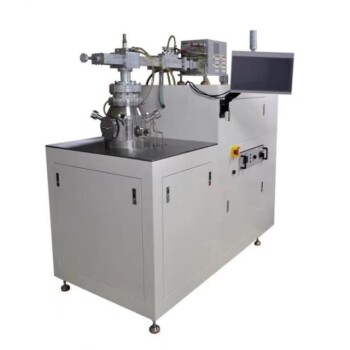
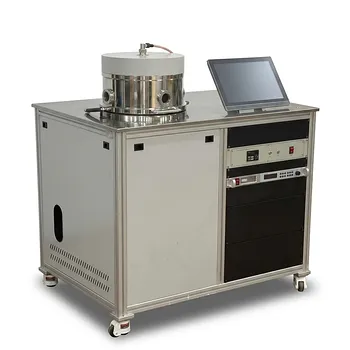
The primary advantage of using a Low-Pressure Chemical Vapor Deposition (LPCVD) system for this application is its ability to deposit a highly uniform, conformal Boron Nitride (BN) nanocoating on the complex, rough surfaces of Lithium Aluminum Titanium Phosphate (LATP). By integrating precise vacuum control with high-temperature heating, the system ensures the controlled decomposition of precursors like ammonia borane, resulting in an atomic-scale layer (approximately 5-10 nm) that perfectly follows the ceramic's topography.
Core Takeaway LPCVD solves the challenge of interface engineering on porous ceramics by bypassing the limitations of line-of-sight deposition. It guarantees that the protective Boron Nitride layer is continuous and atomically thin, stabilizing the LATP surface without blocking ion transport or altering the bulk material properties.
The Mechanism of Controlled Deposition
Precise Precursor Decomposition
The LPCVD system utilizes a specialized environment combining high-temperature heating with precise vacuum control.
This specific setting drives the controlled decomposition of precursors, specifically ammonia borane, rather than allowing a chaotic or rapid reaction.
Atomic-Level Growth Control
Unlike bulk coating methods, LPCVD facilitates growth at the atomic level.
This precision allows for the creation of ultra-thin layers, specifically in the 5-10 nm range, which is critical for maintaining the electrochemical performance of the LATP electrolyte.
Overcoming Surface Topography
Conformal Coverage on Rough Surfaces
LATP ceramic surfaces are inherently porous and rough, presenting a challenge for traditional coating methods that rely on line-of-sight application.
LPCVD utilizes a gas-phase reaction, allowing the BN precursors to penetrate pores and surface irregularities.
Uniformity Across 3D Structures
The gas-phase nature of the process ensures that the coating is distributed with high uniformity across the entire three-dimensional structure.
This eliminates weak points or exposed patches on the LATP surface, ensuring consistent protection and performance across the entire electrolyte interface.
Coating Quality and Density
Creation of Dense Films
The high-temperature environment of the LPCVD system promotes the growth of high-quality, dense Boron Nitride films.
A dense film is essential for providing effective oxidation resistance and preventing unwanted side reactions at the electrolyte interface.
Discrete Particle Distribution
Beyond continuous films, the atomic precision of CVD equipment allows for the discrete distribution of particles if required.
This capability is vital for tailoring the surface properties to create specific electronic or ionic barriers, similar to creating efficient Schottky barriers in other advanced material applications.
Operational Considerations and Trade-offs
Thermal Requirements
The LPCVD process relies heavily on high-temperature heating to initiate the chemical reaction of precursors like ammonia borane.
You must ensure that the specific grade of LATP substrate used can withstand these processing temperatures without phase degradation or thermal shock.
System Complexity
Achieving this level of precision requires sophisticated equipment capable of maintaining strict vacuum levels and thermal profiles.
This adds a layer of operational complexity and cost compared to simpler, wet-chemistry coating methods, but it is necessary for achieving atomic-scale conformality.
Making the Right Choice for Your Goal
To determine if LPCVD is the correct method for your LATP project, consider your specific performance targets:
- If your primary focus is Interface Stability: LPCVD is the superior choice because its conformal nature ensures 100% coverage of porous defects, preventing direct contact between the LATP and reactive electrode materials.
- If your primary focus is Ion Conductivity: The ability to limit thickness to 5-10 nm is critical; LPCVD allows you to deposit a protective layer that is thin enough to minimize impedance while still providing a robust barrier.
LPCVD transforms the BN coating from a simple additive into a precisely engineered interface that enhances the durability of LATP ceramics.
Summary Table:
| Feature | LPCVD Benefit for BN/LATP Coating |
|---|---|
| Coating Uniformity | High conformality on porous and rough ceramic surfaces |
| Thickness Control | Atomic-scale precision (typically 5-10 nm) |
| Film Quality | Dense, high-quality films with excellent oxidation resistance |
| Mechanism | Gas-phase reaction eliminates line-of-sight limitations |
| Impact on LATP | Stabilizes interface without blocking ion transport |
Elevate Your Battery Research with KINTEK Precision
Unlock the full potential of your solid-state electrolytes with KINTEK’s advanced CVD and LPCVD systems. As specialists in high-performance laboratory equipment, we provide the precise thermal and vacuum control necessary to engineer atomic-scale interfaces.
Whether you are developing LATP ceramics, researching lithium-ion batteries, or require specialized high-temperature furnaces and vacuum systems, KINTEK delivers the reliability your research demands. From muffle and tube furnaces to high-pressure reactors and crucibles, our comprehensive portfolio supports every stage of material synthesis.
Ready to achieve 100% conformal coverage for your nanocoatings? Contact our technical experts today to find the perfect solution for your lab.
Related Products
- Chemical Vapor Deposition CVD Equipment System Chamber Slide PECVD Tube Furnace with Liquid Gasifier PECVD Machine
- Microwave Plasma Chemical Vapor Deposition MPCVD Machine System Reactor for Lab and Diamond Growth
- Customer Made Versatile CVD Tube Furnace Chemical Vapor Deposition Chamber System Equipment
- RF PECVD System Radio Frequency Plasma-Enhanced Chemical Vapor Deposition RF PECVD
- 915MHz MPCVD Diamond Machine Microwave Plasma Chemical Vapor Deposition System Reactor
People Also Ask
- What are the advantages of chemical vapor deposition? Achieve Superior Thin Films for Your Lab
- What types of substrates are used in CVD to facilitate graphene films? Optimize Graphene Growth with the Right Catalyst
- What is the chemical vapor deposition growth process? Build Superior Thin Films from the Atom Up
- How expensive is chemical vapor deposition? Understanding the True Cost of High-Performance Coating
- Why is Chemical Vapor Deposition (CVD) equipment uniquely suited for constructing hierarchical superhydrophobic structures?