Knowledge What function does mechanical crushing and sieving equipment serve in forest biomass conversion? Unlock Peak Efficiency
Author avatar

Tech Team · Kintek Solution

Updated 1 day ago

What function does mechanical crushing and sieving equipment serve in forest biomass conversion? Unlock Peak Efficiency


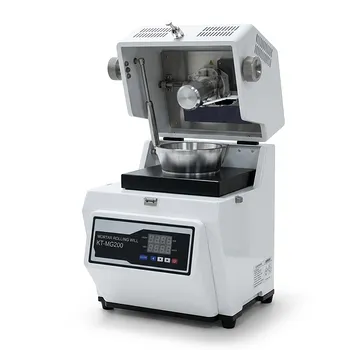
Mechanical crushing and sieving act as the critical physical foundation for biomass conversion. These processes reduce the particle size of forest biomass, directly increasing both pore size and available specific surface area. By physically disrupting the material, this stage lowers the crystallinity and degree of polymerization of cellulose, enabling downstream enzymes to access and convert the substrate effectively.

By eliminating steric hindrance—the physical barriers that block reaction sites—mechanical pretreatment transforms resistant raw materials into accessible substrates, significantly improving the efficiency of enzymatic hydrolysis and monomeric sugar conversion.

The Mechanism of Physical Modification

Increasing Specific Surface Area

The primary function of mechanical equipment is to apply physical shear force to the biomass.

This reduces the raw material into smaller particles with a controlled mesh size.

By miniaturizing the material, you exponentially increase the specific surface area available for subsequent reactions.

Enhancing Pore Structure

Beyond simple size reduction, this process alters the internal architecture of the biomass.

It increases the pore size within the material.

This structural opening creates pathways for liquids and enzymes to penetrate deep into the lignocellulosic matrix.

Impact on Chemical Composition

Lowering Crystallinity

Forest biomass typically possesses a rigid, crystalline structure that resists conversion.

Mechanical crushing effectively lowers the crystallinity of the cellulose.

This disruption makes the cellulose chains less ordered and more susceptible to biological or chemical breakdown.

Reducing Degree of Polymerization

The process physically snaps long molecular chains.

This results in a lower degree of polymerization for the cellulose.

Shorter chains require less energy to break down further, streamlining the conversion process.

Eliminating Steric Hindrance

Natural lignocellulose contains physical barriers that prevent enzymes from locking onto their targets.

Crushing eliminates this steric hindrance.

With these barriers removed, enzymes can make direct contact with the substrate.

Critical Process Considerations

The Necessity of Wettability

Mechanical pretreatment is not just about size; it is about interaction.

As seen in similar biomass contexts, increasing surface area improves wettability.

Without this physical exposure, hemicellulose and other components remain hydrophobic and resistant to acid or enzyme penetration.

Precision in Particle Size

Achieving a random reduction is insufficient; the material often requires a specific mesh size (e.g., 40 mesh) to be effective.

If particles are too large, the specific surface area remains too low for efficient hydrolysis.

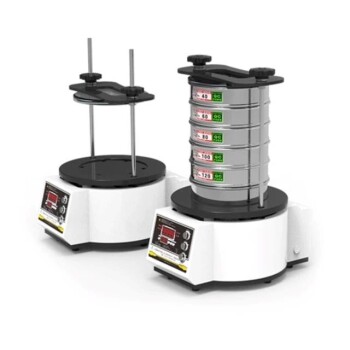
Conversely, effective sieving ensures uniformity, preventing the inefficiency caused by processing variable particle sizes.

Making the Right Choice for Your Goal

Mechanical crushing is not a generic step; it is a tunable variable that dictates downstream success.

  • If your primary focus is Enzymatic Hydrolysis: Prioritize aggressive crushing to maximally lower crystallinity and remove steric hindrance for enzyme access.
  • If your primary focus is Chemical Impregnation: Focus on achieving a uniform particle size distribution to ensure consistent wettability and acid penetration.

Ultimately, mechanical pretreatment turns a physical barrier into a biological opportunity, setting the maximum speed limit for the entire conversion process.

Summary Table:

Process Function Physical/Chemical Impact Impact on Biomass Conversion
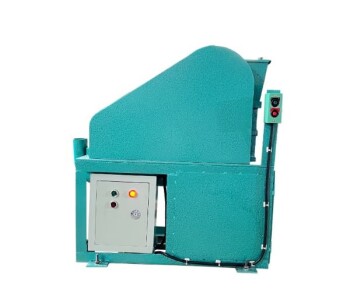
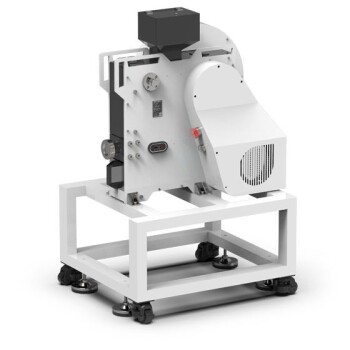
Mechanical Crushing Reduces particle size & snaps molecular chains Lowers degree of polymerization and crystallinity
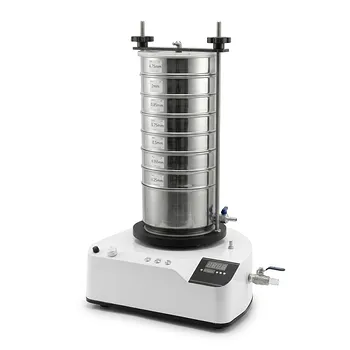
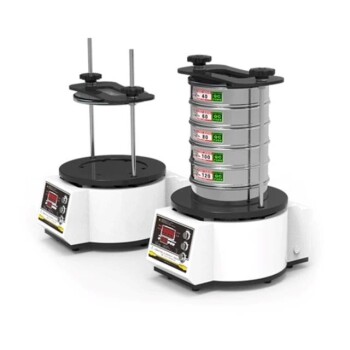
Sieving Ensures uniform mesh size distribution Guarantees consistent wettability and chemical penetration
Shear Force Application Increases specific surface area & pore size Eliminates steric hindrance for enzymatic access
Physical Disruption Breaks the lignocellulosic matrix Enhances accessibility for downstream hydrolysis

Transform Your Biomass Pretreatment with KINTEK Precision

Maximize your conversion efficiency and eliminate steric hindrance with KINTEK’s industry-leading crushing and milling systems. Whether you are developing textile biomaterials or advanced biofuels, our high-performance sieving equipment and grinding solutions are engineered to deliver precise particle sizes and increased surface area for optimal enzymatic hydrolysis.

Why partner with KINTEK?

  • Comprehensive Laboratory Range: From high-temperature furnaces and reactors to hydraulic presses and cooling solutions, we provide the full ecosystem for material science.
  • Tailored Performance: Achieve the exact mesh size and crystallinity reduction required for your specific biomass substrate.
  • Unmatched Durability: High-quality laboratory equipment designed for the rigorous demands of forest biomass research.

Contact KINTEK Experts Today to find the perfect equipment solution for your laboratory and accelerate your path to sustainable biomaterial innovation!

References

  1. J.C. Dias, Carla Silva. Biopolymers Derived from Forest Biomass for the Sustainable Textile Industry. DOI: 10.3390/f16010163

This article is also based on technical information from Kintek Solution Knowledge Base .

Related Products

People Also Ask

Related Products

Vibratory Sieve Shaker Machine Dry Three-Dimensional Vibrating Sieve

Vibratory Sieve Shaker Machine Dry Three-Dimensional Vibrating Sieve

The KT-V200 product focuses on solving common sieving tasks in the laboratory. It is suitable for sieving 20g-3kg dry samples.

Laboratory manual slicer

Laboratory manual slicer

Manual microtome is a high-precision cutting device designed for laboratories, industry and medical fields. It is suitable for the preparation of thin slices of various materials such as paraffin samples, biological tissues, battery materials, food, etc.

Desktop Fast Laboratory Autoclave Sterilizer 35L 50L 90L for Lab Use

Desktop Fast Laboratory Autoclave Sterilizer 35L 50L 90L for Lab Use

The desktop fast steam sterilizer is a compact and reliable device used for rapid sterilization of medical, pharmaceutical, and research items. It efficiently sterilizes surgical instruments, glassware, medicines, and resistant materials, making it suitable for various applications.

Cylindrical Press Mold with Scale for Lab

Cylindrical Press Mold with Scale for Lab

Discover precision with our Cylindrical Press Mold. Ideal for high-pressure applications, it molds various shapes and sizes, ensuring stability and uniformity. Perfect for lab use.

kbr pellet press 2t

kbr pellet press 2t

Introducing the KINTEK KBR Press - a handheld laboratory hydraulic press designed for entry-level users.

Single Punch Manual Tablet Press Machine TDP Tablet Punching Machine

Single Punch Manual Tablet Press Machine TDP Tablet Punching Machine

Single punch manual tablet punching machine can press various granular, crystal or powdery raw materials with good fluidity into disc-shaped, cylindrical, spherical, convex, concave and other various geometric shapes (such as square, triangle, ellipse, capsule shape, etc.), and can also press products with text and patterns.

Laboratory Multifunctional Small Speed-Adjustable Horizontal Mechanical Shaker for Lab

Laboratory Multifunctional Small Speed-Adjustable Horizontal Mechanical Shaker for Lab

The laboratory multifunctional speed-regulating oscillator is a constant-speed experimental equipment specially developed for modern bioengineering production units.

Automatic Laboratory Hydraulic Pellet Press Machine for Lab Use

Automatic Laboratory Hydraulic Pellet Press Machine for Lab Use

Experience efficient sample preparation with our Automatic Lab Press Machine. Ideal for material research, pharmacy, ceramics, and more. Features a compact size and hydraulic press functionality with heating plates. Available in various sizes.

Lab Scale Rotary Single Punch Tablet Press Machine TDP Tablet Punching Machine

Lab Scale Rotary Single Punch Tablet Press Machine TDP Tablet Punching Machine

This machine is a single-pressure automatic rotating, continuous tableting machine that compresses granular raw materials into various tablets. It is mainly used for tablet production in the pharmaceutical industry, and is also suitable for chemical, food, electronics and other industrial sectors.

Engineering Advanced Fine Ceramics Head Tweezers with Pointed Elbow Zirconia Ceramic Tip

Engineering Advanced Fine Ceramics Head Tweezers with Pointed Elbow Zirconia Ceramic Tip

Zirconia ceramic tweezers are a high-precision tool made of advanced ceramic materials, especially suitable for operating environments that require high precision and corrosion resistance. This type of tweezers not only has excellent physical properties, but is also popular in the medical and laboratory fields because of its biocompatibility.

Metallographic Specimen Mounting Machine for Laboratory Materials and Analysis

Metallographic Specimen Mounting Machine for Laboratory Materials and Analysis

Precision metallographic mounting machines for labs—automated, versatile, and efficient. Ideal for sample prep in research and quality control. Contact KINTEK today!

High Shear Homogenizer for Pharmaceutical and Cosmetic Applications

High Shear Homogenizer for Pharmaceutical and Cosmetic Applications

Enhance lab efficiency with our high-speed Laboratory Emulsifier Homogenizer for precise, stable sample processing. Ideal for pharmaceuticals & cosmetics.

Lab Sterile Slapping Type Homogenizer for Tissue Mashing and Dispersing

Lab Sterile Slapping Type Homogenizer for Tissue Mashing and Dispersing

The slapping sterile homogenizer can effectively separate the particles contained in and on the surface of solid samples, ensuring that the mixed samples in the sterile bag are fully representative.

80L Heating Chilling Circulator Cooling Water Bath Circulator for High and Low Temperature Constant Temperature Reaction

80L Heating Chilling Circulator Cooling Water Bath Circulator for High and Low Temperature Constant Temperature Reaction

Get all-in-one heating, chilling, and circulating capabilities with our KinTek KCBH 80L Heating Chilling Circulator. High efficiency, reliable performance for labs and industrial applications.

Electrode Polishing Material for Electrochemical Experiments

Electrode Polishing Material for Electrochemical Experiments

Looking for a way to polish your electrodes for electrochemical experiments? Our polishing materials are here to help! Follow our easy instructions for best results.

Carbide Lab Press Mold for Laboratory Applications

Carbide Lab Press Mold for Laboratory Applications

Form ultra-hard samples with Carbide Lab Press Mold. Made of Japanese high-speed steel, it has a long service life. Custom sizes available.

Engineering Advanced Fine Ceramics Aluminium Oxide Al2O3 Ceramic Washer for Wear-Resistant Applications

Engineering Advanced Fine Ceramics Aluminium Oxide Al2O3 Ceramic Washer for Wear-Resistant Applications

Alumina wear-resistant ceramic washer are used for heat dissipation, which can replace aluminum heat sinks, with high temperature resistance and high thermal conductivity.

Vertical High Temperature Graphite Vacuum Graphitization Furnace

Vertical High Temperature Graphite Vacuum Graphitization Furnace

Vertical high temperature graphitization furnace for carbonization and graphitization of carbon materials up to 3100℃.Suitable for shaped graphitization of carbon fiber filaments and other materials sintered in a carbon environment.Applications in metallurgy, electronics, and aerospace for producing high-quality graphite products like electrodes and crucibles.

Custom PTFE Teflon Parts Manufacturer for Culture Dish and Evaporation Dish

Custom PTFE Teflon Parts Manufacturer for Culture Dish and Evaporation Dish

The PTFE culture dish evaporating dish is a versatile laboratory tool known for its chemical resistance and high-temperature stability. PTFE, a fluoropolymer, offers exceptional non-stick properties and durability, making it ideal for various applications in research and industry, including filtration, pyrolysis, and membrane technology.


Leave Your Message