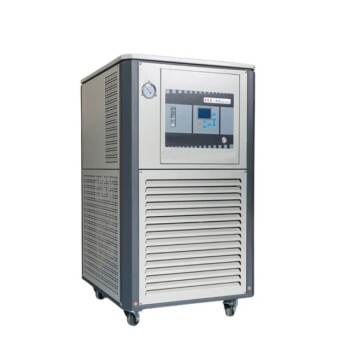
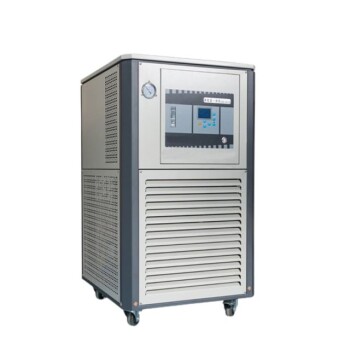
A high-pressure hydrothermal reactor serves as the essential thermodynamic vessel required to transform standard titanium dioxide into advanced catalytic materials. It creates a sealed, high-temperature, and high-pressure environment that forces the structural reorganization of granular anatase titanium dioxide into highly active titanate nanotubes or nanobelts.
The Core Insight The reactor does not merely heat the material; it fundamentally alters its microscopic architecture. By facilitating a phase transition from simple particles to layered nanostructures, the reactor increases the material's specific surface area to over 100 m²/g, unlocking superior performance in photocatalysis and high-temperature chemical reactions.
The Mechanics of Transformation
Creating Critical Thermodynamic Conditions
The reactor functions as a sealed autoclave, allowing the internal environment to reach temperatures and pressures well beyond standard atmospheric limits.
This high-pressure setting maintains solvents (typically high-concentration sodium hydroxide solutions) in a liquid or subcritical state even above their boiling points.
Structural Reorganization
Under these specific conditions, the reactor drives the dissolution and recrystallization of the raw material.
It converts the initial granular anatase titanium dioxide into a layered structure. This is not a surface coating but a fundamental change in the crystal lattice, resulting in nanotubes or nanobelts with high aspect ratios.
Enhancing Catalyst Performance
Drastic Increase in Surface Area
The primary value of using this reactor is the dramatic expansion of the "active" surface.
By converting solid particles into hollow tubes or layered belts, the initial specific surface area is boosted to exceed 100 m²/g. This provides significantly more sites for chemical reactions to occur, directly increasing catalytic activity.
Uniformity and Control
The sealed, static nature of the reactor promotes uniform nucleation and directional growth.
This ensures that the resulting nanotubes or nanobelts are consistent in size and shape, which is critical for predictable performance in complex applications like seawater environments or heterogeneous Fenton reactions.
Understanding the Trade-offs
Process Scalability
While excellent for synthesis, high-pressure hydrothermal reactors act as batch systems.
Scaling this process from a laboratory setting to industrial mass production can be challenging compared to continuous flow methods, as the reactor must be cooled, opened, and cleaned between cycles.
Safety and Energy Intensity
Operating at high pressures and temperatures requires rigorous safety protocols and significant energy input.
The equipment must be rated to withstand the autogenous pressure generated by the solvents, making the initial hardware investment higher than standard reflux setups.
Making the Right Choice for Your Goal
When deciding if a high-pressure hydrothermal reactor is the right tool for your material synthesis, consider your specific performance targets:
- If your primary focus is Maximum Reactivity: The reactor is essential for achieving the >100 m²/g surface area required for high-efficiency photocatalysis.
- If your primary focus is Structural Precision: Use this method to ensure uniform nucleation and strictly controlled morphology (nanotubes/nanobelts) rather than random particle aggregation.
By leveraging the high-pressure environment, you move beyond simple heating to engineer the fundamental microstructure of your catalyst.
Summary Table:
| Feature | Impact on Titanate Synthesis |
|---|---|
| Environment | Sealed, high-temperature, high-pressure (autogenous) |
| Phase Transition | Granular anatase to layered nanostructures (tubes/belts) |
| Surface Area | Drastic increase to >100 m²/g for higher reactivity |
| Morphology | Uniform nucleation with high aspect ratios |
| Applications | Advanced photocatalysis, Fenton reactions, and battery research |
Elevate Your Material Research with KINTEK Precision
Maximize your catalytic efficiency and achieve superior structural control with KINTEK’s high-pressure high-pressure reactors and autoclaves. Specifically designed to withstand rigorous thermodynamic conditions, our reactors enable the precise synthesis of titanate nanotubes and nanobelts with surface areas exceeding 100 m²/g.
Beyond reactors, KINTEK specializes in a comprehensive range of laboratory equipment including high-temperature furnaces, crushing and milling systems, and advanced battery research tools. Whether you are optimizing photocatalysis or scaling up chemical synthesis, our experts are ready to provide the durable hardware and consumables you need for consistent, predictable results.
Ready to engineer your next breakthrough? Contact us today to find the perfect reactor for your lab!
References
- Ernő E. Kiss, Goran Bošković. Impeded solid state reactions and transformations in ceramic catalysts supports and catalysts. DOI: 10.2298/pac1204173k
This article is also based on technical information from Kintek Solution Knowledge Base .
Related Products
- Customizable Laboratory High Temperature High Pressure Reactors for Diverse Scientific Applications
- High Pressure Laboratory Autoclave Reactor for Hydrothermal Synthesis
- Customizable High Pressure Reactors for Advanced Scientific and Industrial Applications
- Stainless High Pressure Autoclave Reactor Laboratory Pressure Reactor
- Mini SS High Pressure Autoclave Reactor for Laboratory Use
People Also Ask
- How do high-pressure and high-temperature reactors ensure the effective treatment of lignocellulosic wastewater in WAO?
- What equipment is required for high-pressure high-temperature reactions? Master Extreme Chemistry Safely
- How do you control high pressure in a reactor? A Guide to Safe & Stable Operation
- Why is argon better than nitrogen for inert atmosphere? Ensure Absolute Reactivity & Stability
- How does initial oxygen pressure affect the wet oxidation of pharmaceutical sludge? Master Your Oxidation Depth