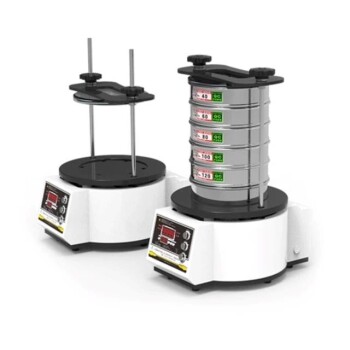
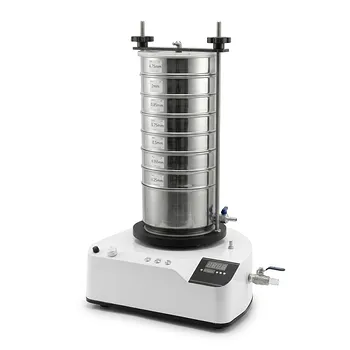
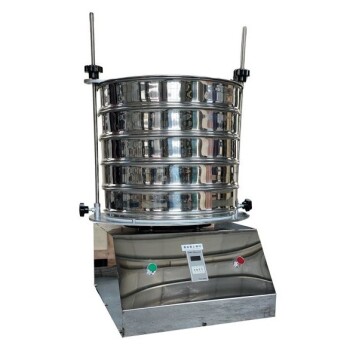
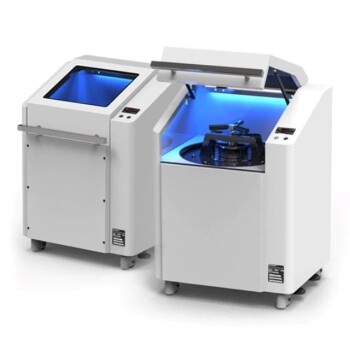
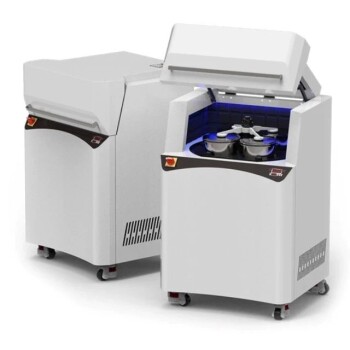
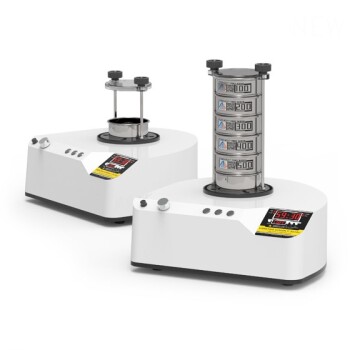
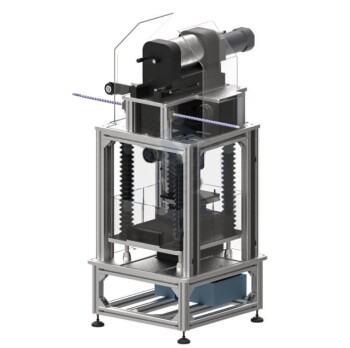
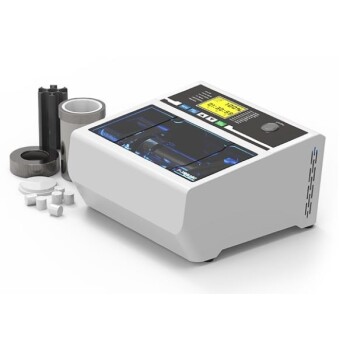
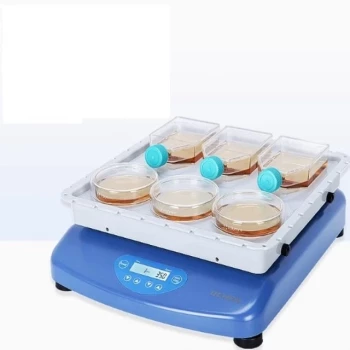
The primary purpose of using a precision laboratory vibrating sieve is to rigorously filter the glass-ceramic slurry before the electrophoretic deposition (EPD) process begins. By utilizing a fine mesh, typically 44 micrometers, this step mechanically removes coarse particles and unground residues that would otherwise contaminate the suspension.
Core Insight: Sieving is not just about refinement; it is a critical structural safeguard. By ensuring no particles exceed a specific size threshold, you prevent the formation of defects that compromise the coating's density and its ability to resist oxidation.
The Critical Role of Particle Sizing
The quality of an electrophoretic deposition coating is defined by the uniformity of the particles suspended in the slurry.
Eliminating Coarse Impurities
Raw glass-ceramic mixtures often contain solid impurities or unground clumps that failed to break down during initial processing.
A vibrating sieve acts as a definitive gatekeeper. It physically traps these large residues, ensuring only the appropriately fine powder enters the deposition stage.
Ensuring Suspension Consistency
For EPD to work effectively, the particles must move and deposit uniformly under an electric field.
A standard 44-micrometer mesh creates a consistent baseline for particle size. This uniformity allows the electric field to act evenly across the suspension, preventing irregular deposition rates.
Impact on Final Coating Properties
If the slurry is not sieved, the physical properties of the final coating will suffer significant degradation.
Preventing Surface Defects
Solid impurities larger than the target size create structural disruptions.
These disruptions manifest as lumps (protrusions) or voids (gaps) in the layer. These defects ruin the surface finish and create stress points within the ceramic material.
Maximizing Density and Protection
The ultimate goal of glass-ceramic coatings is often protection, specifically anti-oxidation performance.
Large particles prevent the powder from packing tightly together, lowering the overall density of the coating. By removing these particles, the sieve ensures a dense, non-porous layer that effectively shields the substrate from oxidation.
Common Pitfalls to Avoid
Understanding the risks of bypassing this step helps clarify its importance.
The "Weak Link" Effect
It is a common error to assume that optimizing EPD voltage or deposition time can fix a poor slurry.
If coarse particles are present, no amount of process optimization can prevent defects. The sieving step is the foundation; without it, the structural integrity of the coating is compromised before deposition even begins.
Making the Right Choice for Your Goal
The use of a precision sieve dictates the success of specific performance metrics.
- If your primary focus is mechanical integrity: Sieving eliminates large inclusions that cause voids, ensuring a solid, crack-resistant structure.
- If your primary focus is environmental protection: Sieving ensures high coating density, which provides the superior anti-oxidation performance required for harsh environments.
Precise particle control is the prerequisite for a high-performance glass-ceramic barrier.
Summary Table:
| Feature | Impact on Electrophoretic Deposition (EPD) |
|---|---|
| Sieve Mesh Size | Typically 44 micrometers to remove coarse residues |
| Slurry Consistency | Ensures uniform particle movement under electric fields |
| Structural Integrity | Eliminates lumps and voids for a defect-free surface |
| Density Enhancement | Promotes tight packing for superior anti-oxidation |
| Process Foundation | Prevents structural failure that voltage tuning cannot fix |
Elevate Your Material Research with KINTEK Precision
Achieving a high-density, oxidation-resistant coating starts with superior particle control. At KINTEK, we specialize in providing researchers with the high-performance sieving equipment and crushing and milling systems necessary to prepare flawless glass-ceramic slurries.
Our extensive portfolio supports every stage of your laboratory workflow—from precision vibrating sieves and high-temperature furnaces (CVD, PECVD, vacuum) for advanced material synthesis to hydraulic presses and PTFE consumables for sample preparation.
Don't let coarse impurities compromise your coating's integrity. Contact KINTEK today to discover how our laboratory solutions can enhance your deposition accuracy and research outcomes!
References
- Rosalina Pérez, Petra Honnerová. Thermal behaviour of vitreous ceramic coatings obtained by electrophoretic deposition for furnace components. DOI: 10.1016/j.ceramint.2020.04.219
This article is also based on technical information from Kintek Solution Knowledge Base .
Related Products
- Laboratory Vibratory Sieve Shaker Machine Slap Vibrating Sieve
- Vibratory Sieve Shaker Machine Dry Three-Dimensional Vibrating Sieve
- Laboratory Vibratory Sieve Shaker Machine for Dry and Wet Three-Dimensional Sieving
- Laboratory Test Sieves and Vibratory Sieve Shaker Machine
- Laboratory Wet Three-Dimensional Vibratory Sieve Shaker Machine
People Also Ask
- How does a laboratory vibratory sieve shaker facilitate the microstructural study of gas-atomized alloy powders?
- What role does a laboratory vibrating sieve shaker play in the LiFePO4 powder processing workflow? Ensure Batch Quality
- What are laboratory sieves used for? Measure Particle Size for Quality Control & R&D
- What are the uses of sieve in laboratory? Essential Guide to Particle Size Analysis
- What are the sieve used in laboratory? A Guide to Choosing the Right Sieve for Accurate Particle Analysis