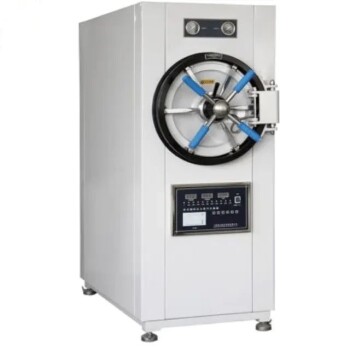
The primary research value of a high-pressure autoclave lies in its ability to simulate extreme hydrothermal environments to rigorously test material limits. By subjecting geopolymer materials to high-temperature and high-pressure steam, researchers can modify the material's fundamental properties and validate its stability for use in harsh industrial settings.
Core Takeaway High-pressure autoclaving serves as a critical stress test that accelerates microstructural evolution and drives changes in crystallinity. This process is essential for verifying the long-term durability of geopolymers intended for high-stakes applications like deep-level nuclear waste encapsulation and geothermal well cementing.
The Role of Extreme Hydrothermal Conditions
Simulating Harsh Environments
The high-pressure autoclave creates a controlled environment of high-temperature and high-pressure steam. This allows researchers to replicate the severe conditions found in specific subterranean or industrial settings without leaving the laboratory.
Assessing Hydrothermal Stability
The primary goal of this method is to study the stability of geopolymer materials. By exposing samples to these extreme hydrothermal conditions, researchers can determine whether the material will degrade, maintain its integrity, or evolve into a more stable phase over time.
Modifying Material Properties
Altering the Microstructure
Autoclaving is not just a passive testing method; it actively modifies the microstructure of the geopolymer gel. Researchers use this tool to induce specific structural changes that standard curing methods cannot achieve.
Controlling Crystallinity
The combination of heat and pressure influences the crystallinity of the material. This allows scientists to study the transition of geopolymer gels from amorphous states to more crystalline structures, which directly impacts the material's mechanical and chemical resistance.
Validating Industrial Applications
Nuclear Waste Encapsulation
The data derived from autoclave testing is vital for deep-level nuclear waste encapsulation. Researchers must ensure that the encapsulating material remains stable over geological timescales under high pressure and temperature; the autoclave provides the necessary validation for this safety-critical application.
Geothermal Well Cementing
Geopolymers used in geothermal well cementing face constant exposure to high heat and pressure. Autoclave curing proves whether the cement can withstand these operational stresses without failing, ensuring the longevity and safety of the energy infrastructure.
Critical Considerations in High-Pressure Research
The Impact of Forced Evolution
It is important to recognize that this curing method modifies the material state. Researchers must understand that the resulting microstructure represents an evolved state, distinct from materials cured under ambient conditions.
Specificity of Application
This method is specialized. It is specifically designed to evaluate durability for specialized industrial applications. It may not be necessary or relevant for geopolymers intended for standard construction environments where such extremes are absent.
Making the Right Choice for Your Goal
To determine if high-pressure autoclave curing aligns with your research objectives, consider the following:
- If your primary focus is Nuclear or Geothermal Applications: You must use this method to validate long-term durability and stability under the specific pressure and temperature conditions of the target environment.
- If your primary focus is Material Science Fundamentals: Use this method to investigate the mechanisms of crystallization and microstructural evolution within the geopolymer gel.
Ultimately, high-pressure autoclaving is the definitive method for proving that a geopolymer can survive and function in the most hostile industrial environments.
Summary Table:
| Feature | Research Value & Impact |
|---|---|
| Environment Simulation | Replicates high-temp/high-pressure steam for hydrothermal stability testing |
| Structural Modification | Accelerates microstructural evolution and drives transition from amorphous to crystalline phases |
| Application Validation | Verifies material integrity for deep-level nuclear waste & geothermal well cementing |
| Long-term Durability | Acts as a critical stress test to predict performance over geological timescales |
Elevate Your Geopolymer Research with KINTEK
Precision is non-negotiable when simulating the harsh conditions of nuclear encapsulation or geothermal energy. KINTEK specializes in advanced high-temperature high-pressure reactors and autoclaves, engineered to provide the rigorous hydrothermal control needed for cutting-edge material science.
From crushing systems and hydraulic presses for sample preparation to specialized cooling solutions and furnaces, KINTEK delivers the comprehensive equipment and consumables your laboratory requires. Ensure your materials can withstand the extreme—Contact us today to find the perfect autoclave solution for your project!
References
- G. Saravanan, S. Kandasamy. Flyash Based Geopolymer Concrete – A State of t he Art Review. DOI: 10.25103/jestr.061.06
This article is also based on technical information from Kintek Solution Knowledge Base .
Related Products
- Mini SS High Pressure Autoclave Reactor for Laboratory Use
- High Pressure Laboratory Autoclave Reactor for Hydrothermal Synthesis
- Stainless High Pressure Autoclave Reactor Laboratory Pressure Reactor
- Desktop Fast High Pressure Laboratory Autoclave Sterilizer 16L 24L for Lab Use
- Laboratory High Pressure Horizontal Autoclave Steam Sterilizer for Lab Use
People Also Ask
- Why use high-pressure reactors for molecular sieve synthesis? Unlock Superior Crystallinity and Framework Control
- Why are high-pressure reactors or autoclaves necessary for the synthesis of new functional materials? Unlock Precision.
- What is the function of a high-pressure reactor autoclave? Enhancing Cu/N Co-Doped Carbon Catalyst Synthesis
- What are the advantages of using a high-pressure reactor like an autoclave? Maximize Liquefaction Speed & Yield
- How are high-pressure reactors used to prepare metaphosphate electrocatalysts? Master In-Situ Precursor Growth