Knowledge What role does a vacuum drying oven play in the post-treatment of NCM cathode sheets? Optimize Battery Stability
Author avatar

Tech Team · Kintek Solution

Updated 4 days ago

What role does a vacuum drying oven play in the post-treatment of NCM cathode sheets? Optimize Battery Stability


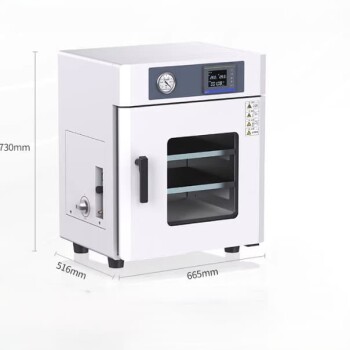
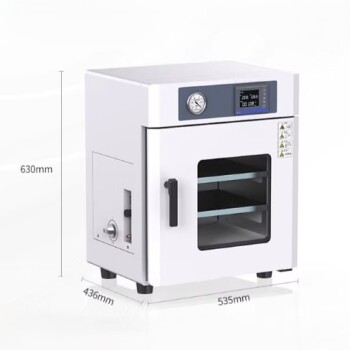
A vacuum drying oven serves as a critical purification stage for NCM cathode sheets, typically executing an overnight treatment at approximately 120°C. Its primary function is to create a negative pressure environment that lowers the boiling point of solvents, ensuring the complete removal of N-Methyl-2-pyrrolidone (NMP) and residual moisture while shielding the active materials from oxidation.

Core Takeaway: The vacuum drying oven is not merely a heating device; it is a stability control system. By manipulating pressure, it allows for the deep extraction of solvents and moisture from electrode micropores at manageable temperatures, preventing the chemical degradation that occurs when NCM materials are exposed to oxygen or high heat.

The Mechanism of Solvent and Moisture Removal

Lowering the Boiling Point

The central physical principle of this process is the relationship between pressure and boiling points. By creating a vacuum, the oven drastically reduces the temperature required for solvents to transition from liquid to gas.

This allows for the efficient removal of organic solvent residues, specifically N-Methyl-2-pyrrolidone (NMP), at 120°C. Without the vacuum, removing these residues would require significantly higher temperatures that could damage the electrode components.

Deep Extraction from Micropores

Coated NCM cathode sheets possess a complex, porous structure. Surface drying is insufficient for long-term battery performance.

The vacuum environment facilitates the extraction of volatile organic compounds and moisture trapped deep within the electrode micropores. Thoroughly clearing these pores is essential to prevent internal side reactions once the battery is assembled.

Enhancing Adhesion

The presence of residual NMP or moisture can interfere with the physical structure of the electrode.

By ensuring the slurry is completely dry, the vacuum oven promotes strong adhesion between the active NCM material and the current collector. This structural integrity is vital for maintaining conductivity during repeated charge and discharge cycles.

Preserving Chemical Integrity

Preventing Oxidation

NCM active materials are sensitive to environmental factors, particularly when heated.

Heating the sheets to 120°C in normal air would accelerate oxidation, degrading the material's electrochemical properties. The vacuum environment eliminates oxygen from the chamber, allowing for heat treatment without the risk of oxidative degradation.

Avoiding Electrolyte Decomposition

Residual moisture is a primary enemy of battery longevity. If water remains in the cathode sheet, it can react with the electrolyte in the finished cell.

This reaction often leads to electrolyte decomposition and gas generation. By rigorously removing trace moisture, the vacuum drying process stabilizes the interface between the cathode and electrolyte, directly improving the battery's cycling stability.

Understanding the Trade-offs

Process Bottlenecks

Vacuum drying is a time-intensive process, often requiring approximately 12 hours or overnight treatment to be effective. This can become a production bottleneck compared to the rapid speed of coating and calendering steps.

Temperature Sensitivity

While the vacuum lowers the boiling point, precise temperature control is still required. Exceeding the standard 120°C for coated sheets can potentially damage the polymer binder used in the electrode, leading to cracking or delamination.

Making the Right Choice for Your Goal

When optimizing your post-treatment process for NCM cathodes, consider which failure mode you are most trying to prevent:

  • If your primary focus is Cycle Life: Prioritize the duration and depth of the vacuum cycle to ensure absolute moisture removal, as trace water is the leading cause of long-term electrolyte degradation.
  • If your primary focus is Structural Integrity: Ensure the temperature ramp-up is controlled to prevent rapid solvent evaporation that could crack the electrode surface before the NMP is fully evacuated.

Rigorous vacuum drying is the bridge between a coated sheet and a functional, reliable battery electrode.

Summary Table:

Feature Function in NCM Post-Treatment Key Benefit
Vacuum Pressure Lowers solvent boiling points Deep extraction of NMP from micropores
120°C Heat Efficient thermal evaporation Removes moisture without damaging binders
Inert Environment Eliminates oxygen exposure Prevents oxidation of active NCM materials
Pore Clearing Evacuates trapped volatiles Enhances adhesion and electrolyte interface

Elevate Your Battery Research with KINTEK

Precision is paramount in NCM cathode processing. KINTEK specializes in advanced laboratory equipment, offering high-performance vacuum drying ovens and high-temperature furnaces designed to ensure the chemical integrity of your electrodes.

Whether you are refining battery slurry with our crushing and milling systems or stabilizing electrodes in our specialized ovens, our solutions prevent oxidation and maximize cycle life. From high-pressure reactors to PTFE consumables, we provide the comprehensive tools needed for cutting-edge energy research.

Ready to optimize your post-treatment process? Contact KINTEK today to discuss how our vacuum solutions can enhance your laboratory's efficiency and battery performance.

Related Products

People Also Ask

Related Products

Vacuum Heat Treat Sintering Brazing Furnace

Vacuum Heat Treat Sintering Brazing Furnace

A vacuum brazing furnace is a type of industrial furnace used for brazing, a metalworking process that joins two pieces of metal using a filler metal that melts at a lower temperature than the base metals. Vacuum brazing furnaces are typically used for high-quality applications where a strong, clean joint is required.

1800℃ Muffle Oven Furnace for Laboratory

1800℃ Muffle Oven Furnace for Laboratory

KT-18 muffle furnace with Japan Al2O3 polycrystalline fibe and Silicon Molybdenum heating element, up to 1900℃, PID temperature control and 7" smart touch screen. Compact design, low heat loss, and high energy efficiency. Safety interlock system and versatile functions.

Vacuum Dental Porcelain Sintering Furnace

Vacuum Dental Porcelain Sintering Furnace

Get precise and reliable results with KinTek's Vacuum Porcelain Furnace. Suitable for all porcelain powders, it features hyperbolic ceramic furnace function, voice prompt, and automatic temperature calibration.

Vacuum Heat Treat and Molybdenum Wire Sintering Furnace for Vacuum Sintering

Vacuum Heat Treat and Molybdenum Wire Sintering Furnace for Vacuum Sintering

A vacuum molybdenum wire sintering furnace is a vertical or bedroom structure, which is suitable for withdrawal, brazing, sintering and degassing of metal materials under high vacuum and high temperature conditions. It is also suitable for dehydroxylation treatment of quartz materials.

Horizontal High Temperature Graphite Vacuum Graphitization Furnace

Horizontal High Temperature Graphite Vacuum Graphitization Furnace

Horizontal Graphitization Furnace: This type of furnace is designed with the heating elements placed horizontally, allowing for uniform heating of the sample. It's well-suited for graphitizing large or bulky samples that require precise temperature control and uniformity.

Vacuum Heat Treat and Sintering Furnace with 9MPa Air Pressure

Vacuum Heat Treat and Sintering Furnace with 9MPa Air Pressure

The air pressure sintering furnace is a high-tech equipment commonly used for the sintering of advanced ceramic materials. It combines vacuum sintering and pressure sintering techniques to achieve high-density and high-strength ceramics.

1700℃ Muffle Oven Furnace for Laboratory

1700℃ Muffle Oven Furnace for Laboratory

Get superior heat control with our 1700℃ Muffle Furnace. Equipped with intelligent temperature microprocessor, TFT touch screen controller & advanced insulation materials for precise heating up to 1700C. Order now!

Vacuum Hot Press Furnace Heated Vacuum Press Machine Tube Furnace

Vacuum Hot Press Furnace Heated Vacuum Press Machine Tube Furnace

Reduce forming pressure & shorten sintering time with Vacuum Tube Hot Press Furnace for high-density, fine-grain materials. Ideal for refractory metals.

2200 ℃ Tungsten Vacuum Heat Treat and Sintering Furnace

2200 ℃ Tungsten Vacuum Heat Treat and Sintering Furnace

Experience the ultimate refractory metal furnace with our Tungsten vacuum furnace. Capable of reaching 2200℃, perfect for sintering advanced ceramics and refractory metals. Order now for high-quality results.

Non Consumable Vacuum Arc Induction Melting Furnace

Non Consumable Vacuum Arc Induction Melting Furnace

Explore the benefits of Non-Consumable Vacuum Arc Furnace with high melting point electrodes. Small, easy to operate & eco-friendly. Ideal for laboratory research on refractory metals & carbides.

Ultra-High Temperature Graphite Vacuum Graphitization Furnace

Ultra-High Temperature Graphite Vacuum Graphitization Furnace

The ultra-high temperature graphitization furnace utilizes medium frequency induction heating in a vacuum or inert gas environment. The induction coil generates an alternating magnetic field, inducing eddy currents in the graphite crucible, which heats up and radiates heat to the workpiece, bringing it to the desired temperature. This furnace is primarily used for graphitization and sintering of carbon materials, carbon fiber materials, and other composite materials.

Vacuum Heat Treat Furnace and Levitation Induction Melting Furnace

Vacuum Heat Treat Furnace and Levitation Induction Melting Furnace

Experience precise melting with our Vacuum Levitation Melting Furnace. Ideal for high melting point metals or alloys, with advanced technology for effective smelting. Order now for high-quality results.

600T Vacuum Induction Hot Press Furnace for Heat Treat and Sintering

600T Vacuum Induction Hot Press Furnace for Heat Treat and Sintering

Discover the 600T Vacuum Induction Hot Press Furnace, designed for high-temperature sintering experiments in vacuum or protected atmospheres. Its precise temperature and pressure control, adjustable working pressure, and advanced safety features make it ideal for nonmetal materials, carbon composites, ceramics, and metal powders.

Vacuum Hot Press Furnace Machine Heated Vacuum Press

Vacuum Hot Press Furnace Machine Heated Vacuum Press

Discover the advantages of Vacuum Hot Press Furnace! Manufacture dense refractory metals & compounds, ceramics, and composites under high temp and pressure.

Vertical High Temperature Graphite Vacuum Graphitization Furnace

Vertical High Temperature Graphite Vacuum Graphitization Furnace

Vertical high temperature graphitization furnace for carbonization and graphitization of carbon materials up to 3100℃.Suitable for shaped graphitization of carbon fiber filaments and other materials sintered in a carbon environment.Applications in metallurgy, electronics, and aerospace for producing high-quality graphite products like electrodes and crucibles.

1400℃ Controlled Atmosphere Furnace with Nitrogen and Inert Atmosphere

1400℃ Controlled Atmosphere Furnace with Nitrogen and Inert Atmosphere

Achieve precise heat treatment with KT-14A controlled atmosphere furnace. Vacuum sealed with a smart controller, it's ideal for lab and industrial use up to 1400℃.

1200℃ Controlled Atmosphere Furnace Nitrogen Inert Atmosphere Furnace

1200℃ Controlled Atmosphere Furnace Nitrogen Inert Atmosphere Furnace

Discover our KT-12A Pro Controlled atmosphere furnace - high precision, heavy duty vacuum chamber, versatile smart touch screen controller, and excellent temperature uniformity up to 1200C. Ideal for both laboratory and industrial application.

1200℃ Split Tube Furnace with Quartz Tube Laboratory Tubular Furnace

1200℃ Split Tube Furnace with Quartz Tube Laboratory Tubular Furnace

KT-TF12 split tube furnace: high-purity insulation, embedded heating wire coils, and max. 1200C. Widely used for new materials and chemical vapour deposition.

Mesh belt controlled atmosphere furnace

Mesh belt controlled atmosphere furnace

Discover our KT-MB mesh belt sintering furnace - perfect for high-temperature sintering of electronic components & glass insulators. Available for open air or controlled atmosphere environments.

Vacuum Sealed Continuous Working Rotary Tube Furnace Rotating Tube Furnace

Vacuum Sealed Continuous Working Rotary Tube Furnace Rotating Tube Furnace

Experience efficient material processing with our vacuum-sealed rotary tube furnace. Perfect for experiments or industrial production, equipped with optional features for controlled feeding and optimized results. Order now.


Leave Your Message