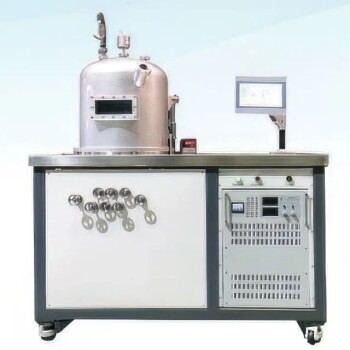
The Microwave Plasma Chemical Vapor Deposition (MPCVD) method is distinguished primarily by its ability to generate a high-purity plasma without the use of electrodes or heating elements. This unique "electrodeless" approach solves the fundamental problem of contamination, allowing for the growth of superior diamond films with structural integrity that other methods struggle to achieve.
Core Takeaway MPCVD has become the industry benchmark because it decouples energy generation from the deposition zone. By eliminating metallic electrodes and hot filaments, it ensures the diamond is grown in a pristine environment, preventing impurity doping while allowing for the precise, large-scale synthesis required for high-end electronics and gem-quality stones.
The Purity and Quality Advantage
Elimination of Contamination Sources
The most critical advantage of MPCVD is that it is an electrodeless discharge method. In traditional setups like Hot Filament CVD (HFCVD), the filament materials (often tungsten or tantalum) degrade at high temperatures, releasing metallic impurities into the growing film.
Because MPCVD uses microwaves to generate plasma, there are no internal components to corrode or sublimate. This results in an exceptionally pure plasma, making it the ideal choice for applications requiring optical-grade or electronic-grade diamond.
Prevention of Surface Damage
High-energy ions can be detrimental during crystal growth, effectively "sandblasting" the lattice as it tries to form. In the MPCVD process, the ions generated within the plasma possess low maximum kinetic energy.
This "soft" impact ensures that the reactive species deposit diamond carbon without corroding or etching the diamond layer that has already formed. This leads to superior crystalline morphology and structural continuity.
High-Efficiency Activation
The microwave discharge area in an MPCVD reactor is highly concentrated. This intensity effectively activates specific atomic groups, most notably atomic hydrogen. High concentrations of atomic hydrogen are essential for etching away non-diamond carbon (graphite) during the growth process, ensuring that only the diamond lattice remains.
Stability and Scalability
Uniformity via the "Plasma Ball"
One of the technical challenges in diamond synthesis is maintaining consistent conditions across a wide wafer. The MPCVD reactor structure can be adjusted to create a large and stable plasma ball.
Unlike the "flame method," which is difficult to scale, the stable plasma ball in MPCVD contacts the substrate evenly. This facilitates the large-area, uniform deposition of diamond films, which is a prerequisite for industrial mass production.
Enhanced Process Versatility
The stability of the MPCVD environment allows for greater flexibility in manufacturing. It is capable of coating curved or shaped surfaces, not just flat wafers.
Furthermore, the absence of sensitive metal filaments allows operators to introduce a wider variety of gas chemistries, such as high concentrations of oxygen, which would otherwise destroy a hot filament system. This flexibility enables the customization of diamond properties, including color and hardness.
Understanding the Trade-offs
While MPCVD is superior for quality, it requires precise environmental control to maintain the "stable plasma ball" described above.
- Parameter Sensitivity: The process relies on the intricate balance of microwave power, chamber pressure, and gas composition. These must be slowly adjusted and optimized using stub tuners to achieve the correct resonance mode.
- System Tuning: Unlike simpler thermal methods, the plasma stability is heavily dependent on the reactor geometry. Achieving the optimal "floating" plasma ball requires careful configuration to prevent plasma from touching the quartz window or chamber walls, which could introduce contaminants or damage the hardware.
Making the Right Choice for Your Goal
The specific advantages of MPCVD make it the dominant choice for high-specification applications. Here is how to verify if it fits your project needs:
- If your primary focus is Electronic or Optical Grade Material: Choose MPCVD for its electrodeless design, which guarantees the high purity levels necessary for semiconductors and transparent windows.
- If your primary focus is Industrial Scale Production: Rely on MPCVD for its ability to generate a stable, large-area plasma ball, ensuring uniformity across large batches or large single crystals.
- If your primary focus is Long-Term Cost Efficiency: Select MPCVD to avoid the frequent replacement of consumables like hot filaments, as the system allows for stable, continuous operation over extended periods.
Ultimately, MPCVD offers the most reliable pathway to synthesizing diamond materials that exceed natural stones in both hardness and purity.
Summary Table:
| Advantage | MPCVD Benefit | Impact on Diamond Quality |
|---|---|---|
| Purity Control | Electrodeless plasma generation | Zero metallic contamination from filaments |
| Surface Integrity | Low kinetic energy ions | Minimal lattice damage & superior morphology |
| Growth Efficiency | High atomic hydrogen concentration | Effective etching of non-diamond carbon |
| Scalability | Stable, large-area "Plasma Ball" | Uniform deposition across large wafers |
| Process Versatility | Stable gas chemistry environment | Ability to coat curved and complex shapes |
Elevate Your Diamond Synthesis with KINTEK Precision
Unlock the full potential of MPCVD technology for your laboratory or industrial production. At KINTEK, we specialize in high-performance laboratory equipment, providing the advanced MPCVD systems and MPCVD consumables needed to grow optical-grade and electronic-grade diamond films with unmatched purity.
Whether you are focused on semiconductor research, gem-quality synthesis, or high-end electronics, our comprehensive portfolio—from high-temperature furnaces and vacuum systems to cooling solutions and ceramics—ensures your lab operates at peak efficiency.
Ready to achieve superior crystalline results?
Contact KINTEK Experts Today to find the perfect solution for your diamond growth and materials research needs.
Related Products
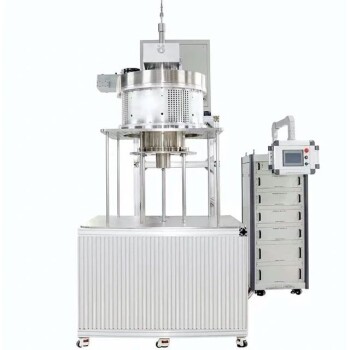
- 915MHz MPCVD Diamond Machine Microwave Plasma Chemical Vapor Deposition System Reactor
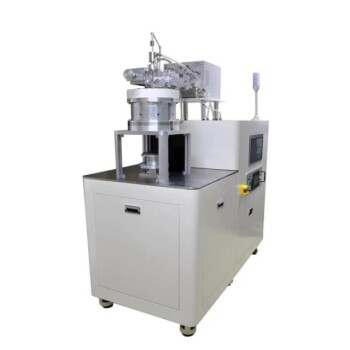
- Microwave Plasma Chemical Vapor Deposition MPCVD Machine System Reactor for Lab and Diamond Growth
- Cylindrical Resonator MPCVD Machine System Reactor for Microwave Plasma Chemical Vapor Deposition and Lab Diamond Growth
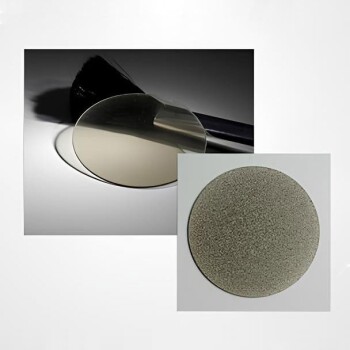
- Custom CVD Diamond Coating for Lab Applications
- Laboratory CVD Boron Doped Diamond Materials
People Also Ask
- How does a microwave plasma reactor facilitate the synthesis of diamond? Master MPCVD with Precision Technology
- What are the advantages of a Microwave Plasma CVD reactor for MCD/NCD coatings? Precision Multilayer Diamond Engineering
- How do vacuum pumps and valves collaborate in MPCVD? Achieve Precise Pressure Control for Superior CNT Synthesis
- What are the primary advantages of the CVD method for growing diamonds? Engineering High-Purity Gems and Components
- How is a diamond formed from CVD? The Science of Growing Diamonds Atom by Atom