Knowledge What temperature does deposition occur? Unlocking the Key Factors for Your Process
Author avatar

Tech Team · Kintek Solution

Updated 6 days ago

What temperature does deposition occur? Unlocking the Key Factors for Your Process


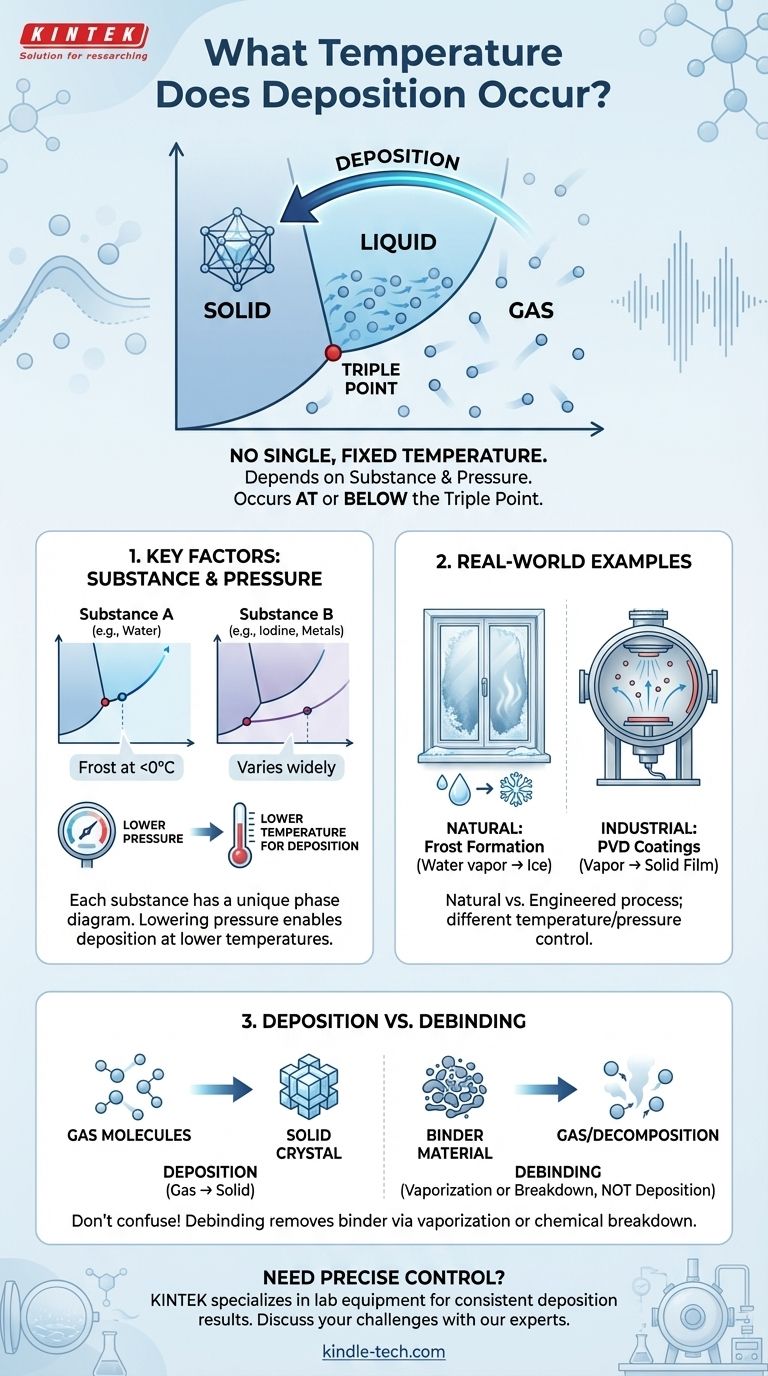
Deposition does not occur at a single, fixed temperature. Instead, the specific temperature for deposition—the process where a gas turns directly into a solid—is entirely dependent on the substance in question and the surrounding pressure. This phase transition happens at or below a substance's "triple point," the unique condition where its solid, liquid, and gas phases can coexist in equilibrium.

The critical takeaway is that "deposition temperature" is not a universal constant but a variable point on a substance's phase diagram. It is defined by the specific relationship between temperature and pressure that allows a material to bypass its liquid state.
What temperature does deposition occur? Unlocking the Key Factors for Your Process

What is Deposition? A First-Principles Look

To understand why there's no single answer, we need to look at the physics of phase changes. Deposition is fundamentally linked to a substance's unique energetic properties.

From Gas Directly to Solid

Deposition is a thermodynamic process where gas molecules lose enough thermal energy to lock directly into a solid crystal structure, skipping the liquid phase entirely.

This process is the direct reverse of sublimation, where a solid turns directly into a gas (like dry ice, which is solid carbon dioxide, turning into vapor).

The Role of the "Triple Point"

Every substance has a phase diagram that maps its physical state (solid, liquid, gas) across a range of temperatures and pressures.

The triple point is a specific temperature and pressure on this diagram where all three phases coexist. Deposition can only occur at temperature and pressure combinations below this triple point.

Everyday Example: Frost on a Window

The most common example of deposition is the formation of frost. On a cold night, water vapor (a gas) in the air comes into contact with a surface, like a window pane, that is below the freezing point of water.

If the conditions are right (below water's triple point), the water vapor molecules transition directly into solid ice crystals without first becoming liquid water droplets.

Key Factors That Determine Deposition Temperature

Since there is no universal temperature, you must consider two primary factors for any specific application.

The Substance Itself

Every substance has a unique molecular structure and bonding energy, resulting in a different phase diagram. The deposition conditions for water are vastly different from those for iodine or the metals used in industrial coatings.

The Critical Role of Pressure

Pressure is equally important as temperature. Lowering the pressure generally makes it easier for a substance to remain in a gaseous state at lower temperatures.

In controlled environments like a vacuum chamber, manipulating the pressure allows engineers to induce deposition at specific, targeted temperatures that might be impossible under normal atmospheric conditions.

Clarifying Common Misconceptions

It's easy to confuse deposition with other thermal processes that occur in industrial settings. Understanding the distinction is key to process control.

Deposition vs. Debinding

The reference to a debinding process finishing at 600°C describes a fundamentally different mechanism. Debinding is the thermal removal of a "binder" material used to hold particles together in a preliminary part.

This process works by vaporization (liquid to gas) or thermal decomposition (breaking down the binder's molecules), not deposition. The 600°C figure is specific to the binder's chemical properties, not a gas-to-solid phase transition.

Deposition in Industrial Applications

In manufacturing, processes like Physical Vapor Deposition (PVD) are used to apply thin film coatings to tools, optics, and semiconductors.

Here, a solid material is vaporized in a vacuum, transported as a gas, and then allowed to deposit onto a cooler target surface. The "deposition temperature" in this context is a carefully engineered process variable, not a natural property.

Finding the Right Temperature for Your Goal

To determine the relevant temperature for deposition, you must first define your context.

  • If your primary focus is understanding a natural phenomenon (like frost): You must reference the phase diagram for that specific substance (e.g., water) and consider the ambient temperature and partial pressure.
  • If your primary focus is controlling an industrial process (like PVD): The deposition temperature is an engineered parameter that depends on the coating material, the substrate, and the desired film properties, which are found in process documentation.
  • If your primary focus is differentiating from other thermal processes: Remember that deposition is a specific phase change (gas to solid), while processes like debinding involve removing material through vaporization or chemical breakdown under a different set of thermal rules.

Ultimately, determining the deposition temperature requires shifting from seeking a single number to understanding the interplay between a specific substance, its temperature, and its pressure.

Summary Table:

Factor Why It Matters for Deposition Temperature
Substance Each material has a unique phase diagram and triple point.
Pressure Lowering pressure allows deposition to occur at lower temperatures.
Process Goal Industrial PVD and natural frost formation have different requirements.

Need precise control over deposition temperatures for your lab or production line? KINTEK specializes in high-quality lab equipment, including vacuum chambers and thermal systems, that enable accurate temperature and pressure control for consistent deposition results. Contact our experts today to discuss how we can support your specific material science or thin-film coating challenges.

Visual Guide
What temperature does deposition occur? Unlocking the Key Factors for Your Process Visual Guide

Related Products

People Also Ask

Related Products

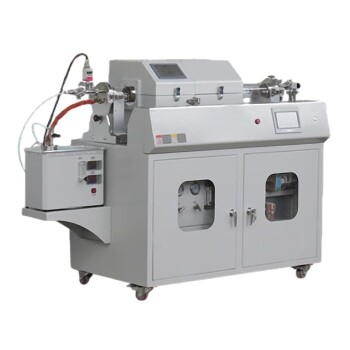
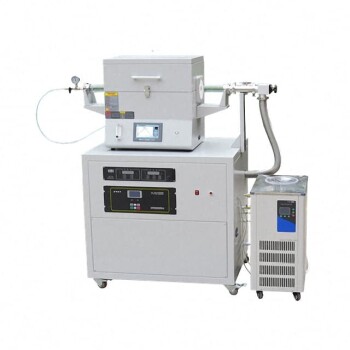
Chemical Vapor Deposition CVD Equipment System Chamber Slide PECVD Tube Furnace with Liquid Gasifier PECVD Machine

Chemical Vapor Deposition CVD Equipment System Chamber Slide PECVD Tube Furnace with Liquid Gasifier PECVD Machine

KT-PE12 Slide PECVD System: Wide power range, programmable temp control, fast heating/cooling with sliding system, MFC mass flow control & vacuum pump.

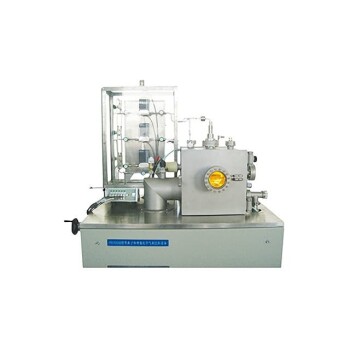
RF PECVD System Radio Frequency Plasma-Enhanced Chemical Vapor Deposition RF PECVD

RF PECVD System Radio Frequency Plasma-Enhanced Chemical Vapor Deposition RF PECVD

RF-PECVD is an acronym for "Radio Frequency Plasma-Enhanced Chemical Vapor Deposition." It deposits DLC (Diamond-like carbon film) on germanium and silicon substrates. It is utilized in the 3-12um infrared wavelength range.

Inclined Rotary Plasma Enhanced Chemical Vapor Deposition PECVD Equipment Tube Furnace Machine

Inclined Rotary Plasma Enhanced Chemical Vapor Deposition PECVD Equipment Tube Furnace Machine

Upgrade your coating process with PECVD coating equipment. Ideal for LED, power semiconductors, MEMS and more. Deposits high-quality solid films at low temps.

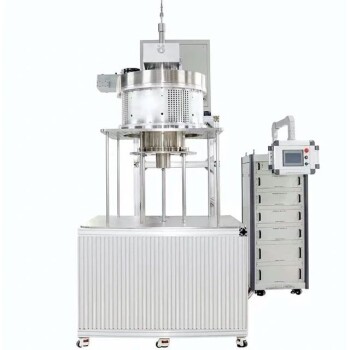
915MHz MPCVD Diamond Machine Microwave Plasma Chemical Vapor Deposition System Reactor

915MHz MPCVD Diamond Machine Microwave Plasma Chemical Vapor Deposition System Reactor

915MHz MPCVD Diamond Machine and its multi-crystal effective growth, the maximum area can reach 8 inches, the maximum effective growth area of single crystal can reach 5 inches. This equipment is mainly used for the production of large-size polycrystalline diamond films, the growth of long single crystal diamonds, the low-temperature growth of high-quality graphene, and other materials that require energy provided by microwave plasma for growth.

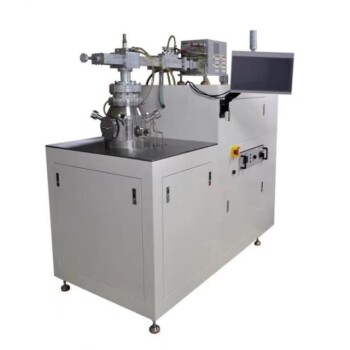
Microwave Plasma Chemical Vapor Deposition MPCVD Machine System Reactor for Lab and Diamond Growth

Microwave Plasma Chemical Vapor Deposition MPCVD Machine System Reactor for Lab and Diamond Growth

Get high-quality diamond films with our Bell-jar Resonator MPCVD machine designed for lab and diamond growth. Discover how Microwave Plasma Chemical Vapor Deposition works for growing diamonds using carbon gas and plasma.

Customer Made Versatile CVD Tube Furnace Chemical Vapor Deposition Chamber System Equipment

Customer Made Versatile CVD Tube Furnace Chemical Vapor Deposition Chamber System Equipment

Get your exclusive CVD furnace with KT-CTF16 Customer Made Versatile Furnace. Customizable sliding, rotating, and tilting functions for precise reactions. Order now!

Cylindrical Resonator MPCVD Machine System Reactor for Microwave Plasma Chemical Vapor Deposition and Lab Diamond Growth

Cylindrical Resonator MPCVD Machine System Reactor for Microwave Plasma Chemical Vapor Deposition and Lab Diamond Growth

Learn about Cylindrical Resonator MPCVD Machine, the microwave plasma chemical vapor deposition method used for growing diamond gemstones and films in the jewelry and semi-conductor industries. Discover its cost-effective advantages over traditional HPHT methods.

Split Chamber CVD Tube Furnace with Vacuum Station Chemical Vapor Deposition System Equipment Machine

Split Chamber CVD Tube Furnace with Vacuum Station Chemical Vapor Deposition System Equipment Machine

Efficient split chamber CVD furnace with vacuum station for intuitive sample checking and quick cooling. Up to 1200℃ max temperature with accurate MFC mass flowmeter control.

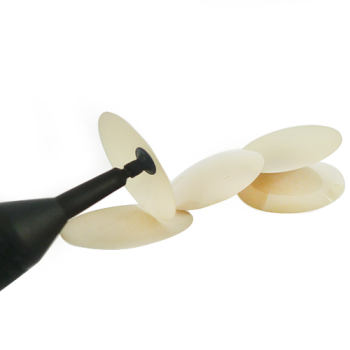
CVD Diamond Domes for Industrial and Scientific Applications

CVD Diamond Domes for Industrial and Scientific Applications

Discover CVD diamond domes, the ultimate solution for high-performance loudspeakers. Made with DC Arc Plasma Jet technology, these domes deliver exceptional sound quality, durability, and power handling.

CVD Diamond Cutting Tool Blanks for Precision Machining

CVD Diamond Cutting Tool Blanks for Precision Machining

CVD Diamond Cutting Tools: Superior Wear Resistance, Low Friction, High Thermal Conductivity for Non-Ferrous Materials, Ceramics, Composites Machining

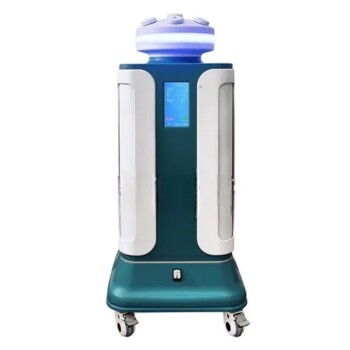
VHP Sterilization Equipment Hydrogen Peroxide H2O2 Space Sterilizer

VHP Sterilization Equipment Hydrogen Peroxide H2O2 Space Sterilizer

A hydrogen peroxide space sterilizer is a device that uses vaporized hydrogen peroxide to decontaminate enclosed spaces. It kills microorganisms by damaging their cellular components and genetic material.

Spark Plasma Sintering Furnace SPS Furnace

Spark Plasma Sintering Furnace SPS Furnace

Discover the benefits of Spark Plasma Sintering Furnaces for rapid, low-temperature material preparation. Uniform heating, low cost & eco-friendly.

High Performance Laboratory Freeze Dryer

High Performance Laboratory Freeze Dryer

Advanced lab freeze dryer for lyophilization, preserving biological & chemical samples efficiently. Ideal for biopharma, food, and research.

1200℃ Split Tube Furnace with Quartz Tube Laboratory Tubular Furnace

1200℃ Split Tube Furnace with Quartz Tube Laboratory Tubular Furnace

KT-TF12 split tube furnace: high-purity insulation, embedded heating wire coils, and max. 1200C. Widely used for new materials and chemical vapour deposition.

Custom PTFE Teflon Parts Manufacturer Corrosion Resistant Cleaning Rack Flower Basket

Custom PTFE Teflon Parts Manufacturer Corrosion Resistant Cleaning Rack Flower Basket

The PTFE cleaning rack, also known as the PTFE flower basket cleaning flower basket, is a specialized laboratory tool designed for the efficient cleaning of PTFE materials. This cleaning rack ensures thorough and safe cleaning of PTFE items, maintaining their integrity and performance in laboratory settings.

Laboratory Vibratory Sieve Shaker Machine Slap Vibrating Sieve

Laboratory Vibratory Sieve Shaker Machine Slap Vibrating Sieve

KT-T200TAP is a slapping and oscillating sieving instrument for laboratory desktop use, with 300 rpm horizontal circular motion and 300 vertical slapping motions to simulate manual sieving to help sample particles pass through better.

Variable Speed Peristaltic Pump

Variable Speed Peristaltic Pump

KT-VSP Series Smart Variable Speed Peristaltic Pumps offer precise flow control for labs, medical, and industrial applications. Reliable, contamination-free liquid transfer.

Platinum Sheet Electrode for Laboratory and Industrial Applications

Platinum Sheet Electrode for Laboratory and Industrial Applications

Elevate your experiments with our Platinum Sheet Electrode. Crafted with quality materials, our safe and durable models can be tailored to fit your needs.

Non Consumable Vacuum Arc Induction Melting Furnace

Non Consumable Vacuum Arc Induction Melting Furnace

Explore the benefits of Non-Consumable Vacuum Arc Furnace with high melting point electrodes. Small, easy to operate & eco-friendly. Ideal for laboratory research on refractory metals & carbides.

Small Vacuum Heat Treat and Tungsten Wire Sintering Furnace

Small Vacuum Heat Treat and Tungsten Wire Sintering Furnace

The small vacuum tungsten wire sintering furnace is a compact experimental vacuum furnace specially designed for universities and scientific research institutes. The furnace features a CNC welded shell and vacuum piping to ensure leak-free operation. Quick-connect electrical connections facilitate relocation and debugging, and the standard electrical control cabinet is safe and convenient to operate.


Leave Your Message