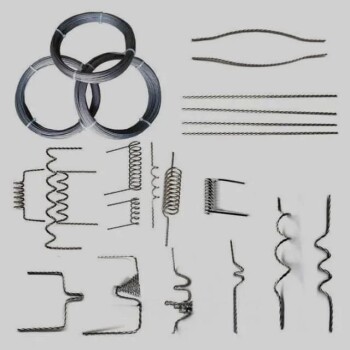
High-power electric heating rods serve as the thermal engine for in-situ reaction cells, explicitly designed to deliver efficient and uniform thermal energy to the catalyst bed via heat conduction. By distributing these rods on both sides of the bed, the system allows researchers to reach high target temperatures, such as 500°C, in a short time while ensuring the thermal stability required for precise characterization.
Core Takeaway: The validity of in-situ catalyst data depends entirely on the stability of the reaction environment. High-power heating rods are essential not just for reaching high temperatures, but for maintaining the uniform thermal distribution necessary to capture accurate kinetic and spectroscopic data.
Achieving Target Conditions Rapidly
Overcoming Thermal Inertia
In-situ characterization often requires testing catalysts under extreme conditions to simulate real-world operations.
High-power rods provide the necessary energy density to elevate the reaction cell to target temperatures, such as 500°C, in a very short time. This rapid ramp rate is critical for time-resolved experiments and efficient workflow.
Efficient Heat Conduction
The mechanism of heat transfer in this configuration is primarily heat conduction.
By placing the rods in direct proximity to the reaction area, thermal resistance is minimized. This ensures that the energy generated is efficiently transferred to the catalyst bed rather than being lost to the surrounding environment.
Ensuring Data Integrity Through Uniformity
Strategic Rod Placement
To prevent thermal gradients, the heating rods are distributed on both sides of the catalyst bed.
This bilateral configuration creates a thermal envelope around the sample. It ensures that the heat is applied evenly, preventing the formation of "hot spots" or "cold zones" that could skew the reaction results.
Stabilizing the Reaction Environment
A stable temperature distribution is not merely a convenience; it is a prerequisite for scientific validity.
The heating rods are calibrated to maintain this distribution throughout the duration of the experiment. This stability ensures that the spectroscopic information collected reflects the true state of the catalyst at a specific temperature, rather than an average of fluctuating conditions.
The Risks of Thermal Inconsistency
Impact on Kinetic Data
Accurate kinetic data relies on the assumption that the entire catalyst bed is reacting at the specified temperature.
If the heating rods fail to provide uniform heat, different parts of the catalyst bed will react at different rates. This leads to convoluted data that misrepresents the true activation energy and reaction mechanisms.
Compromising Spectroscopic Fidelity
In-situ spectroscopy aims to observe the catalyst surface under reaction conditions.
Without the precise temperature control provided by high-power rods, the spectroscopic signals may become broadened or inconsistent. This makes it difficult to correlate specific surface species with the reaction performance.
Optimizing Experimental Design
To ensure your in-situ characterization yields publication-quality results, consider how thermal control impacts your specific research goals.
- If your primary focus is Kinetic Analysis: Prioritize the stable temperature distribution provided by the bilateral rod configuration to ensure uniform reaction rates across the bed.
- If your primary focus is High-Temperature Activation: Leverage the high-power capability to reach 500°C quickly, minimizing the time the catalyst spends in transitional thermal states.
Reliable heating is the foundational variable that transforms a standard reaction cell into a high-precision analytical tool.
Summary Table:
| Feature | Function in In-Situ Characterization | Impact on Research |
|---|---|---|
| High Power Density | Rapidly reaches target temperatures (up to 500°C) | Enables time-resolved experiments and efficient workflows |
| Bilateral Placement | Strategic distribution on both sides of the bed | Eliminates thermal gradients and localized hot spots |
| Heat Conduction | Direct thermal transfer to the catalyst bed | Minimizes thermal resistance for stable kinetic data |
| Thermal Stability | Maintains constant environment during analysis | Ensures spectroscopic fidelity and accurate surface mapping |
Elevate Your Research Precision with KINTEK
Don't let thermal inconsistency compromise your experimental data. At KINTEK, we specialize in high-performance laboratory solutions, from high-temperature high-pressure reactors and autoclaves to advanced electrolytic cells and electrodes.
Whether you are conducting kinetic analysis or high-temperature activation, our precision-engineered heating systems and consumables (including ceramics and PTFE products) ensure your catalyst characterization is both accurate and reproducible.
Ready to optimize your lab environment? Contact our technical experts today to discover how KINTEK's comprehensive range of furnaces, reactors, and research tools can support your next scientific breakthrough.
References
- Gian Luca Chiarello, Davide Ferri. Adding diffuse reflectance infrared Fourier transform spectroscopy capability to extended x-ray-absorption fine structure in a new cell to study solid catalysts in combination with a modulation approach. DOI: 10.1063/1.4890668
This article is also based on technical information from Kintek Solution Knowledge Base .
Related Products
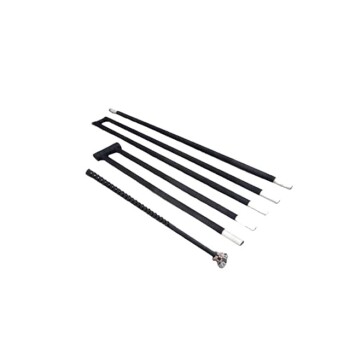
- Silicon Carbide SiC Thermal Heating Elements for Electric Furnace
- Boron Nitride (BN) Ceramic Rod for High Temperature Applications
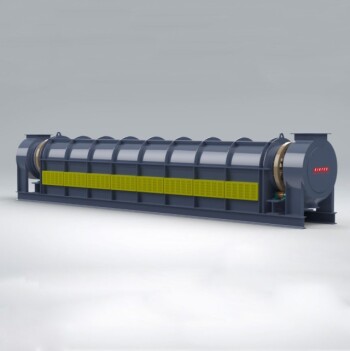
- Electric Rotary Kiln Continuous Working Small Rotary Furnace Heating Pyrolysis Plant
- High Temperature Constant Temperature Heating Circulator Water Bath Chiller Circulator for Reaction Bath
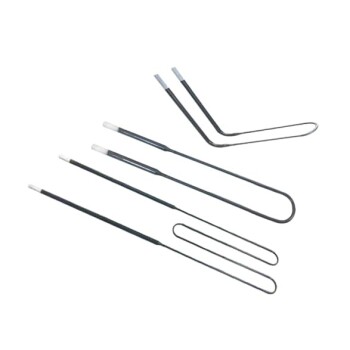
- Molybdenum Disilicide (MoSi2) Thermal Elements Electric Furnace Heating Element
People Also Ask
- What is the function of the heating element in a furnace? The Engine of Your Thermal Process
- What is the best heating element for a furnace? A Guide to Selecting the Right Material for Your Temperature Needs
- What is SiC elements? The Ultimate High-Temperature Heating Solution
- How long does a heating element last on the furnace? Understand Lifespan & Safety for Your System
- What are silicon carbide heating elements used for? Reliable High-Temp Heating for Industrial Processes