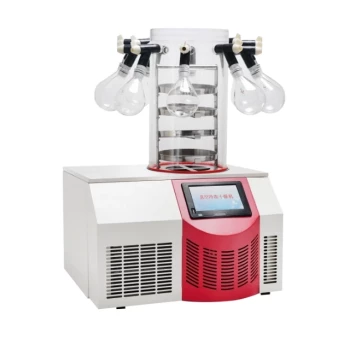
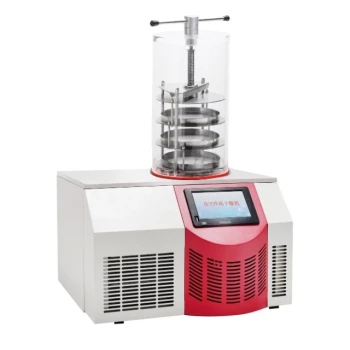
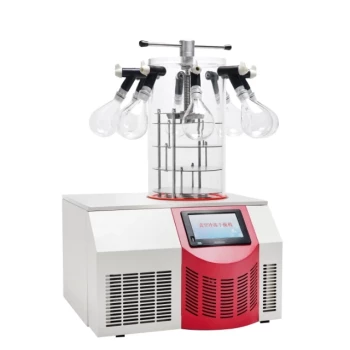
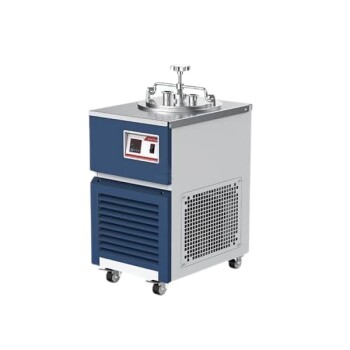
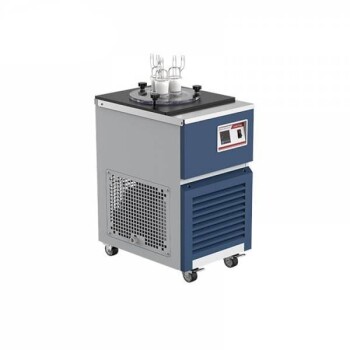
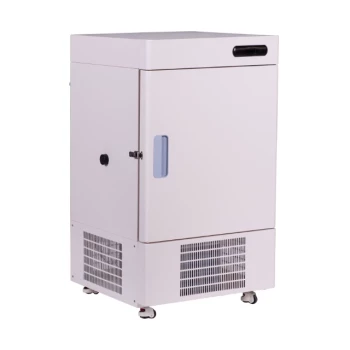
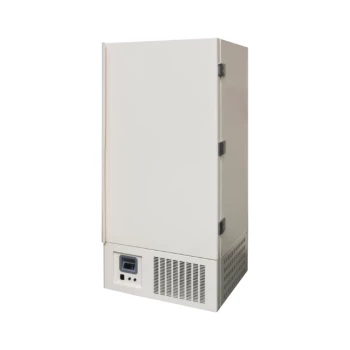
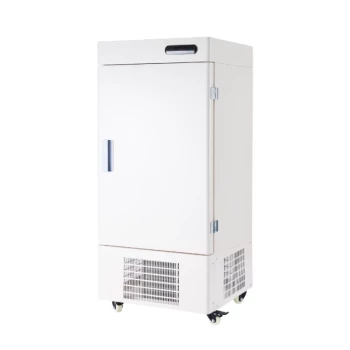
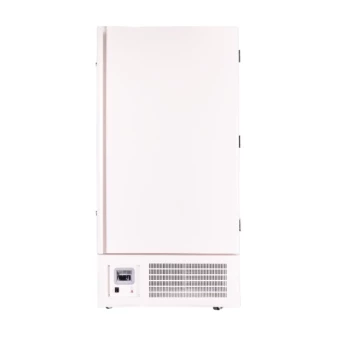
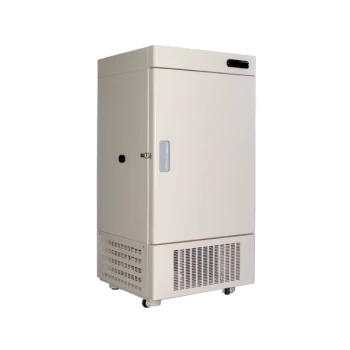
A vacuum freeze dryer is the critical standard for preparing wastewater degradation products for antibacterial testing because it removes moisture without applying heat. By utilizing sublimation under vacuum conditions, it concentrates the sample while strictly maintaining low temperatures. This process prevents the thermal decomposition of fragile intermediates, such as simple organic acids, ensuring the chemical profile remains intact for testing.
Core Takeaway The primary purpose of using vacuum freeze drying in this context is to concentrate samples while protecting heat-sensitive organic intermediates from thermal degradation. This preservation ensures that subsequent antibacterial tests measure the toxicity of the actual degradation products, rather than artifacts created by high-temperature drying methods.
Preserving Chemical Integrity
To accurately assess the toxicity of wastewater degradation, the sample tested must be an exact chemical representation of the wastewater itself.
Protection Against Thermal Damage
Many degradation intermediates found in wastewater, particularly simple organic acids, are highly sensitive to heat. Traditional drying methods, such as oven drying, rely on high temperatures to evaporate water.
Applying such heat would decompose these sensitive organic compounds before they could be tested.
The Mechanism of Sublimation
Vacuum freeze drying works through sublimation, where ice transforms directly into water vapor without passing through a liquid phase.
This occurs under low-temperature vacuum conditions. Because the process avoids the high heat associated with boiling or evaporation, the molecular structure of the degradation products is preserved.
Ensuring Experimental Validity
The ultimate goal of the process is to conduct an antibacterial activity test using specific indicator strains. The validity of this test depends entirely on the quality of the sample preparation.
Concentrating Target Compounds
Wastewater degradation products are often present in dilute amounts that are difficult to test directly.
Freeze drying removes the water volume, effectively concentrating the degradation intermediates. This allows for a potent enough sample to trigger a measurable response in the indicator strains.
Guaranteeing Data Authenticity
If the sample were dried using heat, the resulting toxicity data would be skewed.
You might fail to detect toxicity because the toxic agents were destroyed by heat, or you might detect false toxicity caused by heat-induced chemical changes. Freeze drying ensures the authenticity and reliability of the assessment results.
Understanding the Trade-offs
While vacuum freeze drying is scientifically superior for this application, it presents specific operational challenges compared to other drying methods.
Time Intensity
Freeze drying is a slow process compared to rotary evaporation or oven drying. Sublimation requires significantly more time to remove the same volume of water, potentially acting as a bottleneck in high-throughput workflows.
Equipment Complexity
The process requires specialized equipment capable of maintaining deep vacuums and precise low temperatures. This is more resource-intensive than standard thermal drying techniques.
Making the Right Choice for Your Goal
When preparing samples for environmental toxicity testing, your drying method dictates the accuracy of your results.
- If your primary focus is Data Accuracy: You must use vacuum freeze drying to preserve heat-sensitive organic acids and ensure the toxicity profile is authentic.
- If your primary focus is Speed: You might consider alternative methods only if you have confirmed that your target compounds are completely thermally stable (which is rarely guaranteed in wastewater degradation).
The integrity of your toxicity data is directly linked to the gentleness of your drying process.
Summary Table:
| Feature | Vacuum Freeze Drying (Sublimation) | Traditional Thermal Drying |
|---|---|---|
| Temperature | Sub-zero / Low temperature | High heat (Evaporation) |
| Sample Integrity | Preserves heat-sensitive organic acids | Risk of thermal decomposition |
| Chemical Profile | Accurate representation of products | Possible creation of artifacts |
| Primary Goal | Sample concentration & stabilization | Rapid moisture removal |
| Suitability | Best for environmental toxicity tests | Best for thermally stable materials |
Elevate Your Environmental Research with KINTEK
Precise sample preparation is the foundation of reliable toxicity data. KINTEK specializes in advanced laboratory solutions, including high-performance vacuum freeze dryers (cold traps and freeze dryers) designed to preserve the chemical integrity of your most sensitive wastewater degradation products.
Our comprehensive portfolio supports every stage of your research, from high-temperature furnaces and reactors to specialized PTFE consumables and ceramics. Whether you are concentrating samples for antibacterial activity tests or conducting complex material synthesis, KINTEK provides the reliability and precision your lab demands.
Don't compromise your data authenticity with inferior drying methods. Contact KINTEK today to discover how our freeze-drying solutions can enhance the accuracy and efficiency of your laboratory workflows!
References
- Xianshu Liu, Luyan Zhang. The Detoxification and Degradation of Benzothiazole from the Wastewater in Microbial Electrolysis Cells. DOI: 10.3390/ijerph13121259
This article is also based on technical information from Kintek Solution Knowledge Base .
Related Products
- Benchtop Laboratory Vacuum Freeze Dryer
- High Performance Laboratory Freeze Dryer
- High Performance Laboratory Freeze Dryer for Research and Development
- Benchtop Laboratory Freeze Dryer for Lab Use
- Vacuum Cold Mounting Machine for Sample Preparation
People Also Ask
- What are the technical advantages of using a laboratory freeze dryer for porous carbon precursors? Preserve 3D Networks
- How do laboratory freeze dryers support scientific research? Preserve Sample Integrity for Reproducible Results
- Why is a laboratory freeze dryer preferred over traditional heating? Preserve Biochar Structure & Maximize Porosity
- What types of liquid samples can be processed using a laboratory freeze dryer? Preserve Your Sensitive Materials
- What role do laboratory freeze dryers play in the food industry? Unlock Superior Food Preservation