The inherent stability of Incoloy 800HT requires active electrochemical force. Because this nickel-based alloy is engineered specifically for high corrosion resistance, conventional chemical etching methods are often ineffective and fail to affect the surface. An electrolytic system equipped with a DC regulated power supply provides the necessary external energy to drive an electrochemical reaction, selectively dissolving grain boundaries to reveal the microstructure.
Core Takeaway: Standard chemical etching relies on a material's natural reactivity, which Incoloy 800HT lacks by design. The DC regulated power supply bridges this gap by forcing the electrochemical breakdown of grain boundaries, making invisible weld structures observable.
Overcoming Material Resistance
The Failure of Conventional Etching
Incoloy 800HT is a nickel-based alloy designed to withstand aggressive environments. Its chemical composition creates a stable, passive surface that resists oxidation and acid attack.
Consequently, simply applying a chemical etchant—which relies on spontaneous reactions—is often futile. The solution simply sits on the surface without creating the contrast needed for microscopy.
The Electrochemical Solution
To visualize the microstructure, you must force a reaction that the material resists naturally. This is the function of the electrolytic etching system.
By applying an electrical potential via a DC regulated power supply, you actively drive the dissolution process. This technique uses electrochemical principles to bypass the alloy's natural corrosion resistance.
Visualizing Critical Weld Zones
Revealing Dendritic Structures
The Weld Fusion Zone (WFZ) contains complex solidification patterns known as dendrites. These features are critical for understanding the quality and solidification history of the weld.
The electrolytic process selectively attacks the micro-segregation between these structures. This results in a clear presentation of the dendritic structures that would otherwise remain obscured.
Defining Grain Morphology
The Heat-Affected Zone (HAZ) is the area surrounding the weld that has been altered by thermal cycling. Visualizing the grain structure here is essential for predicting mechanical failure.
The DC power supply allows for the precise etching of grain boundaries. This clearly outlines the grain morphology, allowing you to see how the heat input has changed the grain size and shape.
Understanding the Operational Trade-offs
Complexity vs. Simplicity
While effective, electrolytic etching adds a layer of complexity compared to standard immersion methods. You are no longer just managing chemical safety, but also electrical parameters.
The Need for Regulation
The "regulated" aspect of the DC power supply is not a luxury; it is a necessity. Because the etching relies on current density, fluctuations in power can lead to inconsistent results.
If the current is too high, you risk pitting or over-etching the sample. If it is too low, the grain boundaries will not be revealed. A stable, regulated supply ensures the process remains within the specific window required for Incoloy 800HT.
Making the Right Choice for Your Goal
To get the most out of your microstructural analysis, align your approach with your specific observational needs:
- If your primary focus is the Weld Fusion Zone (WFZ): Calibrate your system to highlight dendritic structures, ensuring you can verify solidification patterns.
- If your primary focus is the Heat-Affected Zone (HAZ): distinct grain boundary definition is your priority to accurately assess thermal impact on grain morphology.
Success with Incoloy 800HT relies on accepting that passive chemistry is not enough; you must use precise electrical energy to reveal the hidden structure.
Summary Table:
| Feature | Conventional Chemical Etching | Electrolytic Etching (DC Regulated) |
|---|---|---|
| Mechanism | Spontaneous chemical reaction | Forced electrochemical reaction |
| Suitability | Low corrosion-resistance materials | High-alloy materials like Incoloy 800HT |
| WFZ Visualization | Poor/No contrast for dendrites | Clear revelation of dendritic patterns |
| HAZ Analysis | Inconsistent grain definition | Precise grain boundary morphology |
| Control Level | Fixed by chemical concentration | Adjustable via voltage and current density |
Elevate Your Material Analysis with KINTEK Precision Solutions
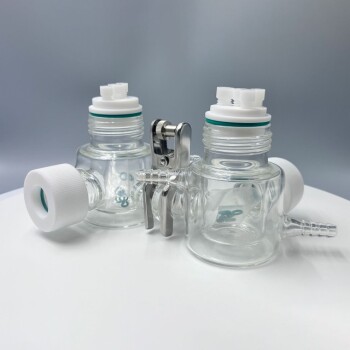
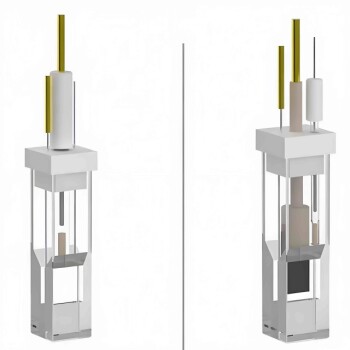
Don't let the corrosion resistance of Incoloy 800HT hinder your research quality. KINTEK specializes in advanced laboratory equipment designed for the most demanding metallurgical applications. From high-performance electrolytic cells and electrodes to precise DC regulated power supplies, we provide the tools necessary to reveal critical microstructures in weld zones and heat-affected zones.
Whether you require high-temperature furnaces, hydraulic pellet presses, or specialized battery research consumables, KINTEK is your partner in laboratory excellence. Our team of experts is ready to help you select the ideal configuration for your material characterization needs.
Ready to achieve superior visualization results? Contact KINTEK today for a consultation and discover how our comprehensive portfolio can optimize your lab's performance.
References
- Vishwa Bhanu, Chandan Pandey. Study on Microstructure and Mechanical Properties of Laser Welded Dissimilar Joint of P91 Steel and INCOLOY 800HT Nickel Alloy. DOI: 10.3390/ma14195876
This article is also based on technical information from Kintek Solution Knowledge Base .
Related Products
- Electrolytic Electrochemical Cell for Coating Evaluation
- Electrode Polishing Material for Electrochemical Experiments
- Side Window Optical Electrolytic Electrochemical Cell
- Electrolytic Electrochemical Cell with Five-Port
- Double-Layer Water Bath Electrolytic Electrochemical Cell
People Also Ask
- What is the volume range of the coating evaluation electrolytic cell? A Guide to Choosing the Right Size
- How does the design of an electrochemical electrolytic cell influence the coating uniformity? Optimize Your Catalysts
- What is the correct shutdown and disassembly procedure after an experiment? Ensure Safety and Protect Your Equipment
- How do the electrochemical cell and three-electrode testing system collaborate? Optimize Zinc Anode Deposition Control
- What is the difference between a voltaic cell and an electrochemical cell? Understand the Two Types of Energy Conversion