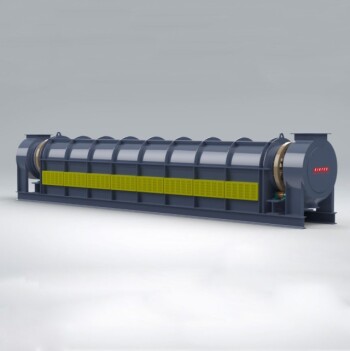
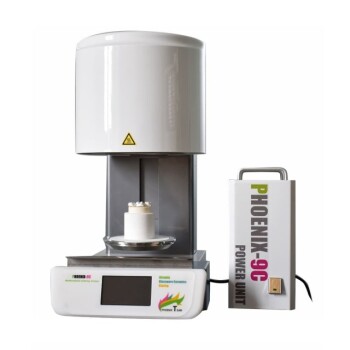
Industrial-grade calcining furnaces are essential for LCO doping because they provide the precise thermal stability required to engineer a protective "high-entropy zone" on the cathode surface. This specific high-temperature environment facilitates a multi-element (Mg-Al-Eu) solid-phase reaction that prevents the formation of ion-blocking layers. Without this controlled calcination, Lithium Cobalt Oxide (LCO) cannot maintain its structural integrity under the stress of high-voltage cycling and rapid charging.
Core Takeaway: To achieve high-voltage stability in LCO cathodes, industrial-grade furnaces are used to drive an entropy-mediated doping process. This creates a nanometer-thick protective phase that ensures consistent lithium-ion flow and structural durability at extreme charging rates.
The Role of Controlled Calcination in LCO Modification
Facilitating the Solid-Phase Reaction
Industrial furnaces enable multiple metal cations, such as Magnesium (Mg), Aluminum (Al), and Europium (Eu), to undergo a thorough solid-phase reaction. This process requires a stable high-temperature environment, often around 700°C, to ensure the dopants integrate uniformly into the LCO crystal lattice.
Precise Ramp Rate Control
Achieving the desired chemical structure requires strict control over the heating rate, typically maintained at 10°C/min. This precision prevents thermal shock and ensures that the entropy-driven effects occur predictably, allowing for the formation of complex, multi-phase composite structures.
Purification and Chemical Integrity
Before doping can be fully effective, the furnace must perform oxidative decomposition to remove residual organic additives like PVDF binders and conductive carbon black. High-temperature treatment ensures the chemical purity of the cathode powder, which is a prerequisite for successful high-entropy surface engineering.
Engineering the High-Entropy Surface Layer
Creating the Rock-Salt Structure Zone
The primary goal of using an industrial-grade furnace is to form a high-entropy zone several nanometers thick on the LCO surface. This zone adopts a rock-salt structure that acts as a buffer between the reactive cathode material and the electrolyte.
Inhibiting Lithium-Ion Blocking
Under high-voltage conditions, standard LCO cathodes often develop layers that block the movement of lithium ions, leading to rapid performance decay. The specialized phase structure created during calcination inhibits these blocking layers, maintaining high conductivity even during aggressive cycling.
Enhancing Structural Stability
By creating a high-entropy surface, the furnace treatment provides the LCO cathode with the "mechanical" strength to withstand high-voltage expansion and contraction. This stability is critical for batteries designed for high-power applications and extreme temperature environments.
Understanding the Trade-offs
Precision vs. Throughput
While industrial-grade furnaces offer the necessary precision, maintaining a strict 10°C/min heating rate across large batches can be challenging. Inconsistent temperature distribution within a large furnace can lead to uneven doping, resulting in "hot spots" where the cathode material may degrade rather than improve.
Energy Consumption and Operational Costs
Running calcining furnaces at sustained temperatures of 700°C for extended periods requires significant energy. Manufacturers must balance the performance gains of high-entropy doping against the increased production costs and potential wear and tear on the furnace components.
Complexity of Multi-Element Doping
Co-doping with three different elements (Mg-Al-Eu) increases the risk of phase separation if the thermal environment is not perfectly controlled. If the industrial furnace lacks the necessary atmospheric control (such as air flow management), the resulting high-entropy zone may be inconsistent, failing to provide the promised high-voltage protection.
How to Apply This to Your Project
Implementation Guidelines
Depending on your specific manufacturing or research goals, your approach to calcination will vary based on the desired performance metrics.
- If your primary focus is Maximum High-Voltage Longevity: Prioritize furnaces with high thermal uniformity to ensure the protective rock-salt high-entropy zone is consistently formed across the entire batch.
- If your primary focus is High-Rate Charging Performance: Focus on the precise control of the Mg-Al-Eu co-doping ratio and ensure the furnace can maintain a steady 700°C environment to minimize lithium-ion resistance.
- If your primary focus is Cost-Effective Production: Optimize the oxidative decomposition stage to ensure all impurities are removed in a single calcination step, reducing the need for multiple heating cycles.
By mastering the thermal environment of an industrial calcining furnace, you can unlock the full potential of LCO cathodes for the next generation of high-performance energy storage.
Summary Table:
| Parameter | Requirement/Detail | Impact on LCO Performance |
|---|---|---|
| Process Temperature | ~700°C | Facilitates multi-element (Mg-Al-Eu) solid-phase reaction |
| Heating Ramp Rate | 10°C/min | Prevents thermal shock; ensures predictable entropy effects |
| Surface Structure | Nanometer-thick Rock-salt | Inhibits ion-blocking layers and maintains conductivity |
| Purification | Oxidative Decomposition | Removes organic binders/residues to ensure chemical purity |
| Target Outcome | High-Entropy Zone | Enhances mechanical strength and high-voltage durability |
Elevate Your Battery Material Research with KINTEK
Precision is the key to unlocking high-voltage stability in LCO cathodes. KINTEK specializes in advanced laboratory and industrial equipment, offering a comprehensive range of high-temperature furnaces (muffle, tube, atmosphere, and vacuum) designed to provide the thermal uniformity and ramp-rate control required for multi-element doping.
Whether you are engineering high-entropy surface layers or optimizing oxidative decomposition, our portfolio—including battery research tools, high-pressure reactors, and specialized ceramics—is built to support your most demanding manufacturing needs.
Ready to optimize your calcination process? Contact KINTEK today to discover how our high-performance thermal solutions can enhance your material integrity and production efficiency.
References
- L. Li. Advancements in anode and cathode nanomaterials for high-performance Li-ion batteries. DOI: 10.54254/2755-2721/26/20230830
This article is also based on technical information from Kintek Solution Knowledge Base .
Related Products
- Electric Rotary Kiln Pyrolysis Furnace Plant Machine Calciner Small Rotary Kiln Rotating Furnace
- Electric Rotary Kiln Continuous Working Small Rotary Furnace Heating Pyrolysis Plant
- Vertical High Temperature Graphite Vacuum Graphitization Furnace
- Graphite Vacuum Furnace High Thermal Conductivity Film Graphitization Furnace
- Ultra-High Temperature Graphite Vacuum Graphitization Furnace
People Also Ask
- What is a rotary kiln electric furnace? Achieve Superior Uniform Heating for Your Materials
- What are the characteristics of the slipping, slumping, and rolling modes of bed motion? Optimize Your Rotary Process
- What are the advantages of rotary kiln furnace? Achieve Superior Uniformity & Efficiency
- What is the temperature of a rotating kiln? It Depends on Your Material and Process Goal
- What are the principles of a rotary kiln? Master the Mechanics of High-Temperature Processing