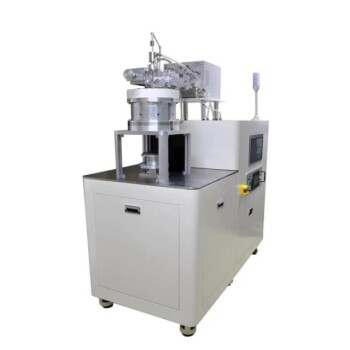
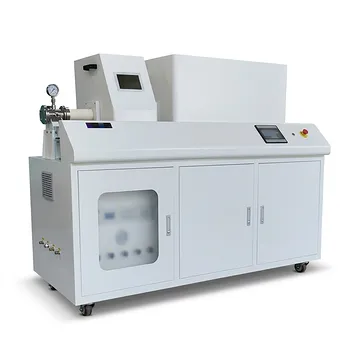
Chemical Vapor Deposition (CVD) serves as the primary mechanism for transforming gas-phase carbon precursors into highly ordered solid-state nanomaterials. Specifically, CVD equipment is utilized to decompose carbon source gases—such as ethylene—onto iron catalysts supported on silicon wafers at high temperatures. This process enables the growth of multi-walled carbon nanotube micro-arrays with precise control over structural dimensions, ensuring the mechanical strength necessary for high-performance film applications.
Core Insight: CVD equipment is not merely a furnace; it is a precision instrument for phase transformation. By strictly controlling temperature and atmosphere, it dictates the solubility of carbon within metal catalysts, allowing manufacturers to engineer the diameter, wall thickness, and alignment of nanotubes rather than simply growing them at random.
Achieving Structural Precision
Controlled Decomposition and Growth
The fundamental value of CVD equipment lies in its ability to facilitate the directional decomposition of carbon gases.
By utilizing a carrier gas (typically nitrogen) and a carbon source (such as ethylene or acetylene), the equipment creates a micro-reaction environment where gas molecules break down exclusively upon contact with the catalyst.
Engineering Nanotube Dimensions
CVD allows for the exact regulation of the resulting nanotube's physical architecture.
Manufacturers can finely tune the diameter and wall thickness of the nanotubes. This geometric control is critical for producing a "macroscopic support" that possesses the ordered structure and mechanical durability required for subsequent processing, such as the loading of platinum nanoparticles.
Thermal and Atmospheric Management
The Critical Temperature Window
CVD equipment maintains a rigorous thermal environment, typically between 700 and 900 degrees Celsius.
This specific range is necessary to manage the solubility of carbon within the metal catalyst (iron, nickel, or cobalt). If the temperature deviates, the carbon may not precipitate correctly, leading to defects or halted growth.
Gas-Phase to Solid-Phase Synthesis
The reactor acts as the core vessel for converting precursors from the gas phase directly into the solid phase.
In configurations like Horizontal CVD, the equipment precisely regulates gas flow rates to ensure nucleation occurs specifically on the catalyst surface. This promotes the growth of high-yield nanotubes perpendicular to the substrate.
High-Rate Film Production Methods
Substrate-Based vs. Floating Catalyst
While standard CVD grows arrays on silicon wafers, Floating Catalyst CVD (FC-CVD) is particularly relevant for high-rate film and aerogel manufacturing.
In this variation, the catalyst (e.g., ferrocene) is introduced as a vapor. It decomposes into transient nanoparticles that react with the carbon source in mid-air, allowing nanotubes to grow freely in the gas flow.
Self-Assembly of Films
This "floating" method enables the continuous synthesis of nanotubes that self-assemble into 3D network structures.
These networks can be collected downstream as ultra-light, high-porosity films, sheets, or wool-like materials, offering a distinct advantage for mass production over batch-processed wafer growth.
Understanding the Trade-offs
Process Sensitivity
The primary challenge with CVD is its extreme sensitivity to process parameters.
Slight variations in gas flow, pressure, or temperature can drastically alter the chirality (twist) and electronic properties of the nanotubes. Achieving uniformity across large-scale films requires sophisticated and expensive control systems.
Complexity of Catalyst Preparation
The quality of the output is heavily dependent on the catalyst.
Whether using a fixed catalyst on a silicon wafer or a floating catalyst, the precursor materials must be of high purity. Inefficiencies in catalyst preparation can lead to amorphous carbon buildup (soot), which degrades the mechanical and electrical performance of the final film.
Making the Right Choice for Your Goal
To maximize the utility of CVD equipment, align the specific reactor type with your end-product requirements:
- If your primary focus is mechanical strength and ordered arrays: Prioritize substrate-based CVD (using ethylene/iron on silicon) to achieve precise wall thickness and diameter control for structural supports.
- If your primary focus is high-volume film or aerogel production: Utilize Floating Catalyst CVD (FC-CVD) to leverage gas-phase self-assembly, enabling the continuous collection of macroscopic sheets or fibers.
Summary: CVD is the indispensable tool for converting raw carbon potential into engineered performance, bridging the gap between molecular chemistry and macroscopic industrial utility.
Summary Table:
| Feature | Substrate-Based CVD | Floating Catalyst CVD (FC-CVD) |
|---|---|---|
| Primary Goal | High mechanical strength & ordered arrays | High-volume film & aerogel production |
| Growth Medium | Supported on silicon wafers | Mid-air gas-phase synthesis |
| Key Precursors | Ethylene/Iron catalysts | Ferrocene/Carbon vapor |
| Structure | Multi-walled micro-arrays | 3D self-assembled networks |
| Temperature | 700°C - 900°C | High-temperature reactor zone |
Elevate Your Nanomaterial Synthesis with KINTEK
Precision is non-negotiable when engineering high-rate carbon nanotube films. KINTEK provides industry-leading laboratory equipment designed for the most demanding thermal and chemical processes.
Our comprehensive range of CVD and PECVD systems ensures the rigorous atmospheric control and thermal stability required to dictate nanotube diameter, wall thickness, and alignment. Beyond synthesis, KINTEK supports your entire workflow with high-temperature furnaces, crushing and milling systems, and high-pressure reactors.
Ready to scale your production? Contact us today to discover how our specialized equipment and consumables can optimize your research and manufacturing outcomes.
References
- Nguyễn Đức Cường, Dương Tuấn Quang. Progress through synergistic effects of heterojunction in nanocatalysts ‐ Review. DOI: 10.1002/vjch.202000072
This article is also based on technical information from Kintek Solution Knowledge Base .
Related Products
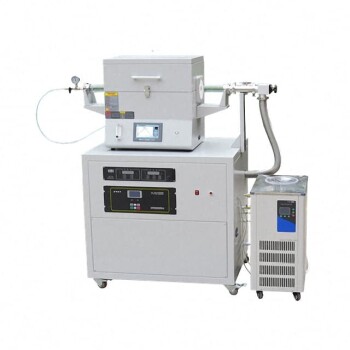
- Customer Made Versatile CVD Tube Furnace Chemical Vapor Deposition Chamber System Equipment
- Multi Heating Zones CVD Tube Furnace Machine Chemical Vapor Deposition Chamber System Equipment
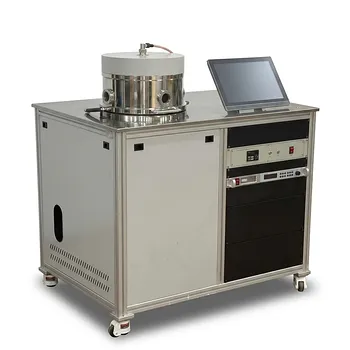
- Chemical Vapor Deposition CVD Equipment System Chamber Slide PECVD Tube Furnace with Liquid Gasifier PECVD Machine
- HFCVD Machine System Equipment for Drawing Die Nano-Diamond Coating
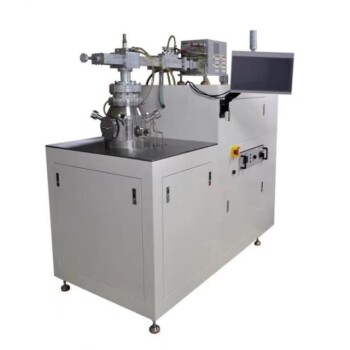
- Split Chamber CVD Tube Furnace with Vacuum Station Chemical Vapor Deposition System Equipment Machine
People Also Ask
- What is a CVD tube furnace? A Complete Guide to Thin-Film Deposition
- What is the function of a high-temperature CVD tube furnace in 3D graphene foam prep? Master 3D Nanomaterial Growth
- What are the technical advantages of using a CVD tube furnace? Optimize Silicon-Carbon Battery Anodes
- How does a CVD tube furnace inhibit the sintering of silver supports? Boost Membrane Durability and Performance
- What is the function of a tube furnace in CVD SiC synthesis? Achieving Ultra-Pure Silicon Carbide Powders