High pressure is fundamental to overcoming the physical limitations of solid materials. A hydraulic press applying pressures such as 720 MPa exploits the ductility of solid electrolytes to plastically deform them, eliminating microscopic gaps at the interfaces. This creates a dense, integrated structure necessary for ions to move freely between the electrode and the electrolyte.
Core Takeaway Unlike liquid batteries where the electrolyte flows into pores, solid-state batteries rely entirely on physical contact for ion transport. Ultra-high pressure is the mechanism used to force solid particles together, reducing porosity and ensuring the low internal resistance required for reversible charge-discharge cycles.
The Core Challenge: The Solid-Solid Interface
Overcoming Material Rigidity
In traditional batteries, liquid electrolytes naturally "wet" the electrodes, ensuring perfect contact. In solid-state batteries, the components are rigid powders or sheets.
Without extreme force, these solids merely touch at rough high points, leaving vast voids where ions cannot travel.
Exploiting Material Ductility
The primary mechanism at work here is the deformation of the solid electrolyte.
By applying ultra-high pressure (e.g., 720 MPa), you force the solid electrolyte to behave slightly like a fluid. It creates a tight, molded fit against the composite electrode layers, effectively sealing the interface.
Critical Outcomes of High-Pressure Densification
Establishing a Continuous Ion Path
The ultimate goal of this pressure is to create a "highway" for ions.
Gaps act as roadblocks; by eliminating them, you ensure a continuous path for ion transport. This continuity is non-negotiable for the battery to function efficiently.
Minimizing Internal Resistance
High pressure significantly reduces interfacial impedance and grain boundary resistance.
When cathode particles are tightly embedded within the solid electrolyte, the resistance drops. This allows the battery to deliver power effectively and recharge without generating excessive heat or degradation.
Consolidating the Monolithic Structure
Pressure transforms loose layers into a single, unified block.
This densification reduces the porosity of the electrolyte layer. A non-porous, dense layer is critical for structural integrity and long-term cycling stability.
Understanding the Trade-offs and Process Nuances
The Risk of Short Circuits
While pressure is good, density is the actual goal.
If the solid electrolyte layer is not sufficiently dense, it remains porous. These pores can lead to short circuits or dendrite penetration, causing immediate battery failure.
The Necessity of Stepwise Molding
Applying maximum pressure indiscriminately can damage sensitive components.
A stepwise approach is often superior: applying ultra-high pressure first to densify the electrolyte, followed by moderate pressure to bond the electrode layers. This protects the cathode-electrolyte bilayer structure while ensuring density where it counts.
Variable Pressure Requirements
Not every layer requires the same force.
For example, ensuring contact between a Li-In alloy anode and the electrolyte may only require 150 MPa, whereas the electrolyte itself requires much higher pressure. Excessive pressure on the wrong component can crush active materials rather than just compacting them.
Making the Right Choice for Your Goal
To ensure your assembly process meets your performance targets, consider the following:
- If your primary focus is Ion Conductivity: Prioritize ultra-high pressure on the electrolyte layer to maximize ductility and eliminate all interfacial voids.
- If your primary focus is Safety and Longevity: Utilize a stepwise molding process to ensure the electrolyte is fully dense (preventing shorts) before bonding the electrodes.
- If your primary focus is Structural Integrity: Calibrate your pressure to the specific yield strength of your anode material to avoid crushing the active structure while maintaining contact.
High pressure is not just a manufacturing step; it is the physical catalyst that turns isolated powders into a functioning electrochemical system.
Summary Table:
| Factor | Requirement | Impact on Battery Performance |
|---|---|---|
| Interface Contact | Ultra-high (e.g., 720 MPa) | Eliminates microscopic voids for seamless ion transport |
| Material State | Plastic Deformation | Forces solid electrolytes to mold against electrode surfaces |
| Internal Resistance | Minimized Impedance | Reduces grain boundary resistance for efficient power delivery |
| Structural Density | Low Porosity | Prevents short circuits and dendrite penetration during cycling |
| Molding Process | Stepwise Application | Balances electrolyte densification with electrode integrity |
Elevate Your Battery Research with KINTEK Precision
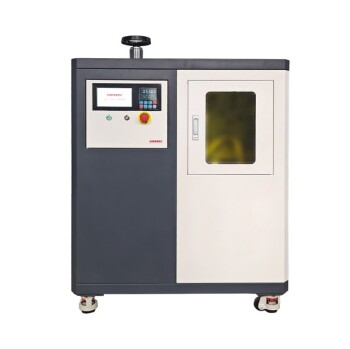
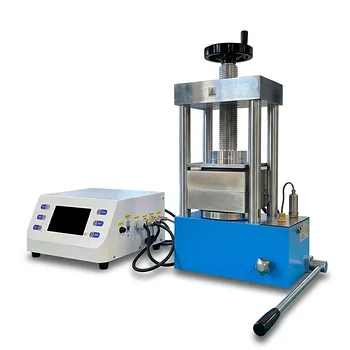
Achieving the critical pressures required for high-performance all-solid-state batteries demands equipment that is both powerful and precise. KINTEK specializes in advanced laboratory solutions, offering a comprehensive range of hydraulic presses (pellet, hot, and isostatic) designed to reach the ultra-high pressure thresholds necessary for material densification.
From high-temperature furnaces and crushing systems to specialized battery research tools and high-pressure reactors, our portfolio provides the end-to-end support needed for breakthrough energy storage development. Partner with KINTEK to ensure your materials reach their maximum potential.
Ready to optimize your assembly process? Contact our technical experts today to find the perfect hydraulic solution for your lab!
Related Products
- Warm Isostatic Press for Solid State Battery Research
- Laboratory Hydraulic Press Lab Pellet Press for Button Battery
- Automatic Laboratory Hydraulic Press for XRF & KBR Pellet Press
- Assemble Square Lab Press Mold for Laboratory Applications
- Manual Lab Heat Press
People Also Ask
- What is the temperature of a warm isostatic press? Achieve Optimal Densification for Your Materials
- What is the function of a Warm Isostatic Press (WIP) in all-solid-state pouch cells? Optimize Battery Density
- Why are Warm Isostatic Presses (WIP) necessary for solid-state batteries? Achieve Atomic-Level Contact
- What advantages does a warm isostatic press offer over a traditional uniaxial press for Li6PS5Cl electrolyte sheets?
- How do warm isostatic presses improve dry electrode performance? Enhance ASSB Conductivity with Heat & Pressure