The Scientist's Dilemma
Imagine a materials science lab. A team is developing a new composite, bonding two dissimilar layers. They have a heater. They have a hydraulic press. They apply heat, then they apply pressure.
The result is a mess. The bond is inconsistent. Air bubbles are trapped. Delamination occurs under the slightest stress. The team is frustrated because they are following the steps, but the outcome is unpredictable.
This scenario reveals a common psychological trap: we often mistake the ingredients for the recipe. The problem isn't the heat or the pressure; it's the failure to see them as a single, interdependent system.
The Marriage of Heat and Pressure
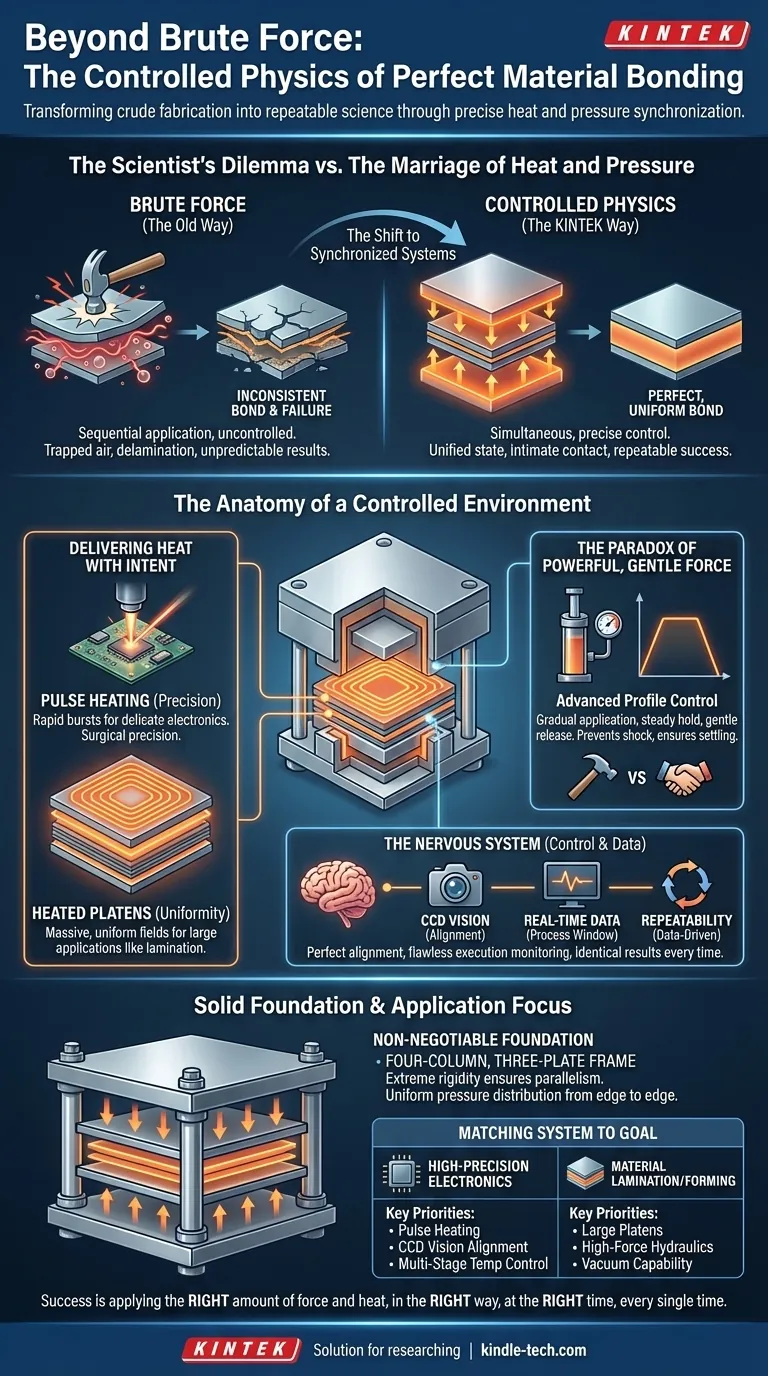
A hot press machine operates on a principle that is simple in theory but complex in execution: heat and force must work in perfect unison.
Applying heat makes materials malleable. It allows adhesives to flow or solder to melt. Applying pressure ensures intimate contact, squeezing out air and forcing the materials into a unified state.
But applying them sequentially is not the same as applying them simultaneously under precise control. A true hot press creates a micro-environment where temperature and force ramp up, hold, and cool down according to a pre-programmed script. This transforms a crude act of fabrication into a repeatable science.
The Anatomy of a Controlled Environment
The magic of a hot press is not in its power, but in its meticulous control over that power. This control is managed by several interconnected systems.
Delivering Heat with Intent
Not all heat is created equal. The method of delivery dictates the outcome.
- Pulse Heating: For delicate electronics like flexible circuit boards, pulse heating technology acts like a surgical laser. It delivers rapid, intense bursts of heat to a very specific location, allowing for precise soldering without damaging surrounding components.
- Heated Platens: For larger applications like laminating wood or forming composites, the machine uses massive steel plates (platens). These are heated from within by circulating oil or steam, creating a vast, perfectly uniform temperature field. It's less like a spotlight and more like a perfectly controlled, heated blanket.
The Paradox of Powerful, Gentle Force
The pressure system, typically driven by hydraulic cylinders, can generate immense force. But its true value lies in its finesse.
Advanced controls allow an operator to program not just the maximum pressure, but the entire pressure profile. The force can be applied gradually, held steady, and then released gently. This prevents shock to delicate parts and ensures the material settles into its new form without stress. It’s the difference between a hammer blow and a firm, steady handshake.
The Nervous System: Vision, Data, and Repeatability
Overseeing this dance of heat and force is a sophisticated electronic control system.
Modern machines often use a CCD vision system to ensure components are perfectly aligned before a single ounce of pressure is applied. This eliminates human error in placement.
During the cycle, a real-time temperature curve display gives the operator a direct window into the process, confirming that the programmed profile is being executed flawlessly. This data-driven approach is what guarantees that the 100th part is identical to the first.
Why a Solid Foundation is Non-Negotiable
All this precision would be wasted without a stable physical structure.
Most industrial hot presses are built on a robust four-column and three-plate frame. This design provides extreme rigidity, ensuring the top and bottom platens remain perfectly parallel even under tons of pressure.
This parallelism is the unsung hero of the process. It guarantees that pressure is distributed evenly across the entire surface, preventing weak spots and ensuring a uniform bond from edge to edge.
From Theory to Application: Matching the System to the Goal
The temptation is to look for a single metric—the highest temperature or the maximum pressure. But the right hot press is not the most powerful one; it's the one whose systems are best matched to your goal.
Navigating these trade-offs is where expertise becomes critical. The requirements for bonding a flexible circuit are vastly different from those for creating a composite panel.
| Application Focus | Key System Priorities |
|---|---|
| High-Precision Electronics | Pulse Heating, CCD Vision Alignment, Multi-Stage Temp Control |
| Material Lamination/Forming | Large Chromium-Plated Platens, High-Force Hydraulics, Vacuum Capability |
Choosing the right integrated system is the final step in moving from unpredictable results to reliable innovation. At KINTEK, we provide the specialized lab equipment that forms the backbone of this precision, ensuring your process is built on a foundation of control and repeatability.
Success in modern material science and manufacturing isn't about applying more force. It's about applying the right amount of force and heat, in the right way, at the right time, every single time.
Visual Guide
Related Products
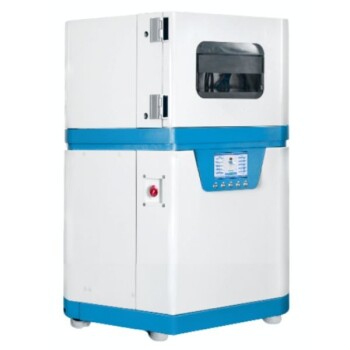
- Automatic Heated Hydraulic Press Machine with Heated Plates for Laboratory Hot Press 25T 30T 50T
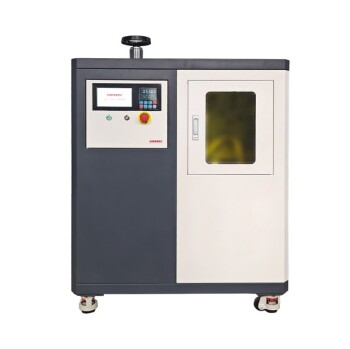
- Manual High Temperature Heated Hydraulic Press Machine with Heated Plates for Lab
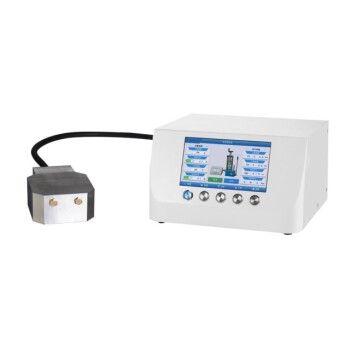
- Touchscreen Automatic Vacuum Heat Press
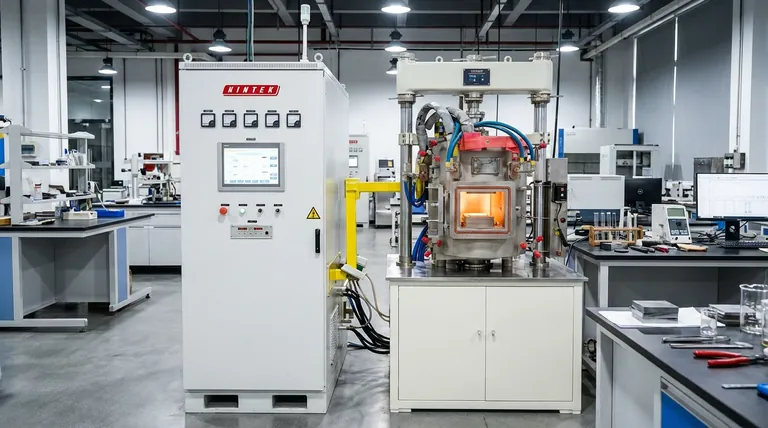
- Vacuum Hot Press Furnace Machine Heated Vacuum Press
- 30T 40T Split Automatic Heated Hydraulic Press Machine with Heated Plates for Laboratory Hot Press
Related Articles
- Why Your Composite and Polymer Parts Keep Failing: The Secret Is Simultaneous Heat and Pressure
- The Physics of Flawless Materials: Deconstructing the Hydraulic Hot Press
- Precision Under Pressure: The Physics and Psychology of the Hydraulic Hot Press
- Hydraulic Hot Press: Principles, Components, Features, Advantages, and Applications
- Comprehensive Guide to Hydraulic Hot Press: Function, Features and Applications