The Enemy Within the Material
In the world of advanced materials, failure often begins invisibly. A microscopic void, a tiny pocket of air trapped deep within a ceramic turbine blade or a composite panel, becomes the epicenter of a catastrophic fracture.
This is the engineer's fundamental challenge: not just shaping a material, but conquering the empty space within it. The pursuit of perfection is a war on porosity. And one of the most elegant weapons in this war is the hot press technique.
The Physics of Perfection
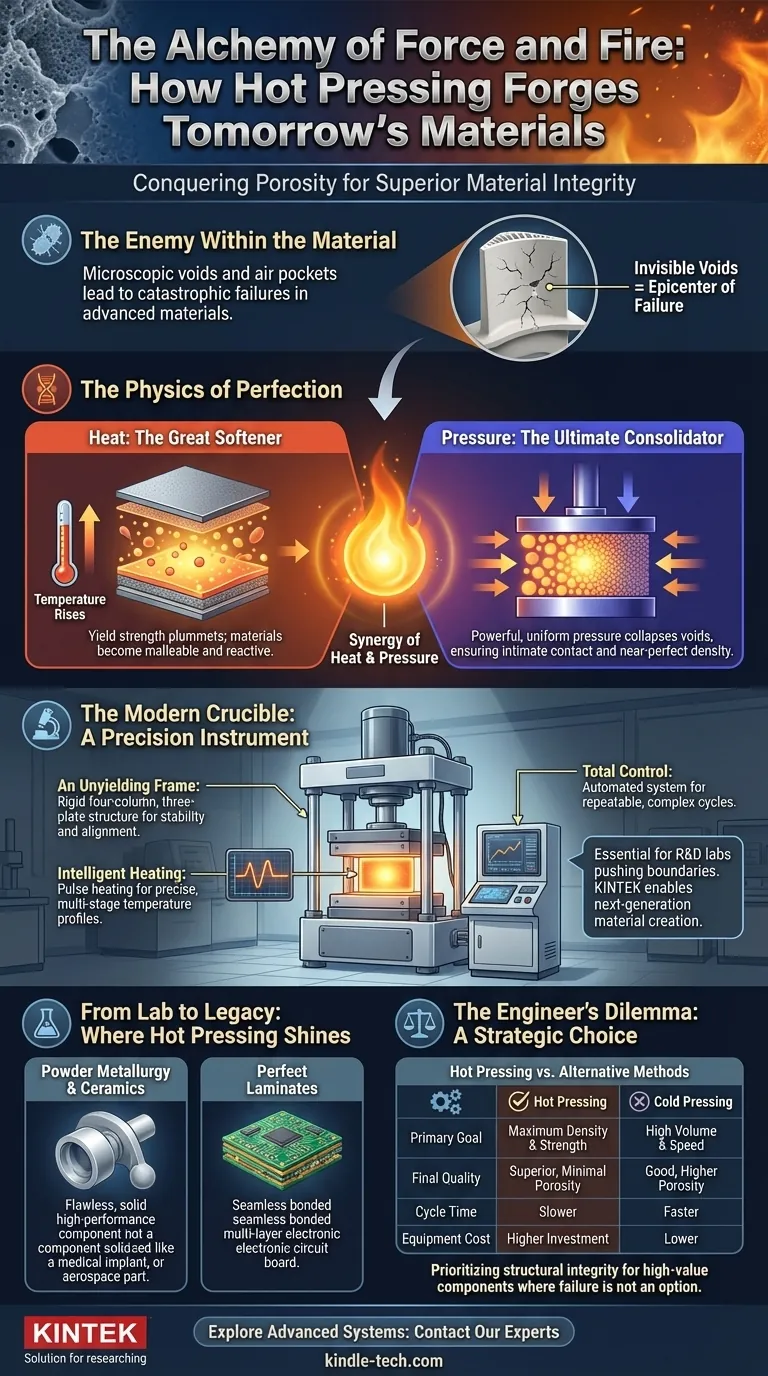
Hot pressing is a process of controlled violence. It applies two fundamental forces of nature—intense heat and immense pressure—simultaneously. It's not just a combination; it's a synergy where the whole is far greater than the sum of its parts.
Heat: The Great Softener
First, heat is applied. As the temperature rises, the material's yield strength plummets. It becomes malleable and reactive. For powders, this is the point of sintering, where individual particles begin to fuse. For laminates, it’s the moment a thermal adhesive awakens, ready to form an unbreakable bond.
Pressure: The Ultimate Consolidator
While the material is in this pliable state, a powerful, uniform pressure is applied. This force is relentless. It physically collapses voids, forces particles into intimate contact, and drives out every last pocket of air. It ensures that the bond—whether between grains of ceramic or layers of wood veneer—is absolute.
This is where the magic happens. The heat makes the material willing to change, and the pressure ensures that change is toward a state of near-perfect density.
The Modern Crucible: A Precision Instrument
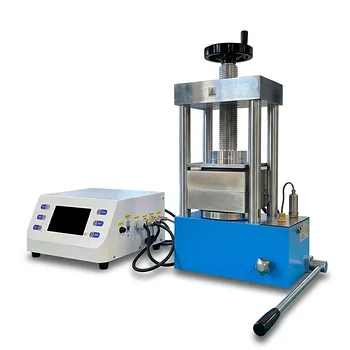
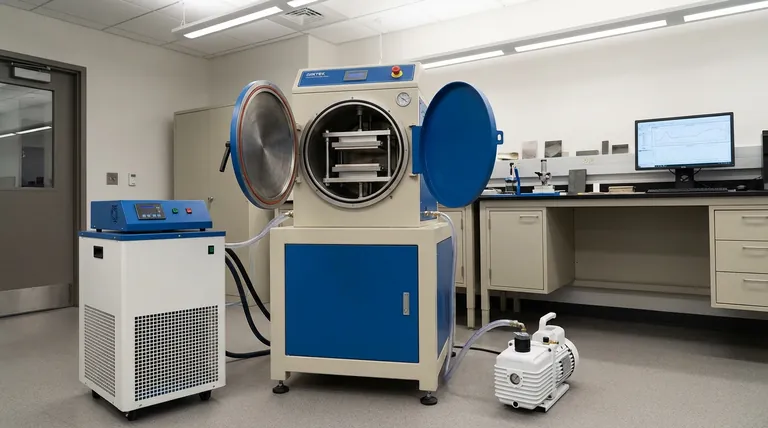
Executing this process requires more than just brute force. It demands surgical precision, which is why modern hot press machines are sophisticated instruments of control, especially in a laboratory setting.
A typical high-performance system, like those essential for R&D labs, is built on a few core principles:
- An Unyielding Frame: A rigid four-column, three-plate structure is non-negotiable. It guarantees stability and perfect alignment when tons of force are being applied, preventing microscopic misalignments that could compromise the final part.
- Intelligent Heating: Modern systems use pulse heating, allowing for rapid, multi-stage temperature profiles. This isn't just about getting hot; it's about following a precise thermal recipe to optimize the material's properties.
- Total Control: The entire process is orchestrated by an automated control system. Researchers can program, save, and flawlessly repeat complex cycles of heat, pressure, and timing. This repeatability is the cornerstone of scientific discovery and material validation.
For laboratories pushing the boundaries of material science, having a reliable, precise hot press is not a luxury—it is the foundation of their work. This is the domain where specialized equipment providers like KINTEK play a crucial role, enabling the creation of next-generation materials.
From Lab to Legacy: Where Hot Pressing Shines
This technique is chosen when material integrity cannot be compromised. Its applications are found where performance is paramount.
Forging the Un-machinable
In powder metallurgy and ceramics, hot pressing creates solid, high-performance parts from powders. These components, used in aerospace, defense, and medical implants, possess exceptional strength precisely because the process has eliminated the internal weaknesses that plague other methods.
The Flawless Bond
In industries from furniture to electronics, hot pressing is used to create perfect laminates. The heat activates the adhesive, and the pressure ensures a seamless, permanent bond free of bubbles or gaps. It’s the difference between a premium finish and a product destined for delamination.
The Engineer's Dilemma: A Conscious Compromise
Hot pressing is not a universal solution. Its adoption is a deliberate strategic choice, reflecting a specific psychological priority: the pursuit of perfection over speed.
| Factor | Hot Pressing | Alternative Methods (e.g., Cold Pressing) |
|---|---|---|
| Primary Goal | Maximum Density & Strength | High Volume & Speed |
| Final Quality | Superior, minimal porosity | Good, but with higher porosity |
| Cycle Time | Slower (due to heating/cooling) | Faster |
| Equipment Cost | Higher capital investment | Lower |
Choosing hot pressing means prioritizing structural integrity above all else. It's an acknowledgment that the initial investment in time and equipment pays dividends in the form of a product that is stronger, more reliable, and performs at a higher level.
When your goal is to create a material that is as close to its theoretical maximum density and strength as possible, the choice becomes clear. The process transforms raw powders and layered sheets into consolidated, high-value components where failure is not an option.
To explore how advanced hot press systems can elevate your research and development, Contact Our Experts.
Visual Guide
Related Products
- Heated Hydraulic Press Machine with Heated Plates Split Manual Laboratory Hot Press
- Automatic Heated Hydraulic Press Machine with Heated Plates for Laboratory Hot Press 25T 30T 50T
- Automatic Heated Hydraulic Press Machine with Heated Plates for Laboratory Hot Press
- Heated Hydraulic Press Machine with Heated Plates for Vacuum Box Laboratory Hot Press
- Manual High Temperature Heated Hydraulic Press Machine with Heated Plates for Lab
Related Articles
- How to choose a laboratory hot press
- Why Your Composite and Polymer Parts Keep Failing: The Secret Is Simultaneous Heat and Pressure
- Choosing the Right Press for Your Laboratory Needs
- More Than a Squeeze: The Physics and Psychology of the Hydraulic Hot Press
- Comprehensive Guide to Hydraulic Hot Press: Function, Features and Applications